Root Canal Treatment in Alanya
The first question on the mind of any patient suffering from severe toothache or who has been told they ‘will lose their tooth’ is the same: Is there really no other option? In most cases, there is. Root canal treatment is the most effective and evidence-based method of saving an infected or damaged tooth without the need for extraction.
The modern root canal treatment carried out by our endodontists at our clinics in Antalya and Alanya is pain-free, quick and delivers long-lasting results. We also treat cases that can be completed in a single session.
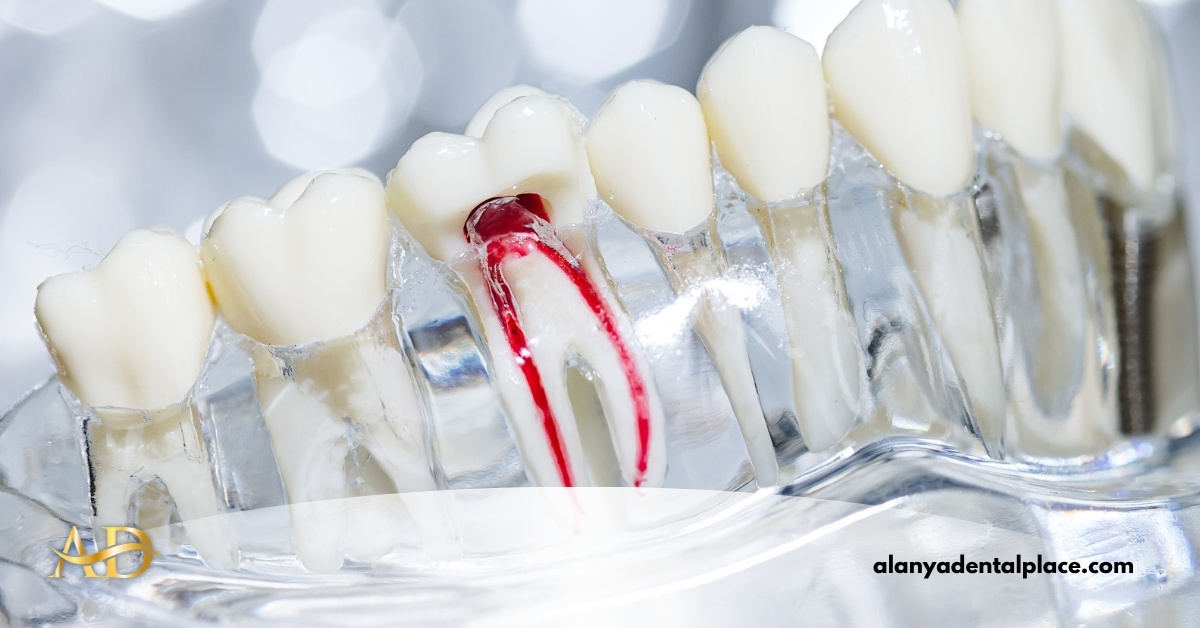
What is Root Canal Treatment?
Inside every tooth there is a soft tissue called the pulp. This tissue consists of nerves, blood vessels and connective tissue, and ensures that the tooth remains alive. Deep cavities, trauma or long-term infections can cause the pulp to become inflamed or die completely.
At this stage, there are two options: to extract the tooth or to save it with root canal treatment.
Root canal treatment (endodontic treatment) involves the removal of infected or necrotic pulp tissue, the sterilisation and cleaning of the root canals, and their obturation with biocompatible filling materials. Although the tooth has lost its pulp, it continues to function; chewing ability, aesthetics and structural integrity are preserved.
Root canal treatment is one of the most commonly performed dental procedures in Turkey. However, root canal treatments carried out without the right technology and a specialist dentist may result in failure. This distinction makes it crucial to consider where and from whom you receive treatment.
Conditions Requiring Root Canal Treatment: What Are the Symptoms?
Inflammation or infection of the pulp presents with distinct symptoms. However, in some cases, the tooth may remain completely asymptomatic. This is why regular check-ups are of critical importance.
If you have any of the following symptoms, you may need root canal treatment:
- Severe pain when biting or chewing
- Prolonged extreme sensitivity to heat and cold (which persists even after the stimulus has ceased)
- Severe pain attacks that occur spontaneously, particularly at night
- Swelling, redness or an abscess (with or without discharge) in the gums
- Tooth discolouration/change in colour
- A recurring, pimple-like swelling on the gums
Asymptomatic Cases
In some patients, the pulp may have died without any pain whatsoever. A dark area at the root tip (periapical lesion), detected on a routine X-ray, is the most common sign of this condition. The fact that root canal treatment may be necessary even in the absence of pain makes regular check-up appointments essential.
Contents
Reasons for Root Canal Treatment: How Do These Conditions Affect the Pulp?
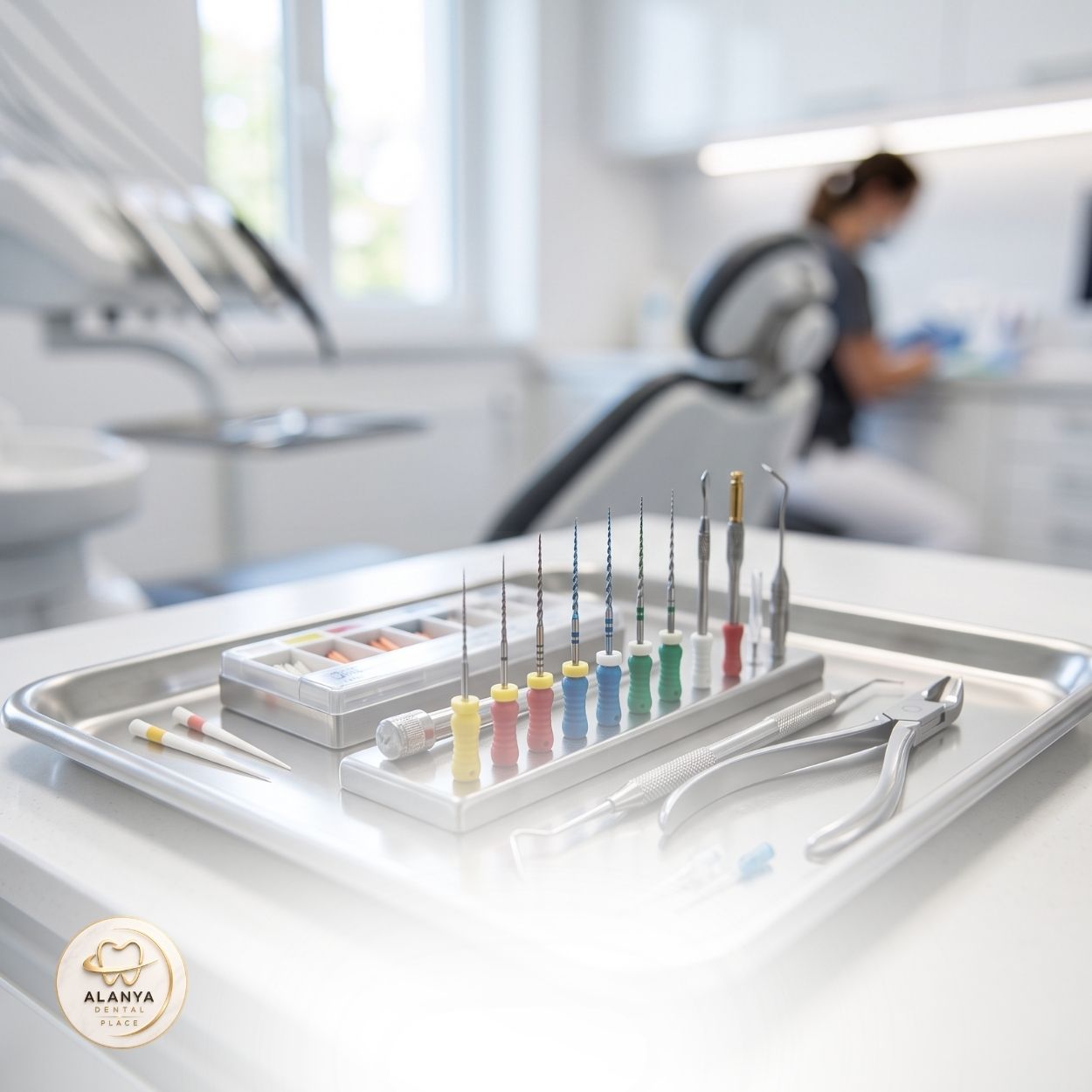
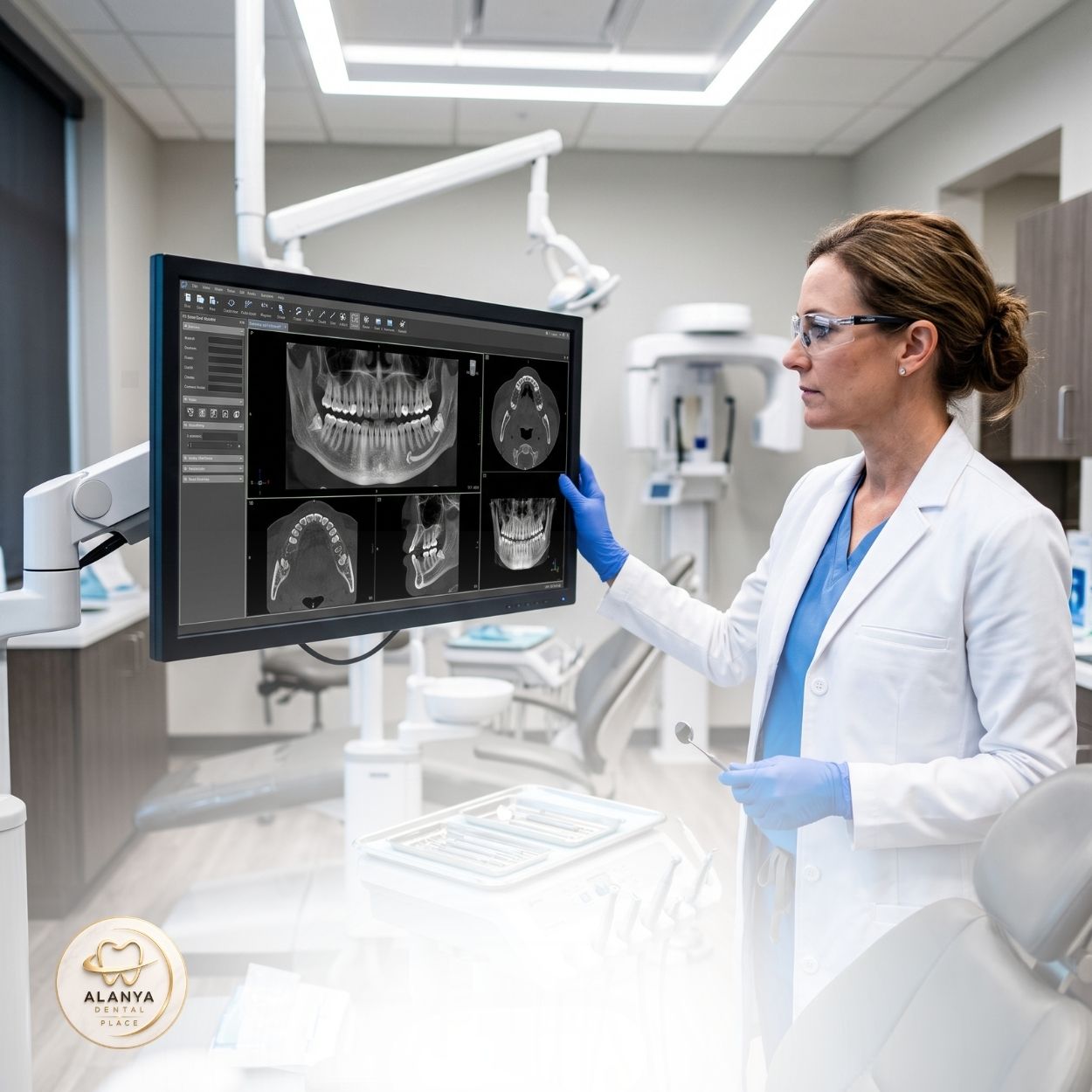
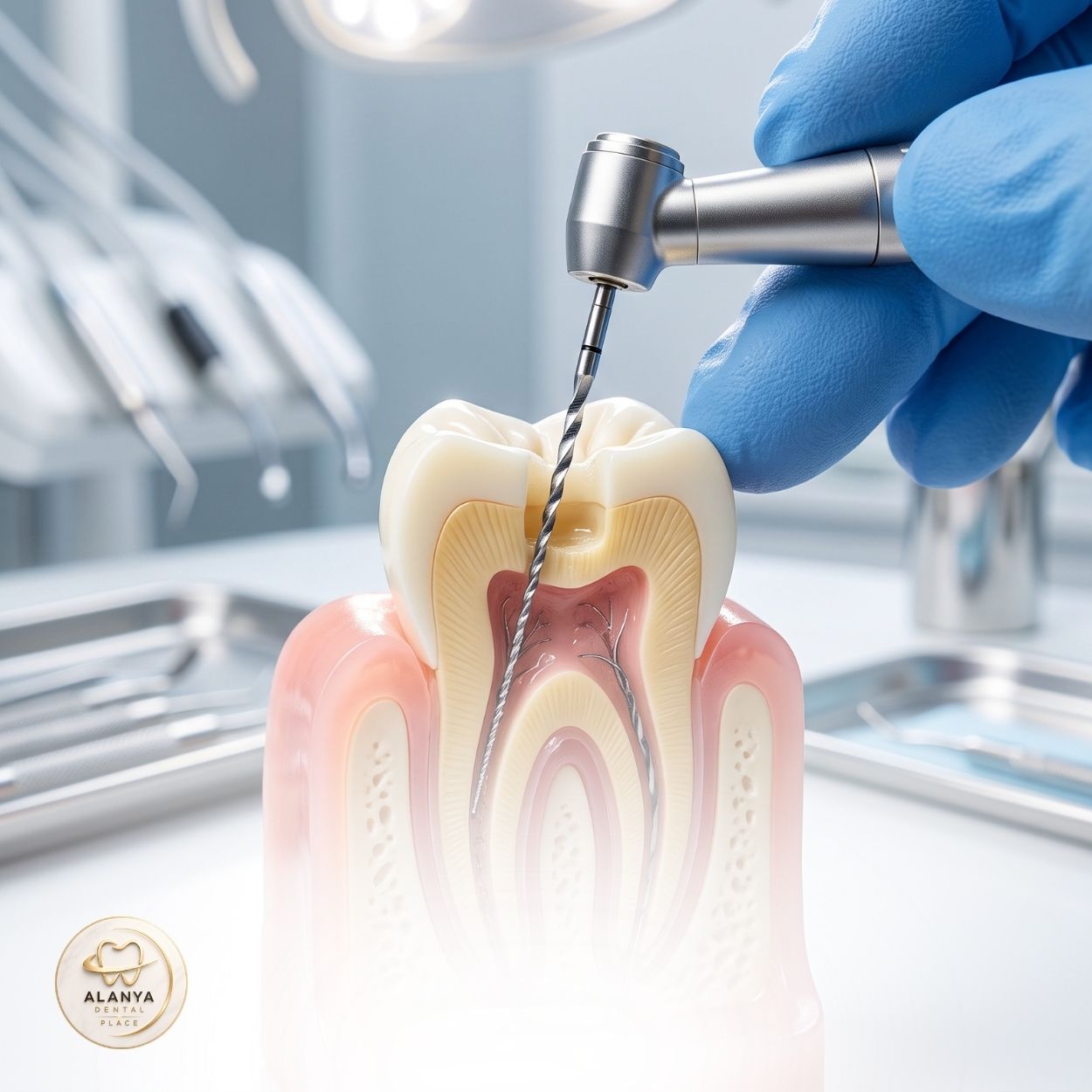
How Is Root Canal Treatment Carried Out? The Step-by-Step Process
Visit our clinic in Antalya or Alanya to see the root canal treatment process for yourself.
Is a Single-Visit Root Canal Treatment Possible?
Yes — in many cases, root canal treatment can be completed in a single session. However, this decision depends on the following criteria:
Status
Live tooth, no infection
A dead tooth, a localised infection
Active inflammation / abscess
Root canal retreatment
Complex canal anatomy
An initial assessment carried out at our Alanya dental clinic will clearly determine how many sessions your treatment will require.
Laser-Assisted Root Canal Treatment
Laser technology offers additional benefits in root canal treatment, particularly during the disinfection stage. Diode or Er:YAG lasers neutralise bacteria in tubular areas that standard chemical irrigation cannot reach.
The clinical advantages of laser-assisted root canal treatment:
- Greater effectiveness in eliminating bacteria
- Reduction in post-operative pain
- A reduction in recovery time (in some cases)
- A reduction in the risk of recurrent infection
Although this method is not routinely applied to all cases, it is available at our clinic once the indication has been established.
Microscope-Assisted Root Canal Treatment (Endodontic Microscopy)
Root canal treatment performed under a microscope is the area of endodontics that requires the highest level of precision. A dental operating microscope (DOM) enables the dentist to view all structures within the root canals at a magnification of 10–25 times.
This technique is used particularly in the following situations:
- Cases of missed canals — the most common cause of failure
- Extraction of an instrument broken inside a canal
- Repair of canal perforations
- Root canal retreatment
- Complex canal anatomy
At our clinic, we offer the option of using a microscope in selected cases.






This is a critical point that many patients overlook. As a tooth that has undergone root canal treatment has lost its pulp, it gradually loses its moisture content over time and becomes more susceptible to fracture.
Back teeth (premolars and molars): As they bear the brunt of chewing forces, it is almost always recommended that they be supported by a zirconia or E-Max crown following root canal treatment.
Front teeth: As the chewing load is low, a good filling may be sufficient; however, if there are aesthetic concerns, veneers or full crowns are preferred.
If a crown is not fitted, the risk of a vertical fracture of the tooth increases significantly. This could result in the loss of the tooth. In other words, a crown is the best way to protect the investment made in root canal treatment.
Yes. If pain, swelling or signs of infection visible on an X-ray have recurred following root canal treatment carried out previously at another clinic, the option of root canal retreatment may be considered.
The retreatment process involves the following:
- Complete removal of the old filling material
- Identification of root canals that could not be cleaned during the previous treatment
- Re-preparation and disinfection of the channels
- New filling
The success rate of retreatment is reported to range between 75% and 85%, depending on the case. In cases where retreatment fails, apical surgery (apicoectomy) is the last resort.
An apicoectomy is performed when retreatment fails or when a cyst at the root tip requires surgical intervention. In this procedure, a small incision is made at the root tip to remove the infected tissue and part of the root tip; the root tip is then sealed with a special biocompatible material.
Apical surgery is the last line of defence against tooth extraction, and high success rates are achieved when it is performed on suitable cases.
A frequently asked question: ‘Why have a root canal treatment on a tooth that’s going to fall out anyway?’ This line of thinking is a serious mistake.
Early extraction of a decayed or infected milk tooth can disrupt the alignment of the permanent tooth, adversely affect jaw development and may impair a child’s speech development. For this reason, root canal treatment is carried out on milk teeth when indicated.
There are two different procedures for milk teeth:
- Pulpotomy: If only the crown portion of the pulp is infected, a partial treatment is carried out whilst preserving the root portion.
- Pulpectomy: If the infection has spread as far as the root canal, a full root canal treatment is carried out.
In the case of permanent teeth, apicalisation or apicogenesis protocols are followed for children whose root development is not yet complete. This is a process that differs from standard root canal treatment and requires check-ups at specific intervals.
Root Canal Treatment in Turkey: Why Is It the Preferred Choice?
Root canal treatment in Turkey is offered at a much more affordable cost than in Europe and the UK. Nevertheless, it meets international standards in terms of modern clinical facilities, the use of CE-certified materials and a team of experienced specialists.
The main reasons why foreign patients choose Turkey:
- A cost advantage of 50–70 per cent compared with European prices
- Quick appointments without long waiting times
- The option to complete multiple treatments in a single visit (extraction, root canal, crown, implant)
- Multilingual patient coordination and accommodation support
- The benefit of combining a holiday with treatment
As an Antalya dental clinic, we offer comprehensive root canal treatment to patients from both Turkey and abroad. We maintain the same high standards of quality at our Alanya dental clinic as well.
Root Canal Treatment in Alanya: About Our Clinic
Endodontist
Root canal treatment is a fundamental procedure in endodontics, a separate specialism within general dentistry. Our clinic is staffed by dentists with extensive experience in endodontics.
The Technologies We Use
- Cone Beam CT (CBCT) — 3D imaging
- Rotary NiTi instrumentation systems
- Electronic apex locator
- Ultrasonic irrigation activation
- Laser-assisted disinfection (where indicated)
- Dental microscope (in selected cases)
Patient Safety Protocols
A rubber dam is used for every procedure, all instruments are sterilised in an autoclave, and single-use materials are preferred. As the Alanya Implant Centre, we also carry out implant planning alongside root canal treatment.
Getting to Alanya for Dental Treatment
Our clinic is located in Antalya city centre and in Alanya. We offer support with airport transfers and accommodation recommendations for international patients visiting our country to receive dental treatment in Turkey.
Why Should You Choose Our Clinic?
Frequently Asked Questions
Questions About the Treatment
The Most Common Concerns Among Patients
This belief is no longer valid in modern dentistry. The pain is a lingering effect of old-fashioned procedures carried out without proper local anaesthesia. Nowadays, pain is kept under control through targeted anaesthesia protocols and, where necessary, sedation. It is the untreated tooth, not the root canal treatment, that causes pain.
With successful root canal treatment followed by a suitable restoration, a tooth can remain functional for decades. Long-term success depends on the quality of the treatment, the restoration and the patient’s oral hygiene.
Once the pulp has been removed, the tooth may change colour over time. In the case of front teeth, this can cause aesthetic concerns. This problem can be easily resolved with internal bleaching (walking bleach) or porcelain/zirconium veneers.
Persistent or recurring pain following root canal treatment is a warning sign that should not be ignored. The possibility of retreatment, apical surgery or a missed root canal should be investigated. In such cases, you can book a second opinion appointment at our clinic.
The cost of root canal treatment varies depending on the number of roots in the tooth (single, two, three or four roots), the extent of the infection, whether a single or multiple sessions are required, and the technology used (laser, microscope).
Prices for root canal treatment in Turkey are significantly lower than in European countries. This difference stems not from clinical technology or the quality of the dentist, but from labour costs and favourable exchange rates.
A consultation is required to determine the exact price. During our initial consultation, following an X-ray assessment, we provide a transparent cost plan.
How many sessions does root canal treatment take?
In cases involving vital teeth and limited infection, root canal treatment can be completed in a single session. Two or more sessions may be required if there is active inflammation, an abscess or complex root canal anatomy. At the end of the first session, the canals are sealed with a medicated filling; in subsequent sessions, the canal is checked and a permanent filling is placed. As the process varies from case to case, your dentist will provide you with clear information during your consultation.
Is root canal treatment painful?
No — with modern local anaesthetic protocols, root canal treatment is a pain-free procedure. The tooth is completely numbed before the procedure. Some patients may experience a brief sensation of pressure during the injection, but this is normal. For patients with high levels of anxiety, conscious sedation is also an option. You may experience mild sensitivity for a few days following the procedure; this can be easily managed with prescribed painkillers.
What should you eat after root canal treatment?
Soft and warm foods are recommended for the first 24–48 hours. Avoid very hot, very cold and hard foods. If possible, avoid chewing on the side where the treated tooth is located. Following your check-up, your dentist will provide comprehensive dietary advice. You should be able to return to your normal eating habits within a short time.
When should a tooth that has had root canal treatment be crowned?
Once root canal treatment has been completed, it is recommended that a crown be fitted as soon as possible (usually within 1–4 weeks). For back teeth (molars and premolars), a crown is almost essential, as a tooth that has undergone root canal treatment is brittle. Every day that passes without a crown being fitted increases the risk of fracture. At our clinic, we offer zirconia or E-Max crowns following root canal treatment.
What happens if root canal treatment fails?
The most common symptoms of a failed root canal treatment are recurrent pain, swelling and evidence of ongoing infection on a follow-up X-ray. In such cases, two options are considered: retreatment (re-treatment of the existing root canal) or apical surgery (apicoectomy). The aim of both methods is to save the tooth. Only in rare cases where both methods have failed is tooth extraction considered.
How long does a root-canal-treated tooth last?
With a properly performed root canal treatment and an appropriate restoration (crown), a tooth can continue to function for 10–20 years, or even for a lifetime. Success depends on the quality of the treatment, the patient’s oral hygiene and regular dental check-ups. Leaving a root-canal-treated tooth without a crown is the most common cause of long-term failure.
Should I have root canal treatment or have the tooth extracted?
Preserving the natural tooth wherever possible is always the primary aim. Following a tooth extraction, neighbouring teeth may shift towards the empty space, the jawbone may resorb, and additional treatments such as implants or bridges may be required. This means that, in the long term, the process is both more expensive and more complex. A tooth that is suitable for root canal treatment should not be extracted.
How long does root canal treatment take in Antalya?
For cases requiring a single session, treatment takes between 45 and 90 minutes, and you can leave the clinic on the same day. For cases requiring more than one session, appointments are scheduled at intervals of 3–7 days. If you are an international patient, we will plan your treatment to fit in with the duration of your holiday in Turkey.
Where can I have root canal treatment in Alanya?
Our dental clinic in Alanya offers comprehensive dental services, including root canal treatment, for both local patients and international patients visiting our region as part of medical tourism. Our team of specialists has extensive clinical experience in root canal treatment in Alanya.
Is it essential to take antibiotics after root canal treatment?
Antibiotics are not always necessary. Your doctor may prescribe antibiotics in cases such as active inflammation, an abscess or a weakened immune system. The unnecessary use of antibiotics contributes to the development of bacterial resistance. It is therefore crucial that you follow your doctor’s advice.
Alanya: Does a tooth that has had root canal treatment cause pain?
Mild sensitivity lasting up to a few days after the procedure is normal. This may be felt more noticeably, particularly in teeth with live nerves. However, the pain should gradually subside and disappear within a few days. If there is still significant pain after a week, or if the pain is getting worse, you must see your dentist.
Is root canal treatment safe in Alanya?
Yes. Accredited clinics in Turkey adhere to international sterilisation standards and use CE-marked equipment. Our clinics in Antalya and Alanya fully comply with these standards. All treatment records (X-rays, treatment plans, prescriptions) are shared digitally with international patients.
Do teeth with root canal treatment become discoloured?
Once the pulp has been removed, the tooth may darken from the inside over time. This is particularly noticeable in the front teeth. As a solution, internal bleaching (walking bleach) or porcelain/zirconium crowns may be considered. Discolouration in the back teeth is usually completely concealed by a crown.
Can my child have root canal treatment?
Yes. Pulpotomy or pulpectomy can be performed on milk teeth, whilst standard root canal treatment can be carried out on permanent teeth. Special protocols (apexogenesis, apexification) are followed for young permanent teeth where root development is not yet complete. Our dentists, who specialise in paediatric dentistry, manage paediatric cases with confidence.
Does insurance cover root canal treatment?
In Turkey, the Social Security Institution (SGK) covers root canal treatment in state hospitals; in private clinics, however, coverage depends on the policy. Foreign patients may apply to their insurance company in their home country for reimbursement; we prepare all the necessary treatment documents for this purpose. Please contact us for further details.
Sources
- American Association of Endodontists (AAE) — aae.org
- American Dental Association (ADA) — ada.org
- European Society of Endodontology (ESE) — ese-endorsed.org
- National Institute of Dental and Craniofacial Research (NIDCR) — nidcr.nih.gov
- NHS Dentistry — nhs.uk/conditions/root-canal-treatment
- Mayo Clinic — mayoclinic.org
- Journal of Endodontics — jendodon.com
- International Journal of Endodontics — onlinelibrary.wiley.com
- PubMed / NCBI — pubmed.ncbi.nlm.nih.gov
Do you have any other questions?