Porcelain Veneers (Porcelain Laminates) in Antalya, Turkey
Porcelain veneers (porcelain laminates) are a revolutionary technique in cosmetic dentistry that offers the greatest respect for natural tooth structure, enabling maximum aesthetic results with minimal intervention. These ultra-thin porcelain veneers, bonded to the front surfaces of teeth that have yellowed, become misshapen, have gaps or are slightly crooked over time using specialised dental adhesives (cements), give you the natural and striking smile you’ve always dreamed of.
At our modern dental clinic in Antalya, Alanya, we approach cosmetic dentistry as an art form.
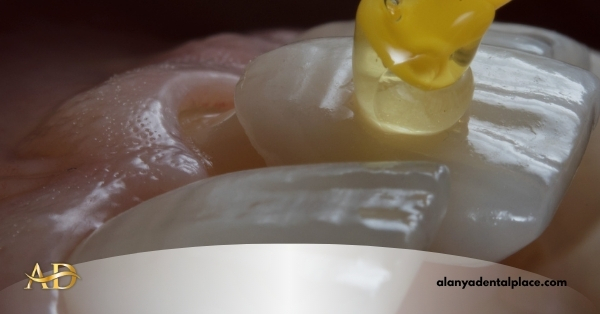
What is the main advantage of the treatment?
What Are Porcelain Veneers and What Technologies Are Used to Produce Them?
Porcelain laminates, commonly known as ‘leaf porcelain’ or ‘veneers’ in the international literature, are ultra-thin restorations bonded to the front surfaces of the teeth. The success of this treatment depends not only on the dentist’s experience but also on the quality and translucency of the material used.
A natural tooth is not made up of a single colour. The parts of the tooth closer to the root are more opaque and darker, whilst the cutting edges (incisal edges) are more translucent. In the aesthetic restorations carried out at our Alanya dental clinic, we use feldspathic porcelain or E-max (lithium disilicate) blocks – a type of reinforced glass-ceramic – which can perfectly replicate this natural colour transition. These materials reflect light in exactly the same way as natural tooth enamel, resulting in a vibrant, three-dimensional and dynamic appearance rather than an artificial ‘matt white’ finish.
Free Quote
Get a free quote for porcelain veneers in just 15 minutes.
In Which Cases Are Porcelain Veneers Used? (Indications)
Porcelain veneers are versatile restorations that address many aesthetic concerns in a single treatment. However, not every patient or every tooth structure may be suitable for this procedure. Porcelain veneer treatment is an ideal solution in the following situations:
Permanent Discolouration: Deep intrinsic stains that cannot be lightened by bleaching, caused by the use of antibiotics (tetracycline), excessive fluoride (fluorosis) or root canal treatment.
Closing Gaps Between Teeth (Diastema): For patients who do not wish to undergo orthodontic treatment (braces), this procedure is used to close gaps between the front teeth for aesthetic reasons.
Minor Misalignments and Rotations: For the correction of mild, minor misalignments (commonly known as ‘instant orthodontics’).
Broken and Worn Teeth: Restoring teeth that have had their tips broken off as a result of trauma, or whose length has been reduced due to wear over time, to their original shape and length.
Enamel Defects (Amelogenesis Imperfecta): Genetic conditions in which the enamel—the outermost layer of the tooth—exhibits structural developmental abnormalities that compromise aesthetics.
Smile Design Makeover: When teeth lose their former vibrancy due to ageing and the smile line is no longer able to complement the aesthetics of the lips (anti-ageing dentistry).
Contents
Alternative Treatment
Porcelain Veneers, Zirconium or Composite?
In cosmetic dentistry, there is no single ‘best’ material; rather, there is the ‘most suitable’ material depending on the patient’s needs, occlusal dynamics and budget. As one of Turkey’s leading centres, we consider it our duty to provide our patients with the most transparent information throughout their dental treatment processes in Antalya.
Our specialists at Antalya Dental Place are ready to examine your teeth and offer you the most suitable and long-lasting option.
The Porcelain Veneer Treatment Process in Antalya and Alanya: What to Expect Day by Day?
This is the most exciting stage of the process. When you visit our clinic, we take detailed intraoral and extraoral photographs, digital impressions using 3D intraoral scanners, and panoramic X-rays. Our dentist will analyse your facial proportions (the golden ratio), lip symmetry and gum levels (zenith points). You will see the anticipated result either on a computer screen or in real time in the mirror using a special material called a ‘mock-up’ (temporary model) applied to your teeth – all without any work being done on your teeth yet. There are no surprises.
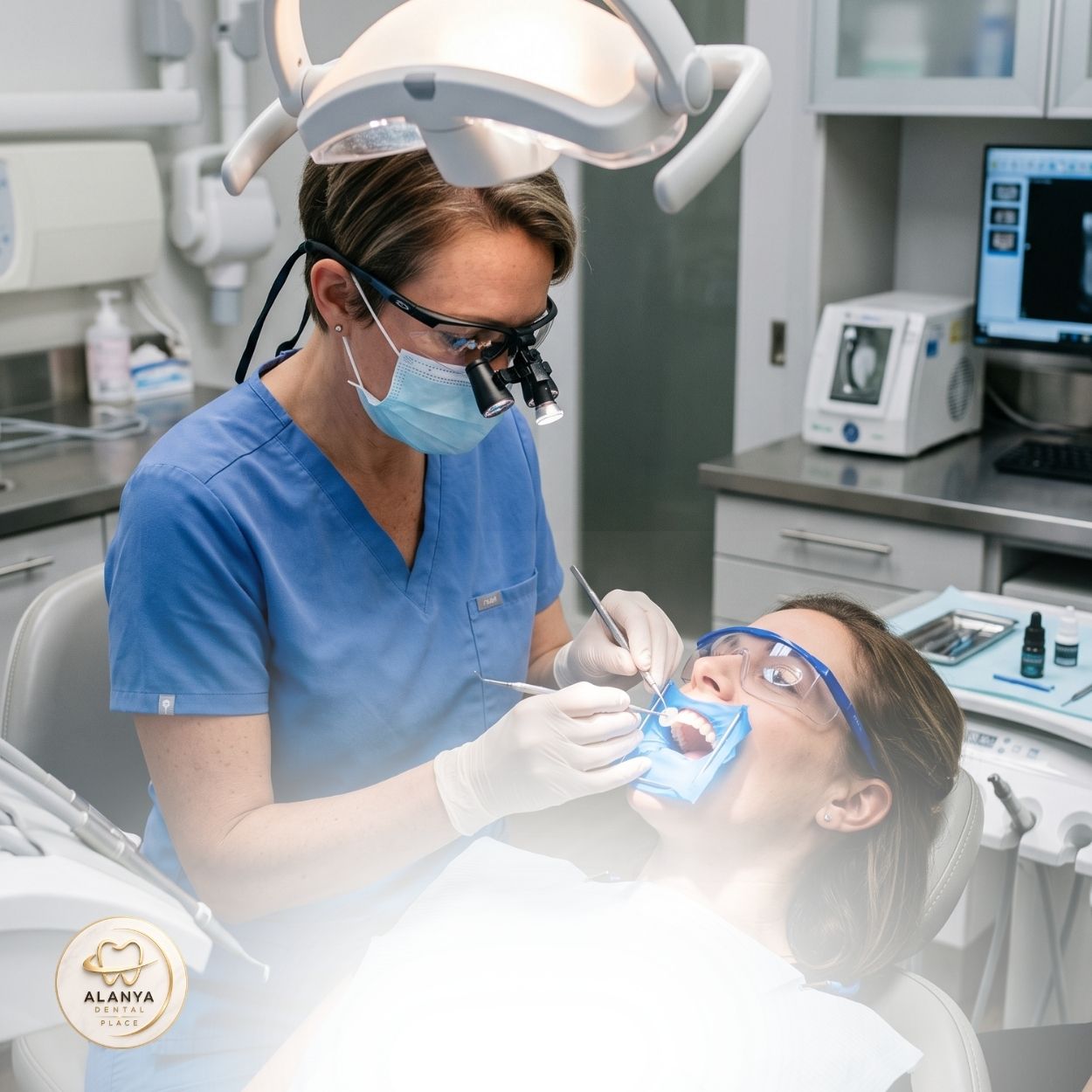
The procedure begins once you have given your approval for the smile design. Local anaesthetic is administered to the relevant area (you will feel absolutely no pain or discomfort). Only the front surfaces of the teeth are ground down by a few millimetres (0.3–0.5 mm). In some cases, the teeth are not touched at all. Instead of traditional ‘putty’ impressions, a flawless 3D copy of your teeth is taken using digital intraoral scanners and sent to the ceramic laboratory within seconds. Before you leave the clinic, your temporary veneers are fitted to protect your prepared teeth and ensure a natural appearance.
Our specialist ceramic technicians produce the veneers—designed digitally—by milling or shaping E-Max blocks using CAD/CAM technology or by hand. At this stage, the tooth’s microstructure, incisal translucency and natural surface irregularities (texture) are meticulously crafted one by one. Meanwhile, you can enjoy the stunning natural beauty of Alanya or Antalya and make the most of your holiday.
At the clinic, your temporary veneers will be removed and your permanent porcelain veneers will be fitted to your teeth for a trial. The colour, fit and bite will be checked. Once you have approved the final result in the mirror, we will proceed to an extremely precise bonding process known as ‘cementation’.
Bonding the veneers is a much more technical and meticulous chemical procedure than that used for standard crowns. Using special light-curing resin cements, the veneers are effectively chemically fused to your tooth enamel. There is no risk of the veneers coming loose after the procedure.

Why Should You Choose Us?
Cosmetic dentistry is much like a delicate work of architecture; the result depends not only on the materials used, but also on the experience of the hands that work with them. At our Alanya Implant Centre and Cosmetic Clinic, which serves as a benchmark both across Turkey and on the international stage, we offer you the following:
Multidisciplinary Approach: We work in close collaboration not only with prosthodontists, but also with periodontists and oral and maxillofacial surgeons who specialise in gum aesthetics. We are fully aware that without ‘pink aesthetics’ (gum contouring), ‘white aesthetics’ (porcelain restorations) will not look their best.
Original Certified Materials: We use materials that are biocompatible with the human body, internationally recognised (such as Ivoclar Vivadent E-max, etc.), and are FDA and CE approved, complete with barcodes.
Advanced Sterilisation Protocols: We prioritise patient safety above all else with our automated ‘Class B’ autoclaves and infection control procedures that comply with international accreditation standards.
Principle of Transparency: We are aware that using the term ‘100% “lifetime” guarantee’ in relation to any medical procedure is not in line with medical ethics. However, provided that the right patients are selected, medical practice is carried out to the highest standards, and you maintain good oral hygiene, we can assure you that you will be able to use your laminates for many years to come.

Don’t put your health at risk. Contact us for reliable, transparent and evidence-based cosmetic dentistry.

Rating 4.9
Factors Affecting the Price of Porcelain Veneers
Our patients frequently enquire about the prices of porcelain veneers in Antalya or the costs of cosmetic dental treatment in general. Pricing cannot be based on a fixed package as each person’s anatomy is unique. The factors that directly influence prices are as follows:
Type of Porcelain Used
Number of Teeth to be Treated
Clinical and Laboratory Technology
Additional Treatment Requirements

Patients' Concerns, Expectations and Medical Facts
Many of our patients are hesitant to undergo cosmetic treatments due to misinformation they have heard in the past or negative experiences they have had. In line with our principle of transparency, we would like to share with you the most common concerns we hear at our clinic, along with the facts:
Will my teeth stay as tiny as a cat’s?
Absolutely not. This misconception stems from the confusion between porcelain veneers and traditional zirconia/metal-supported crowns. With porcelain veneers, only the front surface of the tooth is ground down by about half a millimetre (the thickness of a lens). The back, sides and cutting edges remain untouched.
I’m worried it might look artificial and over the top.
Smile design is not a mass-produced process. Your facial expressions, the curve of your lips, your skin tone and your gender are the cornerstones of the design. ‘Very white and straight’ teeth do not suit every face. Our aim is not to make people say ‘her teeth look artificial’, but rather ‘what beautiful teeth she has’. Through the interplay of surface texture and translucency, natural tooth enamel is replicated exactly.
Will my laminates come loose whilst I’m eating?
Veneers are not bonded using conventional adhesives. Using a highly specialised technique known as ‘adhesive cementation’, they bond chemically directly to the tooth enamel (the bond strength is incredibly high). When the porcelain fuses with the enamel, it effectively becomes a single piece. Unless you use your teeth to crack nuts, the likelihood of them coming loose is virtually nil.
Frequently Asked Questions
Questions About Treatment
How long do porcelain veneers last?
The clinical lifespan of porcelain veneers varies depending on the quality of the material used, the dentist’s precision in cementation (bonding) and, most importantly, the patient’s personal oral hygiene. Scientific research and clinical follow-ups indicate that porcelain veneers, when fitted for the correct indications and well maintained, can be used without any problems for between 10 and 15 years, or even much longer. To extend this lifespan, it is essential to brush twice a day, use dental floss or an interdental brush, and attend regular check-ups with your dentist every six months.
Will I feel any pain when having porcelain veneers fitted?
No, you will certainly not feel any pain or discomfort. Before the procedure, a local anaesthetic is administered to the area where the teeth are to be treated. The very slight abrasion (0.3–0.5 mm) to be carried out on the front surface of the teeth is completely painless whilst you are under anaesthetic. Thanks to the temporary veneers fitted after the impressions have been taken, any sensitivity to hot or cold that might otherwise develop in the teeth is prevented, even after the anaesthetic has worn off. The whole process is extremely comfortable.
Do laminates yellow or change colour over time?
One of the greatest advantages of porcelain veneers is that they do not discolour or yellow. The surface of porcelain veneers is fired at high temperatures to achieve a glass-like, smooth (glazed) finish. Thanks to this smooth surface, substances that stain natural teeth – such as tea, coffee, red wine, cigarettes or coloured fruit juices – cannot adhere to the surface of the porcelain veneer. The tooth colour you selected with your dentist on the first day will retain the same brightness and whiteness, even as the years go by.
In what circumstances, and on which teeth, can veneers not be fitted?
Although it is an excellent aesthetic solution, there are certain contraindications (situations in which it should not be used). In patients who do not have sufficient enamel tissue remaining on their teeth (as the veneer bonds to the enamel, whilst its bond strength to dentine is weak), in patients with severe crowding (as this would require excessive tooth reduction), in cases of reverse occlusion (Class 3 malocclusion) where the lower jaw is significantly protruding, and in cases where there are extensive cavities and insufficient sound tooth structure, porcelain veneers cannot be applied. In such cases, a zirconia crown or orthodontic treatment should be the preferred option.
Can people who grind their teeth at night (bruxism) have porcelain veneers fitted?
Bruxism (teeth clenching and grinding) is a condition that exerts enormous forces on the temporomandibular joint and the teeth. In cases of severe, uncontrolled bruxism, there is a risk of porcelain veneers breaking or cracking. However, this does not mean that people who clench their teeth cannot have veneers fitted. At our clinic, once smile design and veneer treatment have been completed, we prepare custom-made night guards for our patients, made from hard acrylic, to be worn whilst sleeping. Provided these guards are used regularly, patients who clench their teeth can also safely use porcelain veneers.
Can veneers be used as an alternative to braces for crooked teeth?
If the misalignment of the teeth is mild or moderate, these irregularities can be visually masked to perfection with porcelain veneers, and the patient can achieve neatly aligned teeth in a short space of time. However, if the misalignment is very severe, it will be necessary to increase the amount of ‘reduction’ significantly (approaching the pulp/nerve tissue) in order to align the teeth. This is not medically advisable. In severe cases, the most appropriate medical approach is to first use a short-term clear aligner (Invisalign) or braces, followed by a cosmetic touch-up using thin porcelain veneers.
What happens if the laminates break or fall off?
It is virtually impossible for a porcelain veneer that has been chemically bonded to the enamel to fall out spontaneously. Loss is generally caused by trauma or incorrect dental or bonding techniques. However, in the event of a hard impact (a fall, an accident) or when biting into hard-shelled foods such as hazelnuts or walnuts, the veneer may, albeit rarely, break or crack. In such a situation, the fractured veneer is not repaired in the mouth. A new digital impression of the affected tooth is taken, and a new veneer is fabricated in the laboratory specifically for that single tooth, which is then bonded back into place within a short time.
What should I bear in mind after having porcelain veneers fitted?
It is normal to experience very mild sensitivity to hot and cold in your teeth for the first few days following treatment; this will subside on its own within a short time. In your daily life, you should take the same care of your veneers as you do of your natural teeth. You should brush them twice a day with a low-abrasive fluoride toothpaste using gentle strokes, and you must use dental floss to clean between your teeth. You must absolutely avoid bad habits that treat your teeth as ‘tools’, such as biting pens, biting your nails, or tearing open packets or threads.
Are there any restrictions whilst eating? (For example, can I take a bite of an apple?)
Once the veneers have been cemented (bonded) in place, they reach their full strength. There are no restrictions on your normal eating habits; you can comfortably bite into and tear apart foods such as apples, sandwiches and meat with your front teeth. There is no need to worry. However, you must absolutely avoid extreme, traumatic actions that you should not even do with your own natural teeth, such as cracking hard-shelled nuts, opening bottle caps, or carelessly biting into olive or plum stones. Such actions can crack your natural enamel and may also chip the porcelain.
How many days does the treatment process take in total?
Thanks to our clinic’s equipment and digital dentistry (CAD/CAM) infrastructure, the process is completed very quickly. For a patient visiting our clinic for dental treatment in Alanya or Antalya, a standard porcelain veneer procedure is completed in an average of 5 to 7 days. This process covers the entire sequence, from the initial consultation and digital scanning through to the laboratory production stage and the final bonding procedures. In just 3–4 appointments, you will have a smile that will last for years.
Can I carry on with my normal life whilst wearing temporary laminates?
Yes, you may carry on as normal. On the day your teeth are prepared, you will be fitted with ‘temporary veneers’ made from composite or acrylic material, which look just like your natural teeth from an aesthetic point of view and protect your teeth from sensitivity. This means you will have no aesthetic concerns and will not be cut off from your social life. However, as the temporary veneers are not bonded with adhesives as strong as those used for the permanent porcelain veneers (so that they can be easily removed when the permanent ones are fitted), it is recommended that you take care not to bite into hard foods or eat sticky foods during this 3–4-day waiting period.
Will my natural tooth underneath the porcelain veneer go bad?
As the porcelain veneer itself is an inorganic glass-ceramic, it is impossible for it to decay. However, the underlying tooth structure retains its vitality. If the dentist has bonded the veneers to the gum line with a perfect, flush edge fit, there will be no gap between the porcelain and the tooth through which bacteria can seep, and the tooth will not decay. However, if the patient neglects their oral hygiene, decay may begin at the gum line where the veneer margin ends, or on the back surfaces of the teeth. With good oral care, the teeth beneath the veneers will remain healthy for life.
What is the difference between E-max veneers and porcelain veneers?
In fact, both are types of veneer. ‘Porcelain veneer’ is a general term. ‘E-max’ (lithium disilicate), on the other hand, is the brand name of a superior, specialised glass-ceramic material developed by Ivoclar Vivadent, which is currently used in the manufacture of veneers. Compared to traditional feldspathic porcelain laminates, they offer significantly superior aesthetic properties, light transmission and, in particular, fracture resistance. At our dental practice in Alanya, we prioritise the use of E-Max laminates for anterior aesthetics as they combine strength and beauty.
Can I see the result in advance during a smile design consultation?
Absolutely yes, and this is the most crucial part of the process. Thanks to a temporary application known as a ‘mock-up’, the design is transferred from the computer to your mouth using a special aesthetic resin, before any cutting or grinding has been carried out on your teeth. You can stand in front of a mirror and see the shape and length of your new teeth, as well as how they harmonise with your face, in real time; you can discuss them with your dentist and, if you wish, have the length or angles adjusted on the spot. The anxiety of wondering, ‘What will my teeth look like?’ is completely eliminated.
Which is better: zirconia or porcelain veneers?
There is no definitive answer to this question, as the two materials serve different purposes. If you are only unhappy with the shape and colour of your teeth, do not have any major cavities, and wish to achieve the highest level of natural-looking aesthetics with minimal intervention (by polishing only the front surfaces), porcelain veneers are by far the better option. However, if you have had root canal treatment, if your tooth has previously been fully prepared and crowned, if there is significant tooth structure loss, or if the procedure is to be carried out on a back molar, a zirconia crown is a medical necessity as greater strength will be required.
International Sources and Scientific References
- This content has been compiled in accordance with the principles of medical ethics, drawing on scientific research and publications from the world’s leading authorities in cosmetic dentistry and healthcare:
American Dental Association (ADA) – Veneers: https://www.mouthhealthy.org/en/az-topics/v/veneers
European Federation of Periodontology (EFP) – Periodontal Health and Aesthetics: Guidelines on the biological compatibility of periodontal tissues with restorative materials.
National Institute of Dental and Craniofacial Research (NIDCR) – Tooth Decay and Restoration: Long-term clinical success evaluations of ceramic restorations.
NHS Dentistry (UK) – Dental Veneers Guide: Indications for veneers and care guidelines for patients.
Mayo Clinic – Dental Veneers Overview: Risks, benefits and expectations in cosmetic dentistry.
Do you have any other questions?