Dental Crown Treatment in Turkey
For your broken, decayed, or discolored teeth, we offer zirconia and porcelain dental crown treatments at our clinics in Antalya and Alanya, using digital CAD/CAM technology and a team of experienced dentists. Regain your smile with confidence using the same international-brand materials—at prices well below those in Europe.
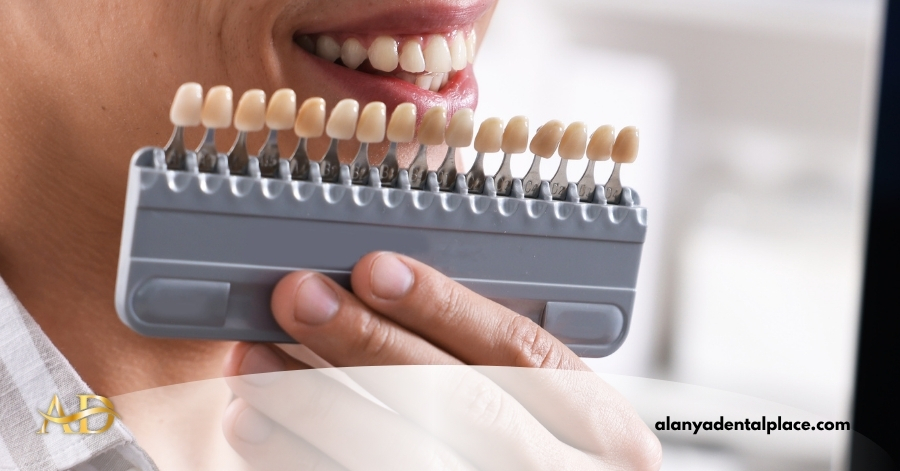
What Is a Dental Crown, and Who Is It Suitable For?
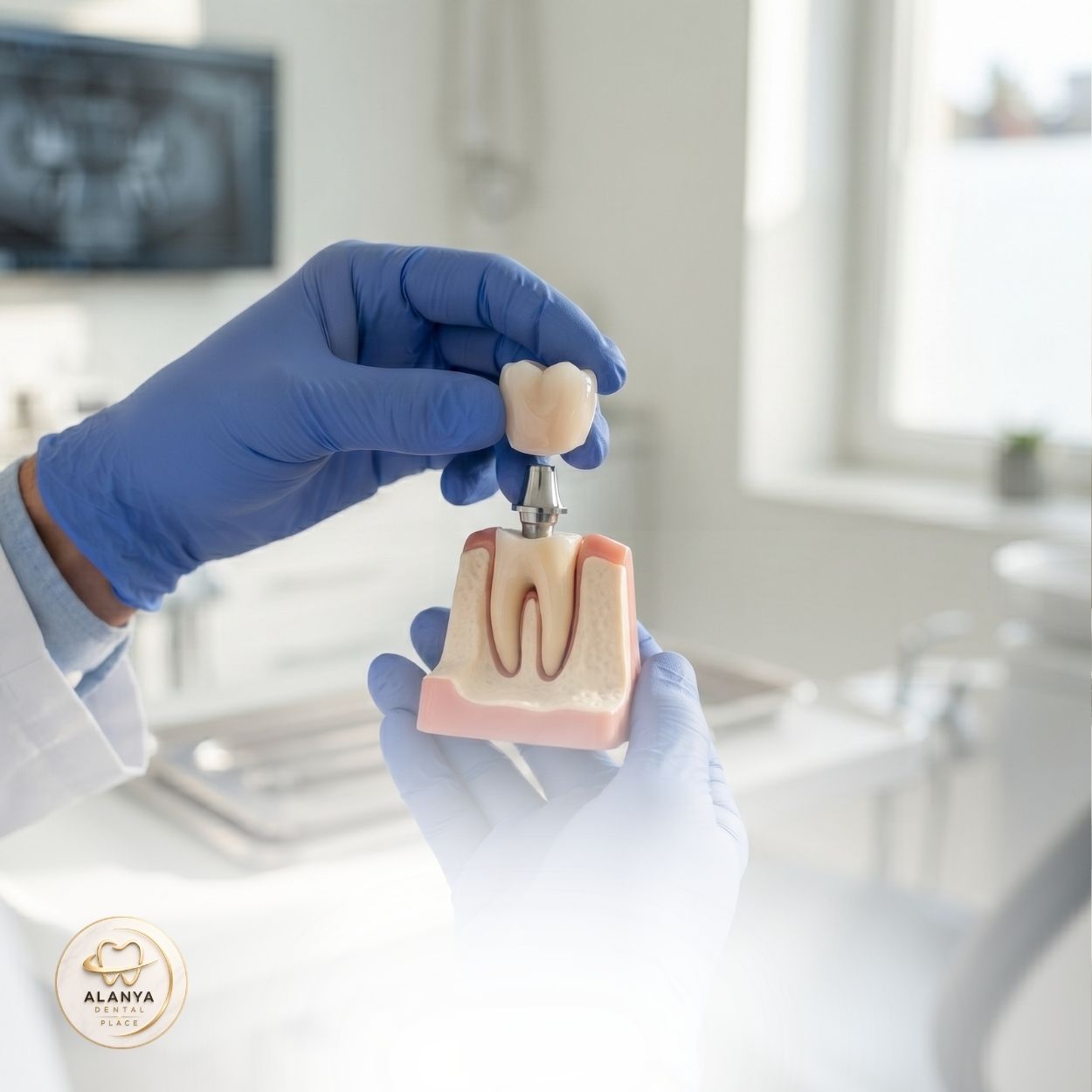
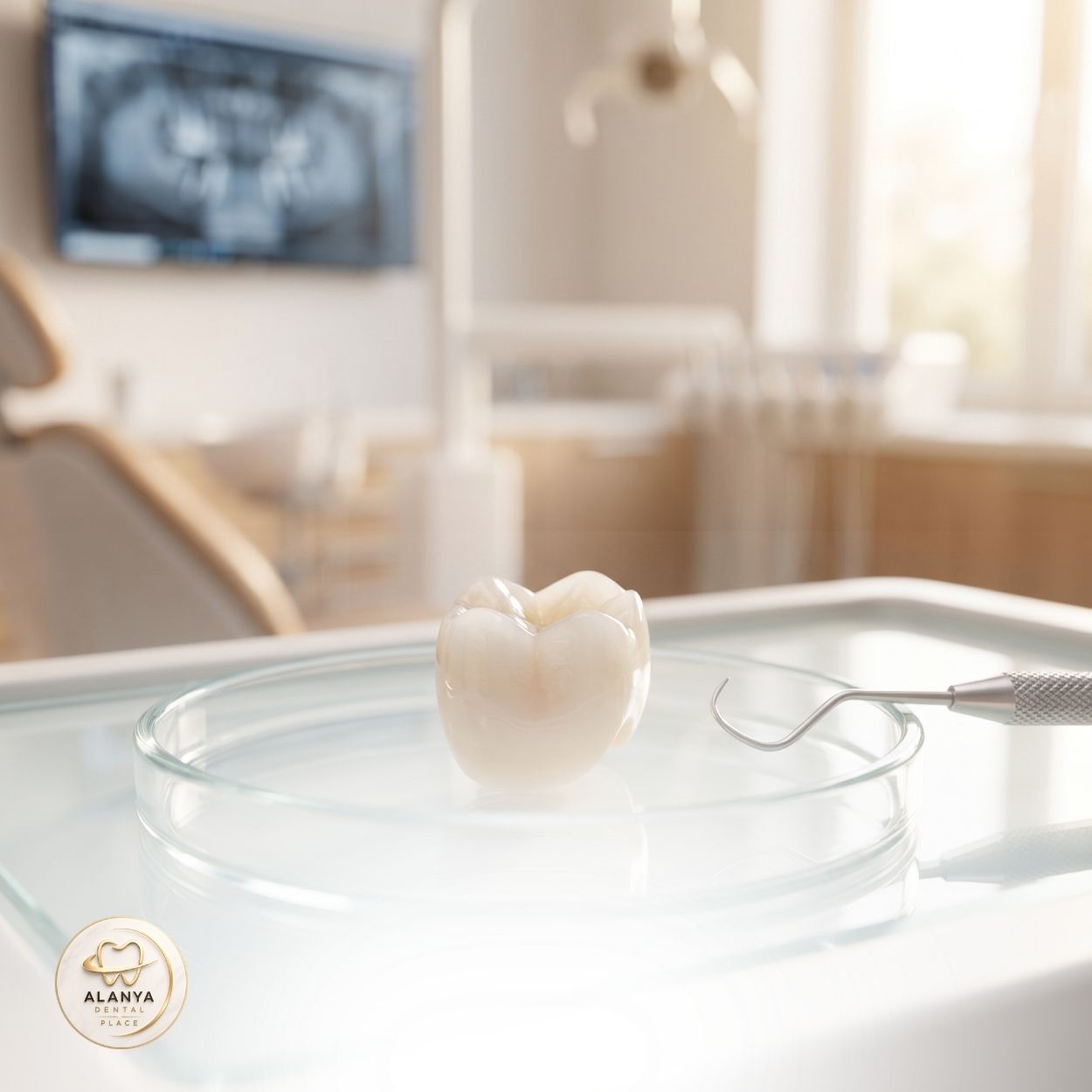
A dental crown—also commonly known as a “cap” or “crown”—is a custom-made, fixed prosthetic restoration that covers the entire visible surface of a tooth that is decayed, broken, worn down, or has undergone root canal treatment.
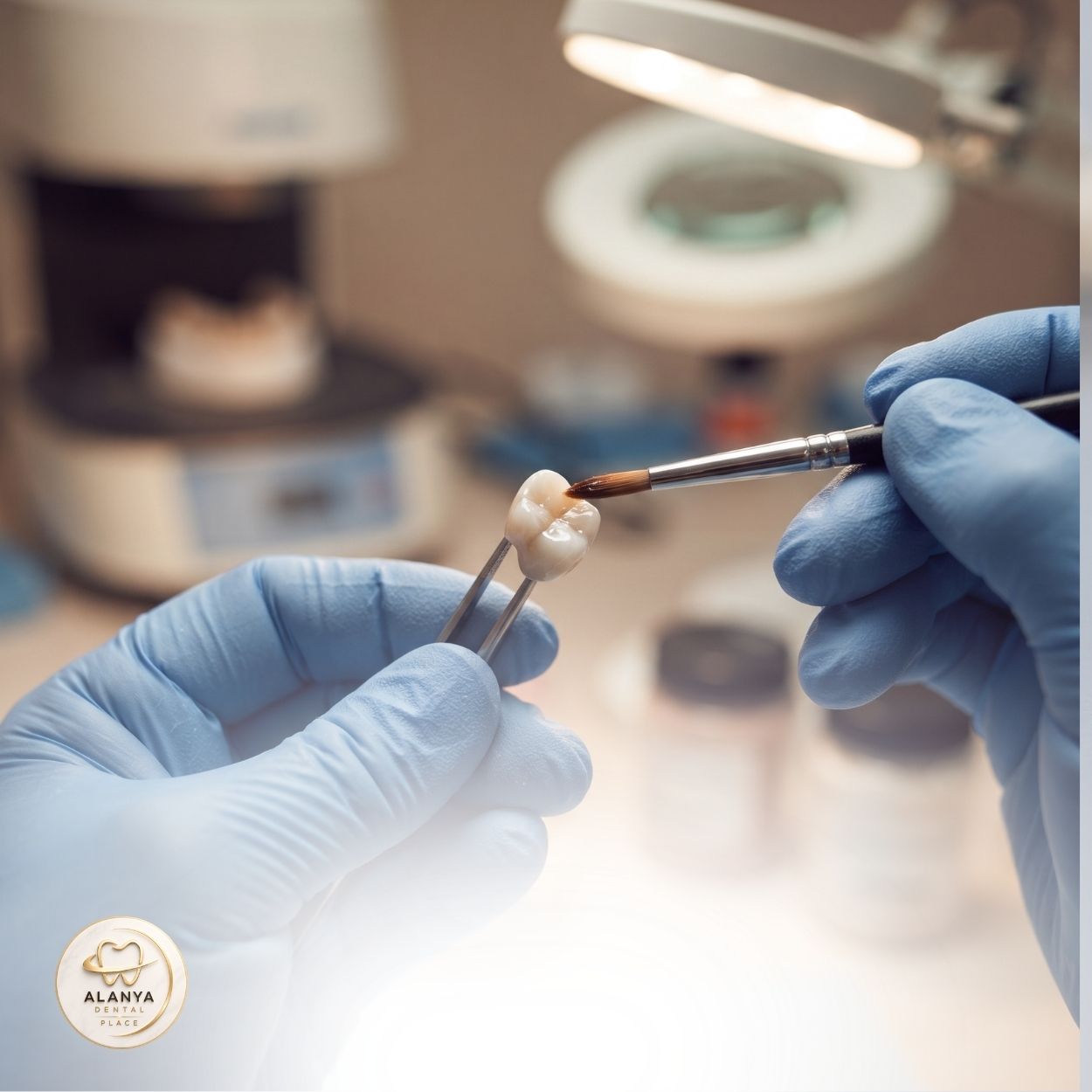
Before placing the crown, the dentist removes the damaged tissue from the tooth and shapes the tooth by removing a thin layer from its surface to ensure the crown fits properly. After this step, the data obtained using a digital scanner or traditional impression material is sent to the laboratory; the crown is then fabricated to match the color, shape, and size of the adjacent teeth.
A dental crown is not merely a cosmetic procedure. It is used to address various clinical needs, such as protecting teeth that have become brittle after root canal treatment, providing support to tooth structure weakened by large fillings, restoring functionality to cracked or broken teeth, and correcting teeth with discoloration or irregularities in shape. A dental crown can be placed as long as the tooth root and the surrounding bone tissue are sufficiently strong; in cases where the root structure is inadequate, the dentist will consider alternative solutions, such as an implant-supported crown.
A dental crown differs from other prosthetic treatments, such as bridges, veneers, and implants. While adjacent teeth are used as supports in a bridge, a veneer covers only the front surface of the tooth and requires less tooth structure to be removed.
A dental implant, on the other hand, is a surgical solution that replaces the root of a missing tooth and is completed by placing a crown on top of it. The dentist determines which treatment is appropriate following an examination and radiographic evaluation.
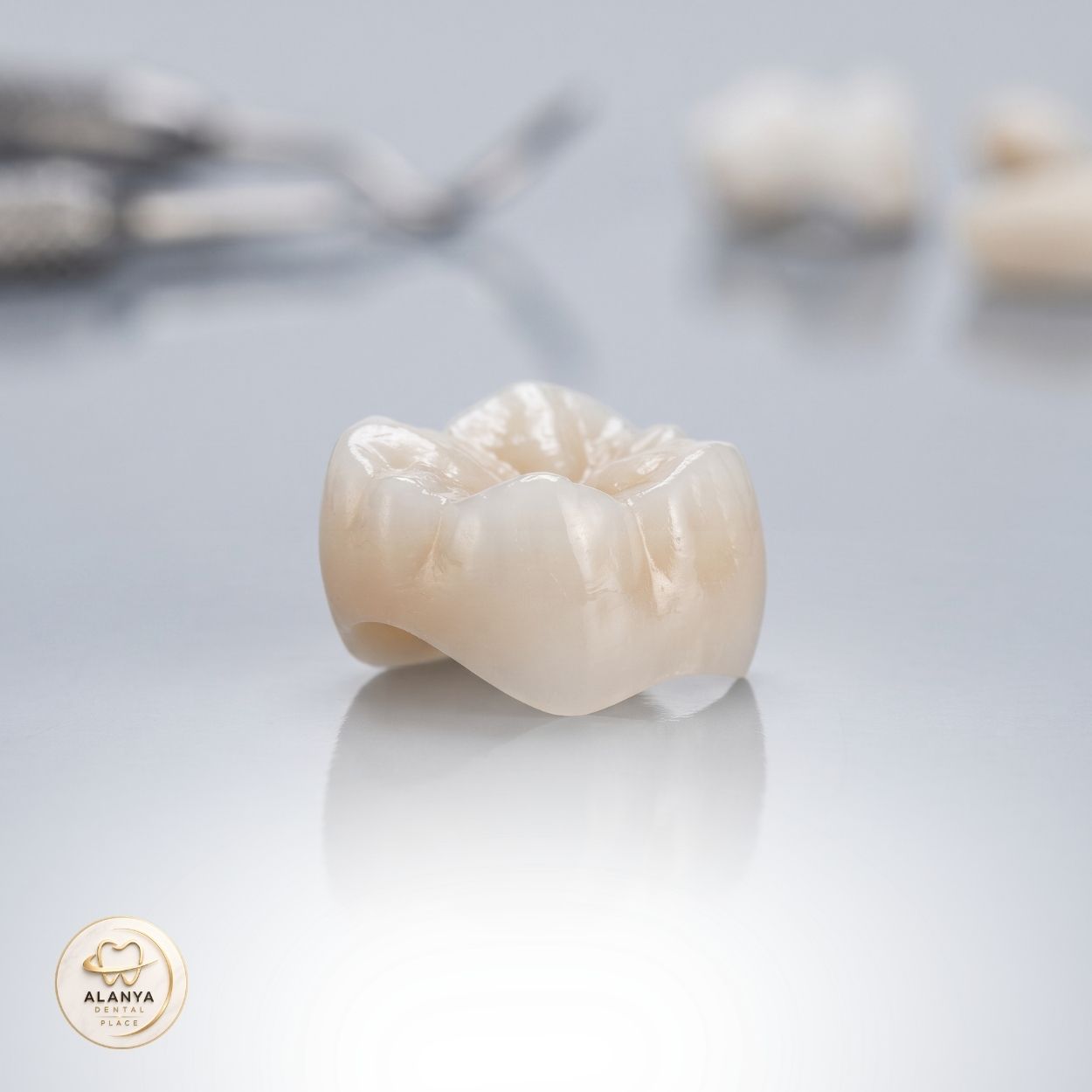
Types of Dental Crowns and a Comparison of Materials
The material used in dental crown treatment varies depending on the tooth’s location, the force of chewing, and the patient’s aesthetic expectations. In the table below, we have compared the five types of crowns we most frequently use at our clinics in Antalya and Alanya.
* Lifespans are approximate values based on data from the material manufacturer and general clinical observations; they may vary depending on oral hygiene, chewing habits, and regular checkups. No guarantee of specific results is provided.
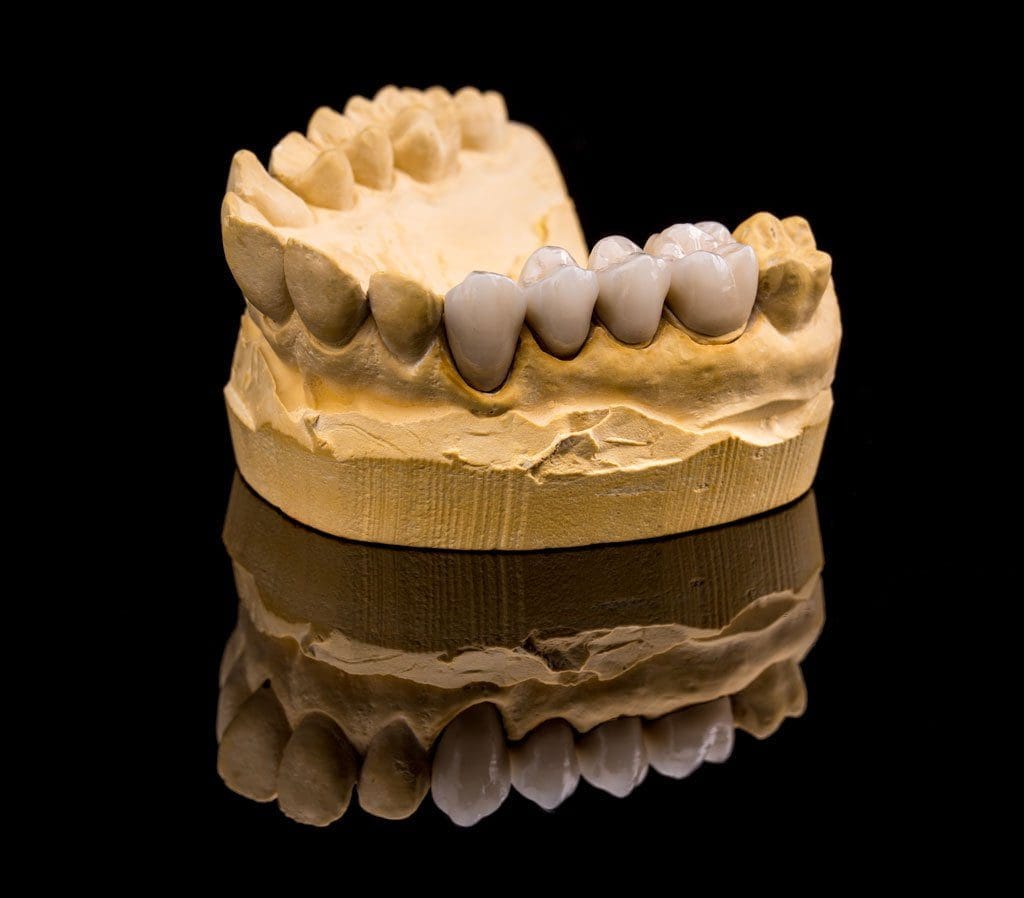
It contains no metal, poses no risk of allergic reactions, does not cause a gray discoloration on the gums, is highly resistant to chewing forces, and offers light transmission similar to that of natural tooth enamel.
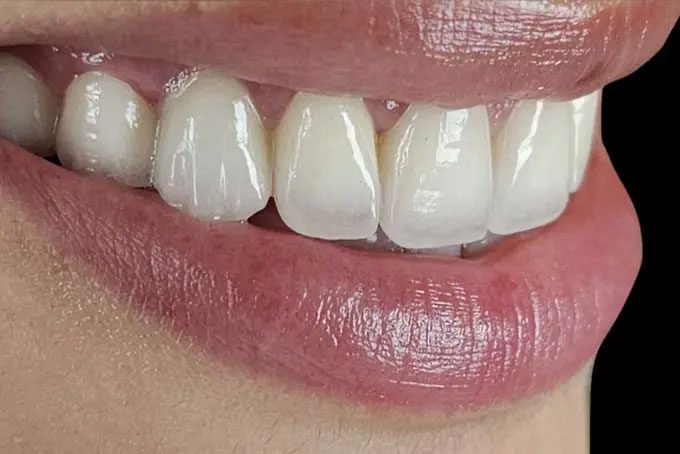
Compared to porcelain veneers, the production process requires more digital infrastructure; therefore, the laboratory cost is slightly higher than that of PFM. As with all restorations, there is a risk of fracture if the patient bites down on extremely hard objects.
🌍 Dental Tourism
Why Should You Get a Dental Crown in Antalya and Alanya?
Significant Cost Advantage
In countries such as the United Kingdom, Germany, and France, the cost of dental crowns is quite high due to the costs of materials and labor. In Turkey, services can be provided at significantly more affordable prices using the same international brands of materials, thanks to differences in clinic operating and labor costs.
Proven Medical Tourism Infrastructure
In 2023, Turkey hosted more than 1.6 million foreign visitors seeking medical care. This scale has enabled clinics to gain experience in handling international patients and to establish a multilingual service infrastructure.
Combining Treatment with a Vacation
Antalya and Alanya are tourist destinations located on the Mediterranean coast. While the laboratory process for your dental crown treatment is underway, you can make the most of your time by enjoying the beach, historic sites, and culinary offerings.
Digital Dentistry
Our clinic uses CAD/CAM digital scanning, intraoral 3D imaging, and computer-aided smile design. These technologies shorten the impression-taking process and improve the fit of the crown in the mouth.
International Material Standards
In the production of zirconia and ceramic crowns, we work with well-known laboratory brands used in dentistry worldwide. Material quality is subject to international standards, regardless of the country where the treatment is performed.
End-to-End Patient Support
Services such as airport transfers, accommodation assistance, and private driver/guide support during your treatment allow you to focus not just on a single tooth, but on your entire travel experience.
💶 Price Comparison
Prices for Single-Tooth Zirconia Crowns by Country
Price ranges are based on general market observations and do not constitute a binding offer; the final price will be provided in writing following a digital examination and treatment plan.
Dental Specialties and the Technology Used
Our clinic’s team of dentists has years of clinical experience in prosthetic dentistry and cosmetic dentistry. Treatment planning is tailored to each patient’s individual oral anatomy, jaw alignment, and aesthetic expectations; we do not follow a standard template.
Patient safety is ensured through the strict adherence to sterilization protocols (autoclaves, single-use supplies). Each patient receives detailed information prior to treatment, and potential risks are communicated transparently.
Key technologies used:
📋 Before Treatment What You Need to Know
Myths and Facts About Dental Crowns
Let's 🔍 clarify everything.
Crowns made in Turkey are produced from low-quality materials.
At our clinic, we use the same international laboratory brands and zirconia blocks that are used in dentistry worldwide. Price differences stem from operating and labor costs, not the materials themselves.
A crown made in a short amount of time is bound to be sloppy.
Digital CAD/CAM technology reduces production time while increasing precision compared to traditional methods. This reduction in time is the result of a well-planned and efficient laboratory workflow.
A dental crown procedure is a painful process.
The procedure is performed under local anesthesia; most patients report no pain during the procedure, at most a slight sensation of pressure. Temporary sensitivity after the procedure is considered normal.
If I receive treatment in Turkey, I won’t be able to get support if I run into problems after returning to my country.
Your treatment is backed by a written guarantee, and you can continue to access our remote consultation service via WhatsApp or Telegram even after you return to your home country.
The fact that it's cheap means that quality has been sacrificed.
The main reason for the price difference is the variations in rent, labor costs, and overhead expenses between countries. The materials used and the clinical protocols followed comply with international standards.
Before and After Gallery

This section contains real before-and-after photos shared with the patients' consent.
Patient Reviews
It’s truly wonderful that there’s such a great clinic in Alanya! They speak English, German, Turkish, and Russian here. The clinic works with the world’s leading insurance companies. The clinic has departments for general dentistry, surgery, and dental implants. By the way, the implants are sourced from the world’s best manufacturers, including Turkish ones.
I had my teeth done a year and eight months ago. No one could believe the results. My dentist had magic hands. Today, I went to see another specialist for the first time, and everything went great. The clinic is fantastic; I highly recommend it to everyone.
Alanya Dental Place is a great company. The staff is attentive and caring. They do their work professionally and meticulously. This company gave me a smile, and I am very grateful to the entire staff. I highly recommend it to everyone—you won’t regret it.
I had 12 zirconia crowns made at this dental clinic, and the results exceeded all my expectations. The doctors were very professional and explained everything in detail at every stage of the treatment. The crowns look as natural as possible, are comfortable, and my bite feels just right. The procedure was performed with great care and to a high standard. The clinic has a pleasant atmosphere, and the staff is attentive and friendly. I am very satisfied with the results and highly recommend this dental clinic!
I’d like to thank the staff very much for their hard work; I was very pleased with the result. I was also very pleased with the staff. I will definitely recommend them to my friends. 10/10
It’s truly wonderful that there’s such a great clinic in Alanya! They speak English, German, Turkish, and Russian here. The clinic works with the world’s leading insurance companies. The clinic has departments for general dentistry, surgery, and dental implants. By the way, the implants are sourced from the world’s best manufacturers, including Turkish ones.
I had my teeth done a year and eight months ago. No one could believe the results. My dentist had magic hands. Today, I went to see another specialist for the first time, and everything went great. The clinic is fantastic; I highly recommend it to everyone.
Alanya Dental Place is a great company. The staff is attentive and caring. They do their work professionally and meticulously. This company gave me a smile, and I am very grateful to the entire staff. I highly recommend it to everyone—you won’t regret it.
I had 12 zirconia crowns made at this dental clinic, and the results exceeded all my expectations. The doctors were very professional and explained everything in detail at every stage of the treatment. The crowns look as natural as possible, are comfortable, and my bite feels just right. The procedure was performed with great care and to a high standard. The clinic has a pleasant atmosphere, and the staff is attentive and friendly. I am very satisfied with the results and highly recommend this dental clinic!
I’d like to thank the staff very much for their hard work; I was very pleased with the result. I was also very pleased with the staff. I will definitely recommend them to my friends. 10/10
Frequently Asked Questions About Dental Crowns
In everyday language, “dental veneer” and “dental crown” are generally used interchangeably; both terms refer to a fixed restoration that completely covers the visible surface of a tooth. Technically, a “crown” is the name for the natural part of the tooth above the root; an artificial covering placed over this area is also called a crown.
A veneer, on the other hand, is a thin covering applied only to the front surface of the tooth that requires less tooth reduction and should not be confused with a crown. Which treatment is right for you will be determined after an examination, based on the extent of the damage to your tooth.
In simple cases, treatment is usually completed within 5 days; in cases involving multiple teeth or more complex situations, it takes 7–8 days. On the first day, an examination and digital scan are performed, your tooth is prepared, and a temporary crown is placed. Once the laboratory process is complete, the permanent crown is fitted. The exact duration will be specified by your dentist in your treatment plan; we recommend that you plan your travel dates accordingly.
"Which is better" is a highly personal question with no single answer. Since zirconia crowns contain no metal, they do not cause a gray shadow on the gums and are resistant to high chewing forces; for this reason, they are frequently chosen for both front and back teeth. Metal-supported porcelain (PFM), on the other hand, is a more budget-friendly option, but a slight gray line may become visible along the gum line over time. Your dentist will recommend the most suitable material for you based on the location of your tooth and your aesthetic expectations.
Tooth preparation and crown placement are performed under local anesthesia; you will not feel any pain during the procedure, though you may experience a slight sensation of pressure at most. After the procedure, it is normal to experience temporary sensitivity in the tooth once the anesthesia wears off, and this usually subsides within a few days. If you experience severe or prolonged pain, it is recommended that you contact your dentist.
Depending on the material used and your oral hygiene habits, dental crowns can generally last between 8 and 15 years without any problems; with some materials, such as monolithic zirconia, this lifespan may be even longer. Regular dental checkups, good oral hygiene, and avoiding biting on hard objects are the most important factors in extending the life of a crown. A specific duration cannot be guaranteed; results vary from person to person.
The primary reason for the price difference is not the quality of materials, but rather the operating, rent, and labor costs that vary from country to country. While clinics in Turkey use the same international brands of zirconia and ceramics, their overall operating costs are lower than those in Western European countries. As a result, treatments of the same quality can be offered at significantly more affordable prices.
A standard crown procedure typically requires two clinic visits: during the first visit, an examination, digital scan, tooth preparation, and placement of a temporary crown are performed; during the second visit, the permanent crown is placed and a fit check is conducted. If more than one tooth or additional treatment (such as root canal therapy) is required, the number of visits may increase depending on the plan determined by your dentist.
Yes, you should brush your crowned tooth at least twice a day, just like your other teeth. Using a soft-bristled toothbrush to clean the gum line around the crown and gently flossing will help preserve both the life of the crown and your gum health. Hard-bristled toothbrushes and abrasive toothpastes can damage the surface of the crown over time.
The crown itself does not decay, but decay can develop if the natural tooth structure around the edge of the crown is not cleaned thoroughly enough. Regular brushing, flossing, and at least one dental checkup per year significantly reduce this risk. If you notice bad breath or swollen gums, it is recommended that you consult your dentist without delay.
Get Your Free Treatment Plan
Fill out the form, and our dentist will get back to you within 24 hours with a personalized treatment plan and price quote.
Things to Keep in Mind After Dental Crown Treatment
After dental crown treatment, the dentist must instruct the patient on proper oral hygiene techniques. If you experience any discomfort after your crown treatment is complete, you should consult your dentist.
For individuals with sensitivity issues in the nerves inside their teeth, these symptoms may persist even after crown treatment. If you experience sensitivity when consuming hot or cold foods or beverages after having a crown placed, it is recommended that you consult your dentist.
In some cases, a dark line may appear on the tooth in patients who have received metal alloy crowns. Since this dark line is the metal crown itself, this appearance is normal.
Teeth with crowns offer no protection against either tooth decay or gum disease. Therefore, you must not neglect your oral hygiene and cleaning routine, even though you have had crown treatment. It is important to follow the dentist’s recommendations regarding oral and dental care.
To keep your teeth healthy and aesthetically pleasing after dental crown treatment, it is recommended that you brush them regularly.
If you would like to learn more about dental crowns, you can read this article.
What Are the Different Types of Crowns?
Crown types are made from various materials that allow everyone to choose based on their own dental structure. In the past, when dentistry was not as advanced as it is today, crowns made of metal and gold were the most common.
However, today crown treatment can be performed using more aesthetic and whiter-looking materials. The following types of crowns stand out:
Metal-supported porcelain crowns,
Zirconia-supported porcelain crowns,
Empress porcelain crowns,
Porcelain laminate crowns
Each type of dental crown material has different properties and advantages. Today, porcelain laminate crowns have become increasingly popular. Those who wish to improve the aesthetic appearance of their teeth can consult their dentists to choose the crown option that best suits their needs.
Although the materials used in crowns vary in composition, their average lifespan ranges from 5 to 7 years. However, to use crowns for a longer period without issues, regular daily care and routine checkups must be maintained.