Hooked Dental Prosthesis in Turkey
Tooth loss is not just an aesthetic loss; it also means a loss of chewing function, speech clarity, and facial support. One of the most established and widely used methods to compensate for this loss is the anchor denture. At Alanya Dental Place, we meticulously offer this treatment to our local patients in Antalya and Alanya, as well as to medical tourism guests from the UK, Germany, Russia, Ukraine, Scandinavian countries, and the Gulf countries.
Anchored dentures are a type of removable partial denture that attaches to existing healthy teeth with the help of metal or aesthetic hooks and can be removed and reinserted by the patient on a daily basis. They offer a prominent solution for addressing the functional and aesthetic consequences of tooth loss, especially in cases where implant treatment is not preferred or cannot be applied for medical reasons.
Would you like to find out if hooked dental treatment is right for you?
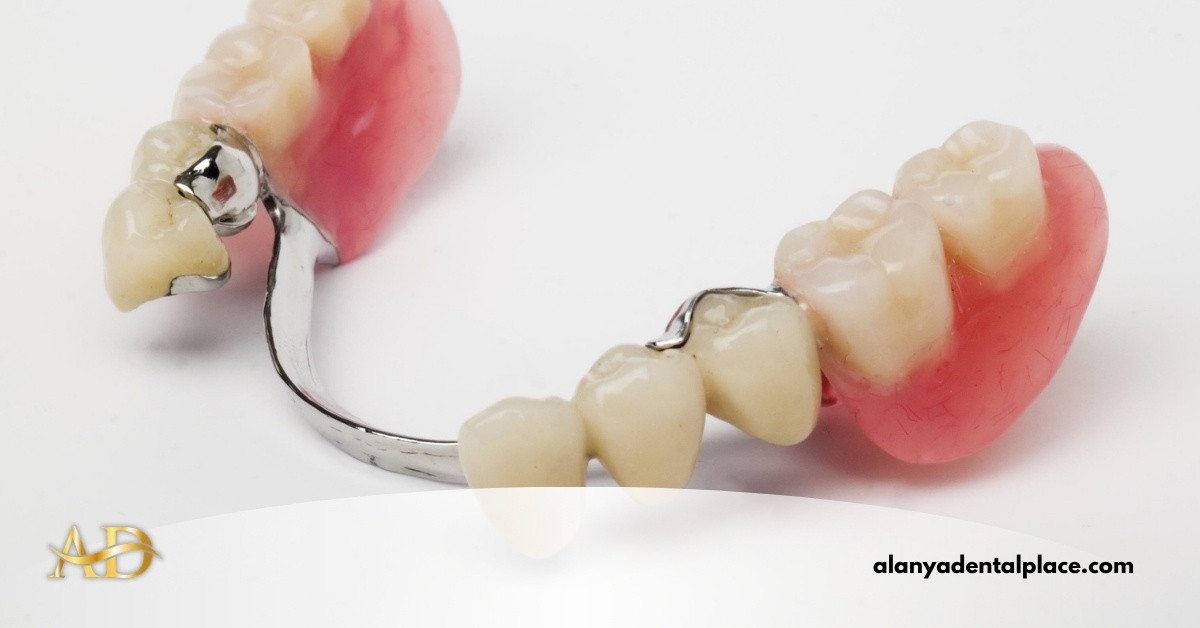
What is a hook-on dental prosthesis?
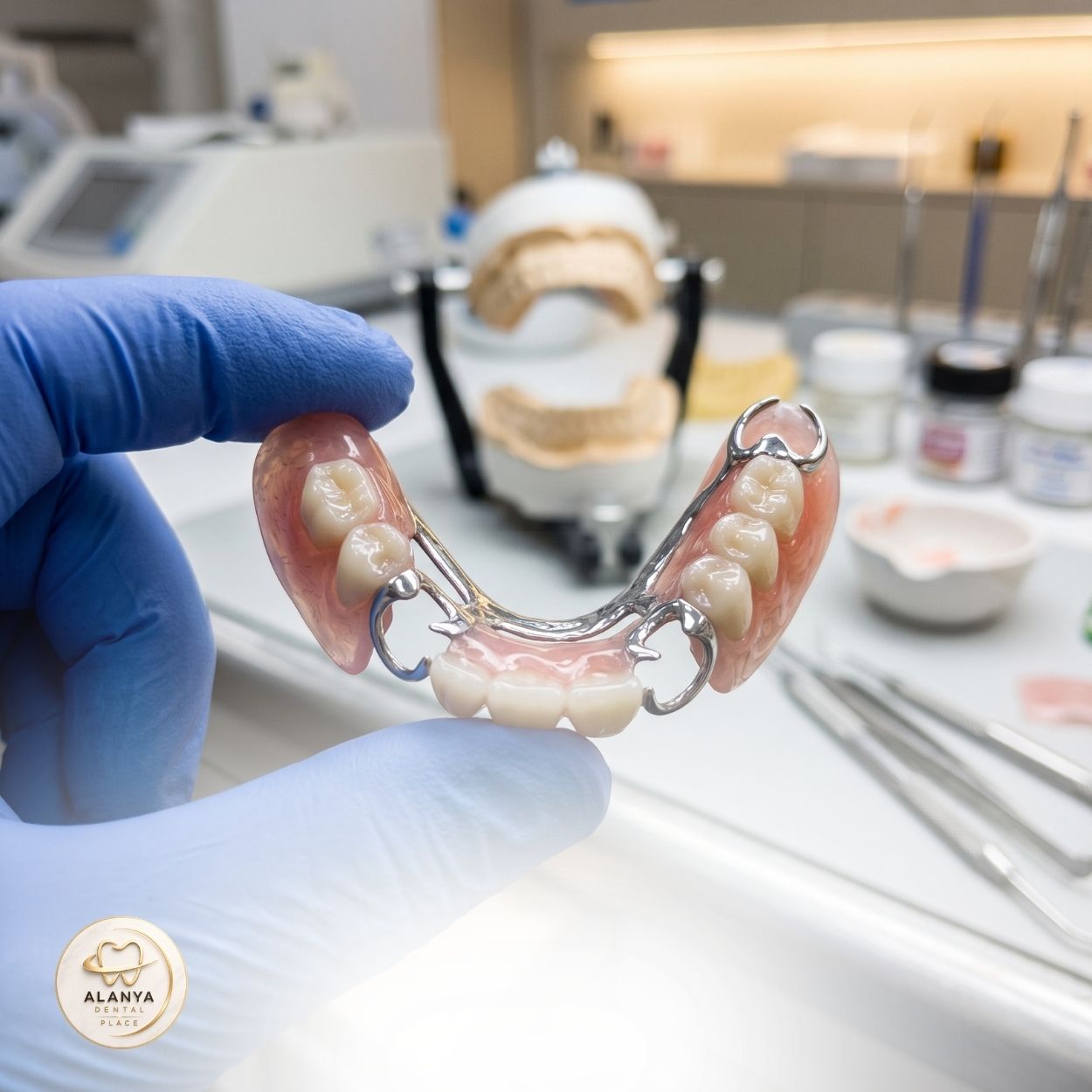
Anchored dentures are a type of removable prosthesis designed to replace one or more missing teeth. They consist of an acrylic or metal frame onto which artificial teeth are placed, and this frame is secured to the remaining healthy teeth using retainers called hooks (or clasps). Unlike fixed crown or bridge treatments, anchored dentures can be easily removed, cleaned, and reinserted by the patient; this feature makes them a practical option, especially for patients seeking ease of care.
The design of the prosthesis is custom-planned by the dentist based on the number of missing teeth, the position of the remaining healthy teeth, and the condition of the gums. The clasps prevent the prosthesis from moving around in the mouth, providing stability during chewing and speaking.
Materials Used in Hooked Dentures
The body of a clasp denture is generally made of acrylic resin or cast metal (chrome-cobalt alloy); while acrylic bodies are more economical, metal-bodied dentures generally offer a thinner, more durable, and longer-lasting structure.
The clasps themselves can be designed as metal or aesthetic (invisible). Metal clasps provide stronger retention, while tooth-colored or transparent aesthetic clasp options can be preferred for patients with aesthetic concerns in the anterior region; this choice directly affects the appearance and cost of the prosthesis.
In some cases, precision attachment systems may be considered as an alternative to classic clasp dentures. These systems use hidden attachment elements placed on the abutment teeth instead of visible clasps, resulting in a more aesthetically pleasing outcome; however, this method is generally more expensive and may require crowns to be placed on the abutment teeth.
Who are suitable candidates for hook-type dental prostheses in Antalya?
Hooked dentures are a preferred treatment option for patients who are missing one or more teeth in their mouth, but whose remaining teeth are healthy enough to support a prosthesis.
In cases where dental implant treatment is not possible for medical reasons (insufficient bone tissue, systemic health problems, patient not suitable for implant surgery) or when the patient is looking for a more economical solution, clasp-type prostheses come into consideration. The health of the gums and jaw structure, sufficient to support the prosthesis, is a crucial prerequisite for successful treatment. This method is also frequently considered in elderly patients and those who have experienced multiple tooth loss but are not yet completely edentulous.
Which design and hook type is best suited to your oral structure can only be determined after a detailed clinical examination. Would you like to discuss the suitability of your oral structure for this treatment together?
Contents
The Process of Making Hooked Dental Prostheses
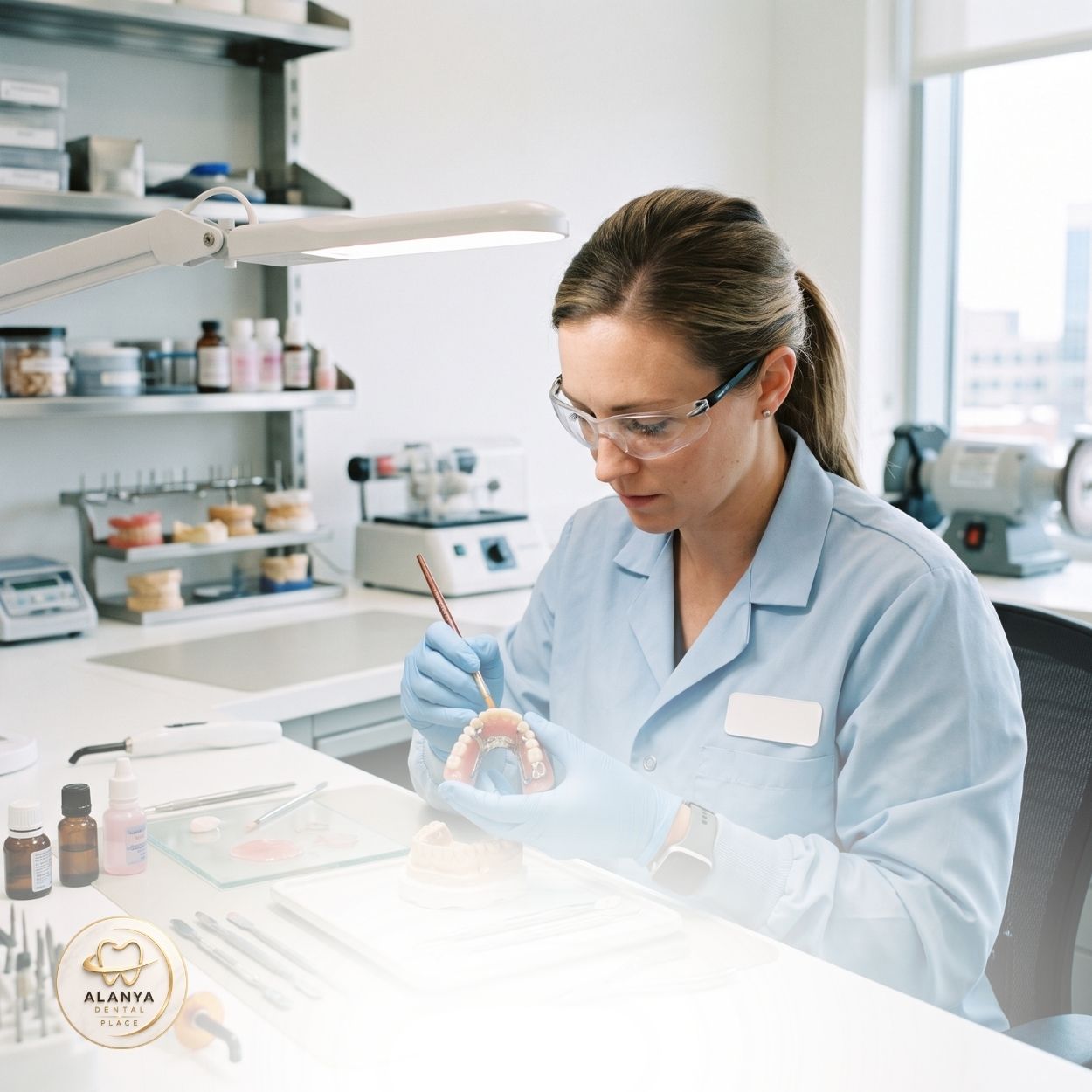
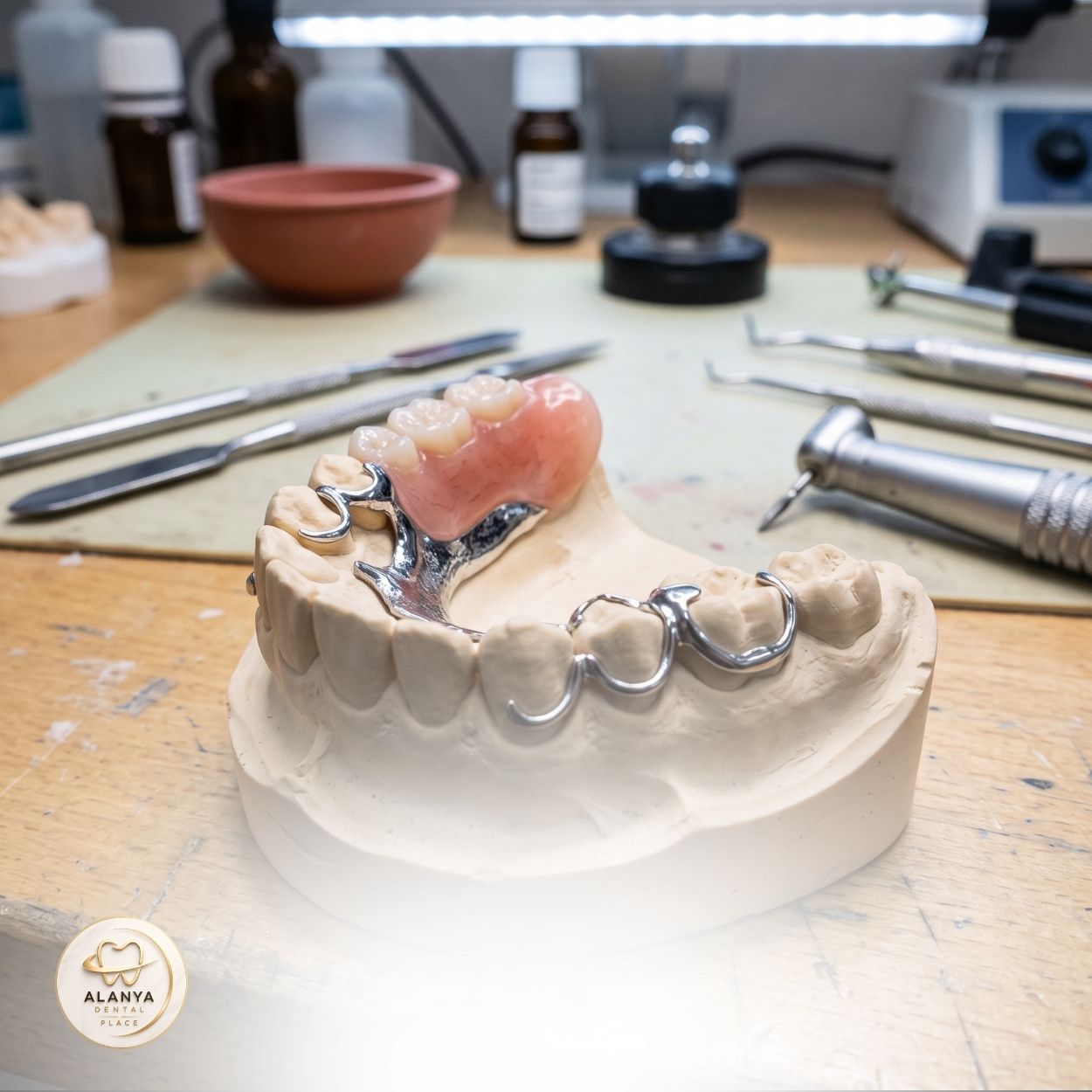
Treatment begins with an oral examination and, if necessary, X-ray evaluation by the dentist; this stage assesses the health of the remaining teeth, gum condition, and bone support. Then, impressions are taken of the mouth, and working models are created based on these impressions. The dentist plans on these models which teeth the clasps will be placed on and at what angle.
During the laboratory phase, the acrylic or metal frame of the prosthesis is produced according to the measurements taken, artificial teeth are placed, and clasps are integrated into the frame. This process usually requires several clinic visits; the first session involves taking measurements, the fit and occlusion of the prosthesis are checked in subsequent sessions, and in the final session, the completed prosthesis is placed in the mouth and any necessary fine adjustments are made. After the prosthesis is delivered, the dentist demonstrates the insertion and removal technique and the daily care routine to the patient in detail.
For patients arriving as part of medical tourism, appointment frequencies can be scheduled to suit the duration of their trip; laboratory processes can be expedited, aiming for completion of treatment in a single trip.
The Difference Between Hooked Dentures and Other Denture Options
Clasp dentures are a more economical and less invasive method compared to fixed crown and bridge treatments because they do not require the cutting of supporting teeth; only minor adjustments are made to the surfaces where the clasps will attach. However, they may not provide the same level of stability as fixed prostheses and need to be removed and reinserted daily by the patient.
Compared to implant-supported fixed or removable dentures, clasp dentures can be completed in a shorter time and are significantly more economical because they do not require a surgical procedure; however, they do not provide the same level of bone preservation and long-term stability as implant treatment. Precision attachment dentures can be considered a middle ground between clasp dentures and implants; they offer a more aesthetic result because there are no visible clasps, but their cost is higher than clasp dentures.
Factors Affecting the Price of Hooked Dentures
The price of a clasp denture cannot be given as a fixed figure; many variables directly affect the price, including the number of missing teeth and the area the prosthesis will cover, whether the body material used is acrylic or metal, whether the clasps are metal or aesthetically designed, whether additional treatment (crown, root canal treatment) is needed on the supporting teeth, and the quality of the laboratory workmanship.
According to the current price list of the Turkish Dental Association, the cost of partial dentures with clasps is within a certain range for a single jaw; however, it is known that this amount is higher for dentures with cast metal substructures. The exact price can only be determined after an examination of the patient’s oral structure. We recommend contacting us to receive a personalized treatment plan and price quote.
Advantages and Limitations of Hooked Dental Prostheses
The most important advantage of clasp dentures is that they can restore chewing and speech functions quickly, economically, and without requiring surgery. The fact that they can be easily removed and cleaned by the patient also offers a practical advantage in terms of maintaining oral hygiene.
Conversely, the visible metal clasps may be an aesthetic concern for some patients; the prosthesis may lead to wear or loosening of the supporting teeth over time compared to fixed restorations, requiring regular adjustments. Furthermore, the daily removal and insertion of the prosthesis means an adaptation period requiring adjustment for some patients.
Advantages of Hooked Denture Treatment in Alanya
Alanya, as one of Antalya’s popular tourist destinations, offers significant advantages for both domestic and international patients seeking denture treatment.
Offering significantly more affordable prices compared to European countries, the Mediterranean climate and tourist attractions that transform the treatment process into an enjoyable holiday experience, easy access via direct flights from many European cities thanks to its proximity to Antalya Airport, and ease of communication with the clinic team that speaks English, German, Russian, French, and Ukrainian, make Alanya an attractive destination for this treatment.
Would you like to combine your treatment plan in Alanya with your vacation? Contact us for detailed information.
Practical Information for Medical Tourism Patients
Patients arriving from abroad can begin the preliminary evaluation process by first sharing intraoral photographs and any X-rays with us.
Following this assessment, patients are informed about the estimated treatment plan and the required travel time. Accommodation suggestions suitable for their travel dates are provided, and airport transfers and coordination of in-clinic processes are arranged.
Even after treatment, communication channels are kept open via WhatsApp and email to ensure uninterrupted follow-up.
Would you like us to create a treatment schedule that fits your travel plans?
Post-Treatment Care and Prosthesis Lifespan
The lifespan of a clasp denture varies depending on the material used, oral hygiene, and the health of the supporting teeth, but with regular care, it can be used problem-free for years. It is recommended that the denture be removed daily and cleaned with a soft brush and appropriate cleaning solution, soaked overnight in a suitable solution, and that the remaining teeth in the mouth be brushed regularly.
Having a dental check-up every six months is important for monitoring both the fit of the prosthesis and the health of the supporting teeth. Due to changes that may occur in the gum and bone structure over time, periodic adjustments or replacements may be necessary for the prosthesis.
Why Choose Alanya Dental Place?
Our experienced team of prosthetic dentists designs custom-made, anchor-type dental prostheses for each patient’s oral structure and produces long-lasting, comfortable prostheses through precise laboratory processes. In our clinic, which adheres to international hygiene and sterilization standards, we offer transparent pricing and clear treatment plans to both domestic and international patients. Our multilingual consulting team ensures uninterrupted communication from the beginning to the end of the treatment process.
You can contact us to find out if this treatment is right for you.
Frequently Asked Questions
Questions About Treatment
What is a hooked dental prosthesis?
Anchored dentures are a type of removable prosthesis designed to replace missing teeth. They attach to healthy teeth via metal or aesthetic hooks and can be inserted and removed by the patient.
Is it painful to wear a clasp denture?
A slight feeling of pressure or discomfort is normal in the initial period after the prosthesis is fitted; this sensation usually decreases within a few weeks as the adaptation process begins. The procedure itself is not painful.
What is the difference between a clasp denture and an implant?
Anchored dentures do not require surgery and are more economical, but they are not as effective as implants in terms of preserving jawbone. Dental implants, on the other hand, require surgery, are more expensive, and offer a more stable, permanent solution.
How long can a hook-type dental prosthesis be used?
Depending on the quality of care, oral hygiene, and the health of the supporting teeth, with regular check-ups and proper use, a prosthesis can provide years of trouble-free service.
Does wearing a hooked denture affect speech?
A slight change in speech may be felt in the period after the prosthesis is first fitted, but this usually returns to normal quickly and the patient gets used to speaking with the prosthesis.
Should a clasp denture be worn overnight?
In general, removing the prosthesis overnight and soaking it in a suitable solution is recommended for both gum health and prosthesis hygiene.
Is a clasp denture suitable for every patient?
No, the teeth and gums to which the prosthesis will be attached must be in sufficient health. Suitability can only be determined after a thorough oral examination.
Is it difficult to eat with a hooked denture?
Chewing certain foods may feel unusual during the adaptation process, but over time the patient largely returns to normal eating habits.
Are the clasps visible on a clasp denture?
It depends on the type of hook used; metal hooks may be visible from some angles, while hooks designed for aesthetics or tooth color are less noticeable.
Can clasp dentures damage supporting teeth?
A properly designed and regularly checked prosthesis can be used for a long time without damaging the supporting teeth; however, if proper care is not provided, the risk of wear or sensitivity in the supporting teeth may increase.
How do you clean a clasp denture?
The denture should be removed from the mouth daily and gently cleaned with a soft brush and appropriate cleaning product; abrasive toothpaste or hard brushes should not be used.
Can clasp-type dentures and implant-supported dentures be evaluated simultaneously?
Yes, in some cases, the physician may offer a comparative analysis of both hook-type and implant-supported alternatives; the choice is determined by the patient's clinical condition and expectations.
How long does it take to get used to a clasp-type denture?
Although it varies from patient to patient, significant adjustment in terms of speech and chewing with the prosthesis is usually achieved within a few weeks.
Is there accommodation support available in Alanya when receiving treatment for hooked dentures?
For our patients arriving from abroad, we provide support with accommodation suggestions and airport transfer coordination; details will be clarified during the treatment plan discussion.
Is it possible to complete a full set of dental prosthetic treatments in a single trip?
Multiple sessions may be required due to the laboratory process and follow-up checks; however, the process can be optimized by scheduling appointments to suit travel times.
Can a clasp denture loosen over time?
Due to natural changes in gum and bone structure, the prosthesis may loosen slightly over time; in this case, the dentist can make adjustments to the prosthesis.
Sources
- American Dental Association (ADA) – Dentures and removable prosthodontics The source provides general information about types of removable prostheses and their care.
- European Federation of Periodontology (EFP) It provides resources on the relationship between periodontal health and prosthetic treatment.
- National Institute of Dental and Craniofacial Research (NIDCR) It contains scientific resources on tooth loss and prosthetic solutions.
- NHS – Dentures information This page contains patient-focused information on the use and care of removable prostheses.
- Türk Dişhekimleri Birliği (TDB) 2026 Rehber Tarife Kitapçığı This includes current treatment price references in Türkiye.
Do you have any other questions?