The Best Metal-Supported Porcelain Dental Crowns in Antalya, Turkey
Metal-supported porcelain veneers are a classic and durable type of restoration, created by bonding porcelain to a metal framework, which has been safely used in dentistry for many years. At Alanya Dental Place, we meticulously provide metal-supported porcelain veneer treatment not only to our local patients in the Antalya and Alanya regions but also to medical tourism guests visiting us from the UK, Germany, Russia, the Nordic countries and the Gulf states.
On this page, we will provide a comprehensive overview of what metal-supported porcelain veneers are, the metal alloys used in their manufacture, the situations in which they are preferred, the application process, the factors affecting their cost, their advantages and disadvantages, the associated risks, and the practical aspects of undergoing this treatment in Alanya.
Would you like to find out whether metal-supported porcelain veneers are right for you?
What is Metal-Supported Porcelain Veneering in Turkey?
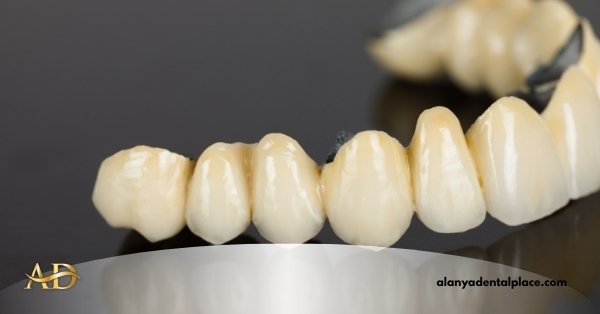
In Turkey, metal-supported porcelain veneers (also known in the literature as PFM – Porcelain Fused to Metal) are a type of veneer (crown) fitted over damaged, decayed, fractured or non-functional teeth, consisting of a metal core structure with a layer of porcelain fused onto it. This method, which has been used in dentistry for decades, is known for its mechanical strength and is still considered the first choice in many cases today.
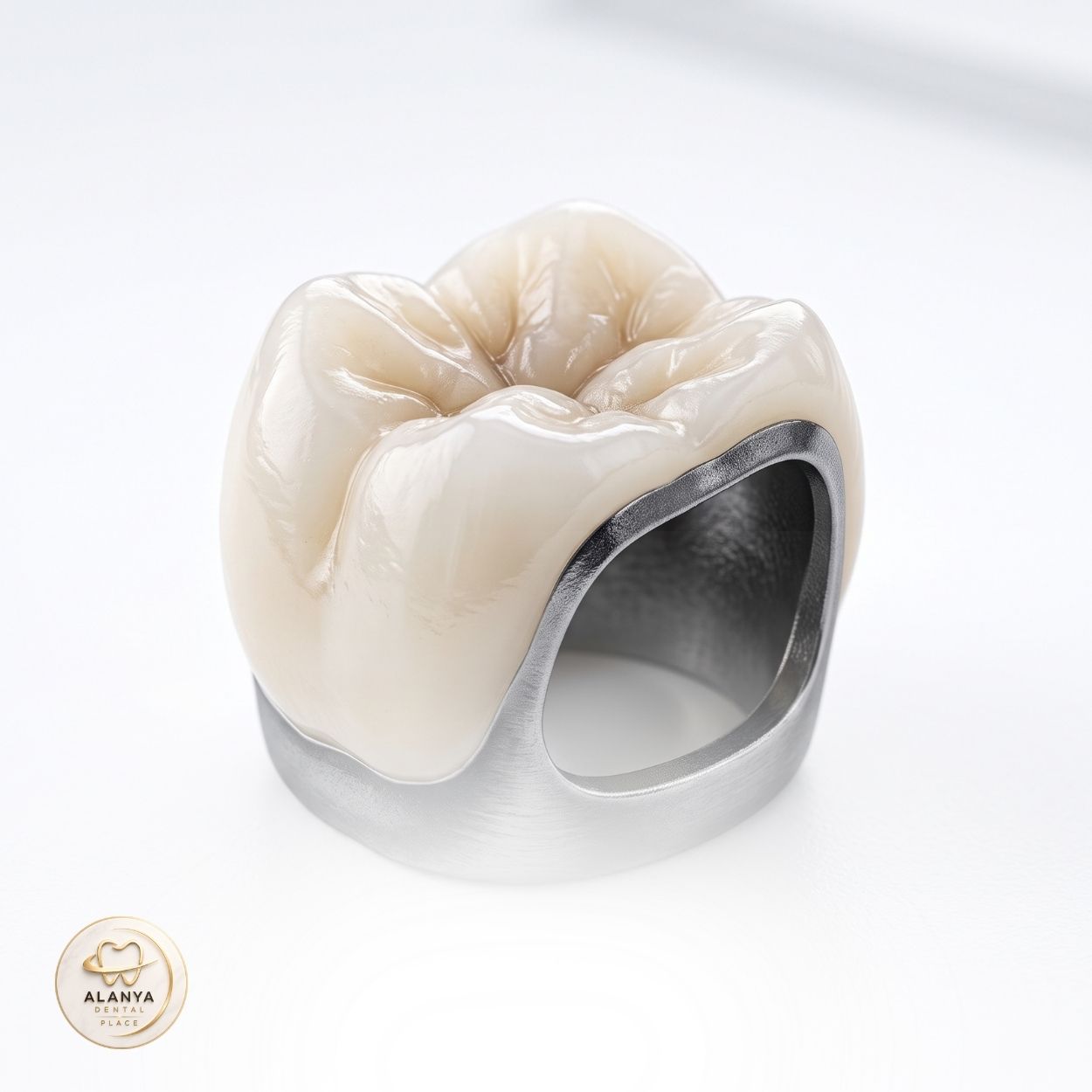
In Alanya, metal-supported porcelain crowns restore both the appearance and chewing function of a tooth by completely encasing it. After assessing the current condition of the tooth, the dentist carries out root canal treatment if necessary, prepares (shapes down) the tooth to suit the crown, and takes an impression to send to the laboratory. In the laboratory, a metal framework is cast, and layers of porcelain are fired onto it to achieve an appearance close to that of a natural tooth.
Free Quote
Get a free quote for metal-supported porcelain veneers in Antalya in just 15 minutes.
Alloys Used in Metal-Supported Porcelain Veneers
The metal alloy used in the substructure of a metal-supported porcelain veneer directly affects both its durability and its cost:
Chromium-Cobalt Alloy
It is an economical and widely used alloy. Chromium-cobalt is the preferred choice for the majority of metal-supported porcelain veneer applications; it offers high hardness and corrosion resistance.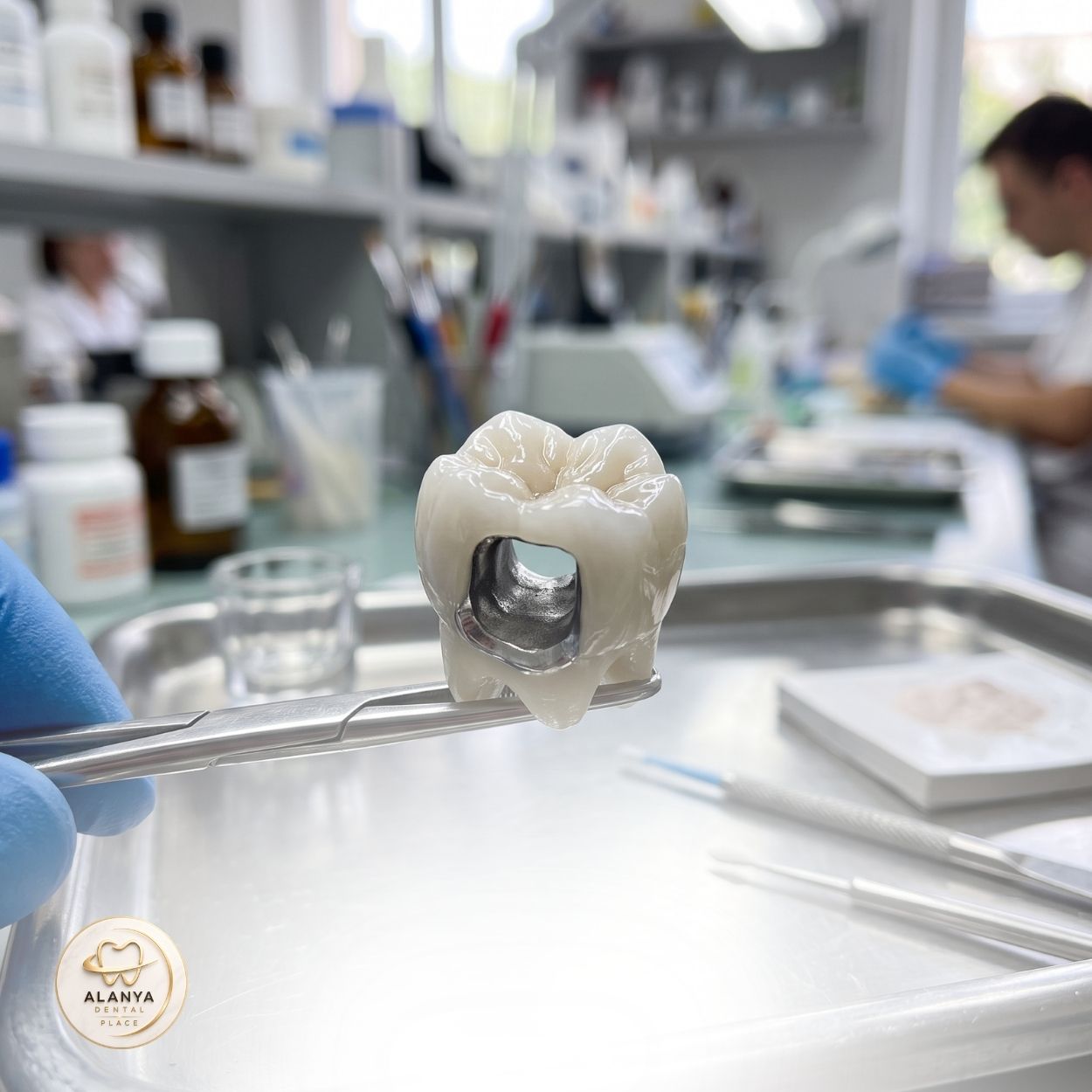
Nickel-Chromium Alloy
It is used in some cases involving metal-supported porcelain veneers, but requires careful assessment in patients with a nickel allergy.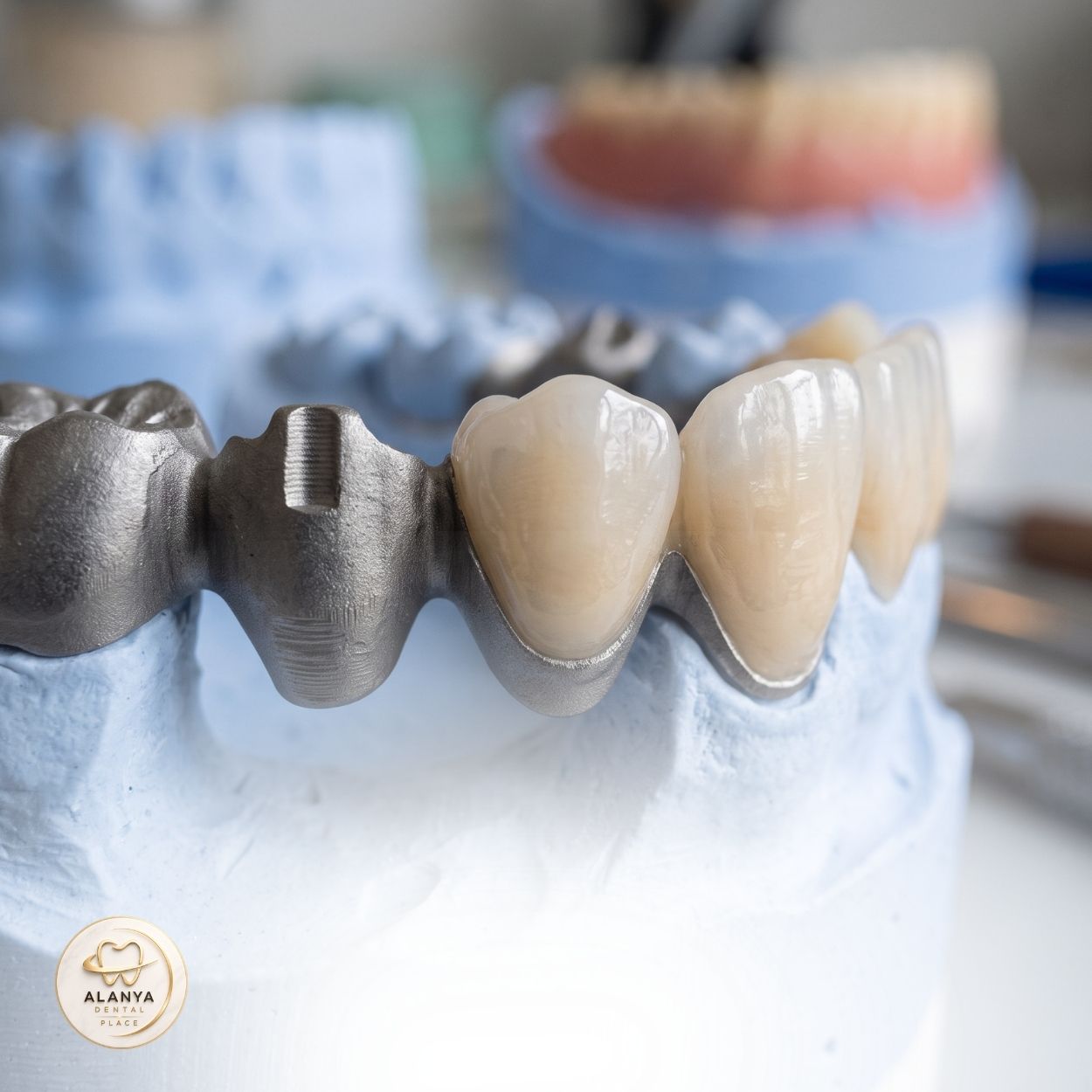
Titanium Infrastructure
Titanium, which is also used in implant procedures due to its high biocompatibility, is preferred in some cases involving metal-supported porcelain crowns in order to reduce the risk of an allergic reaction.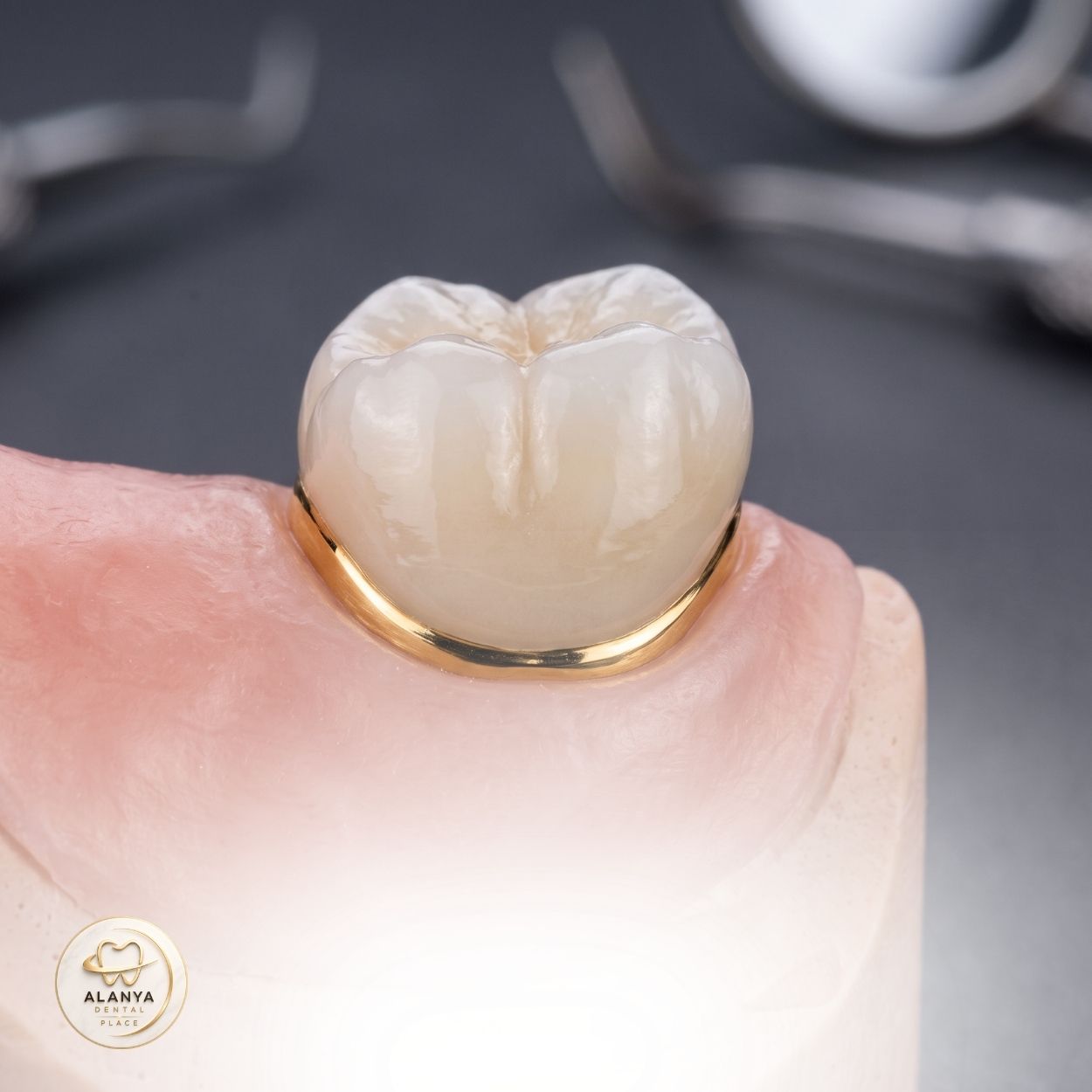
Gold-Alloy-Reinforced Porcelain
Although it is more expensive, it is the preferred option in specific cases due to its tissue compatibility and durability.Would you like us to arrange a detailed examination to find out which alloy is right for you?
Who is suitable for metal-supported porcelain veneers?
In Alanya, metal-supported porcelain veneers are a reliable and cost-effective solution that is frequently chosen in the following situations:
- In the posterior region, where chewing forces are high
- In teeth requiring mechanical support following root canal treatment
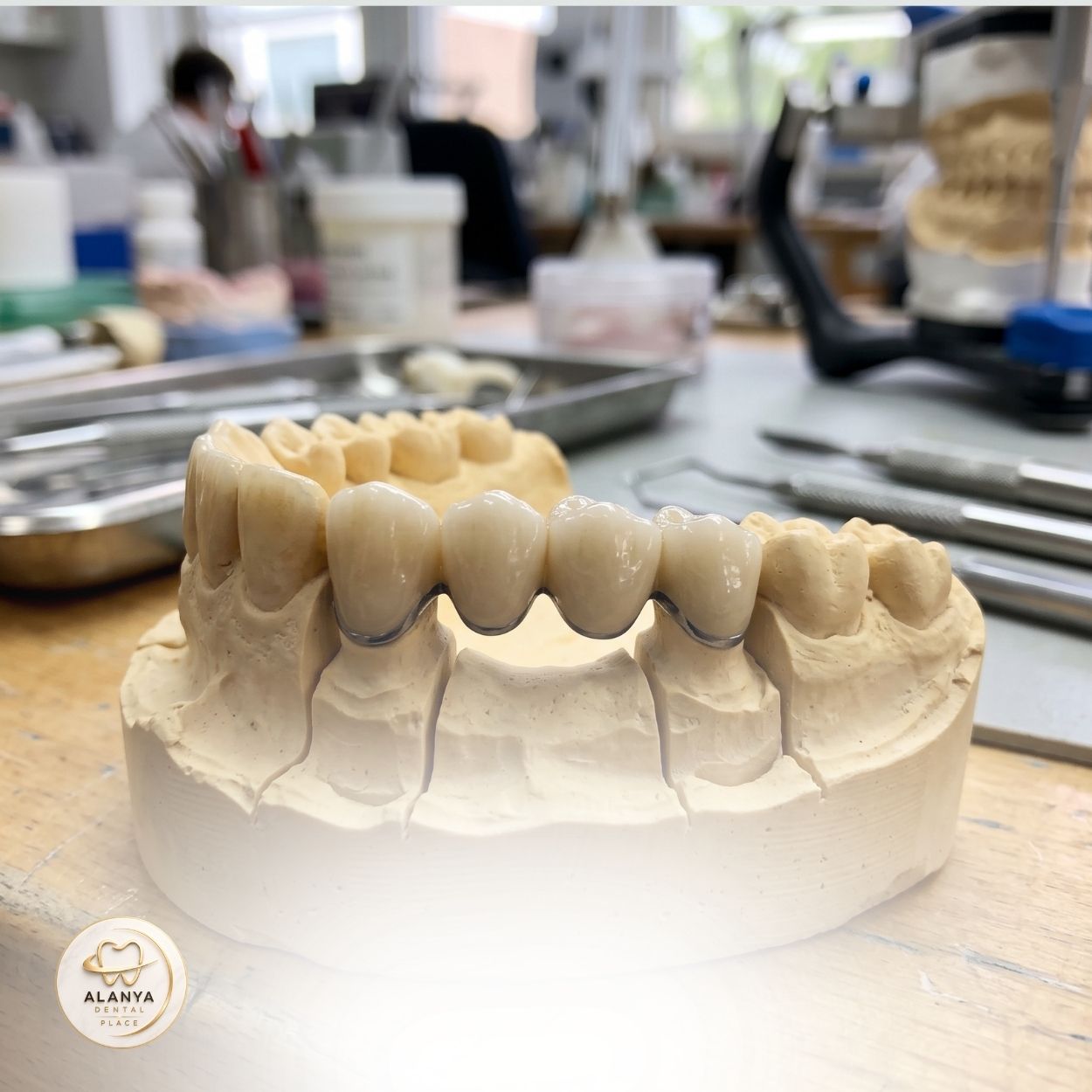
- As a support tooth (abutment) in bridgework
- For patients looking for a more cost-effective restoration
- In cases involving extensive loss of tooth structure, where durability takes precedence over aesthetics
- In patients requiring implant-supported prosthetic restorations
For patients with very high aesthetic expectations regarding their front teeth, all-ceramic (metal-free) alternatives may be considered instead of metal-supported porcelain veneers; this decision is made following a consultation with the dentist. Would you like to discuss the most suitable type of veneer for your teeth?
Contents
The Process of Applying Metal-Supported Porcelain Veneers in Antalya
The dentist assesses the condition of the tooth through an oral examination and, if necessary, an X-ray; a decision is then made as to whether a metal-supported porcelain crown is suitable.
The tooth is reduced in size to make room for the crown; local anaesthesia is administered for natural teeth.
An impression is taken of the prepared tooth; an acrylic temporary crown is fitted until the laboratory process is complete.
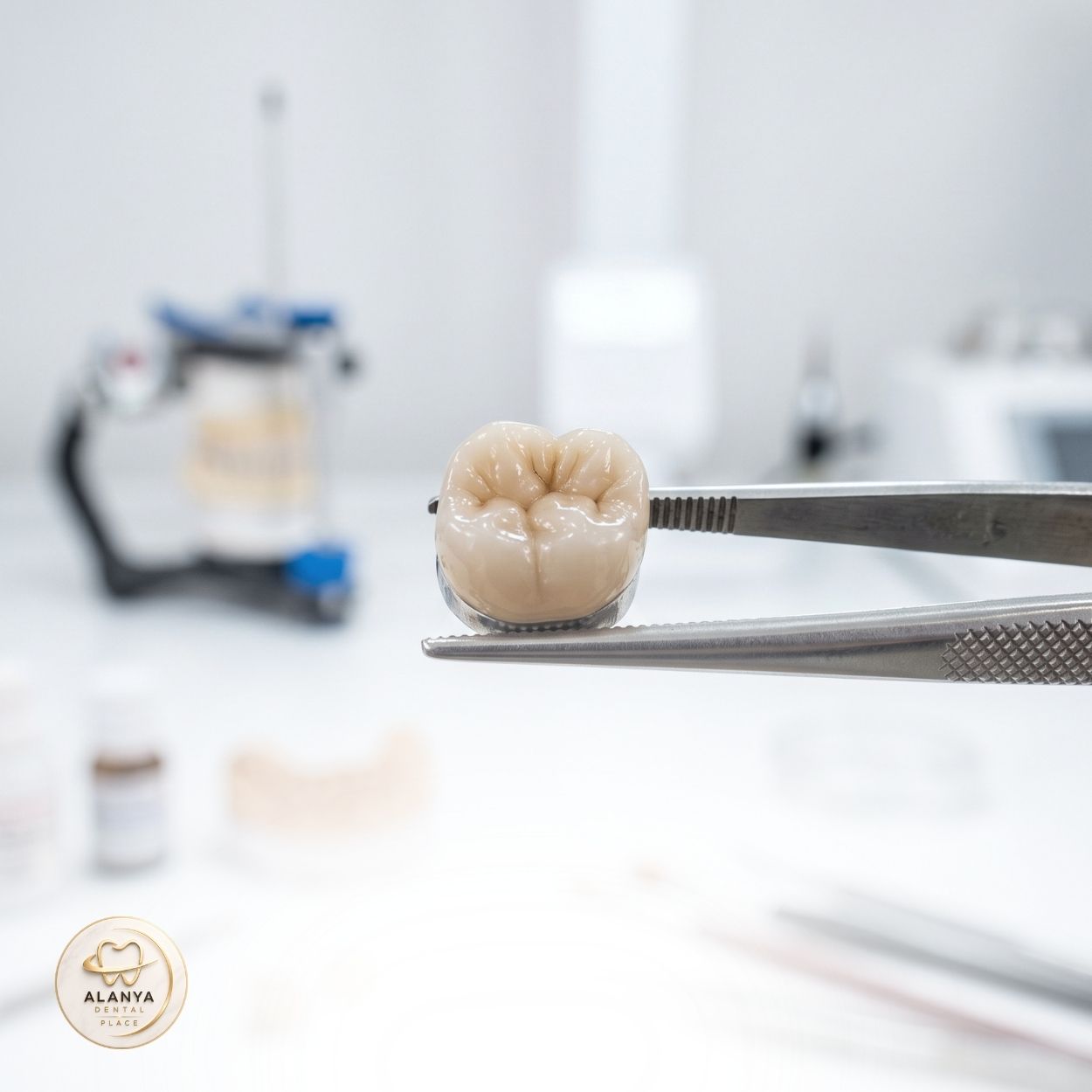
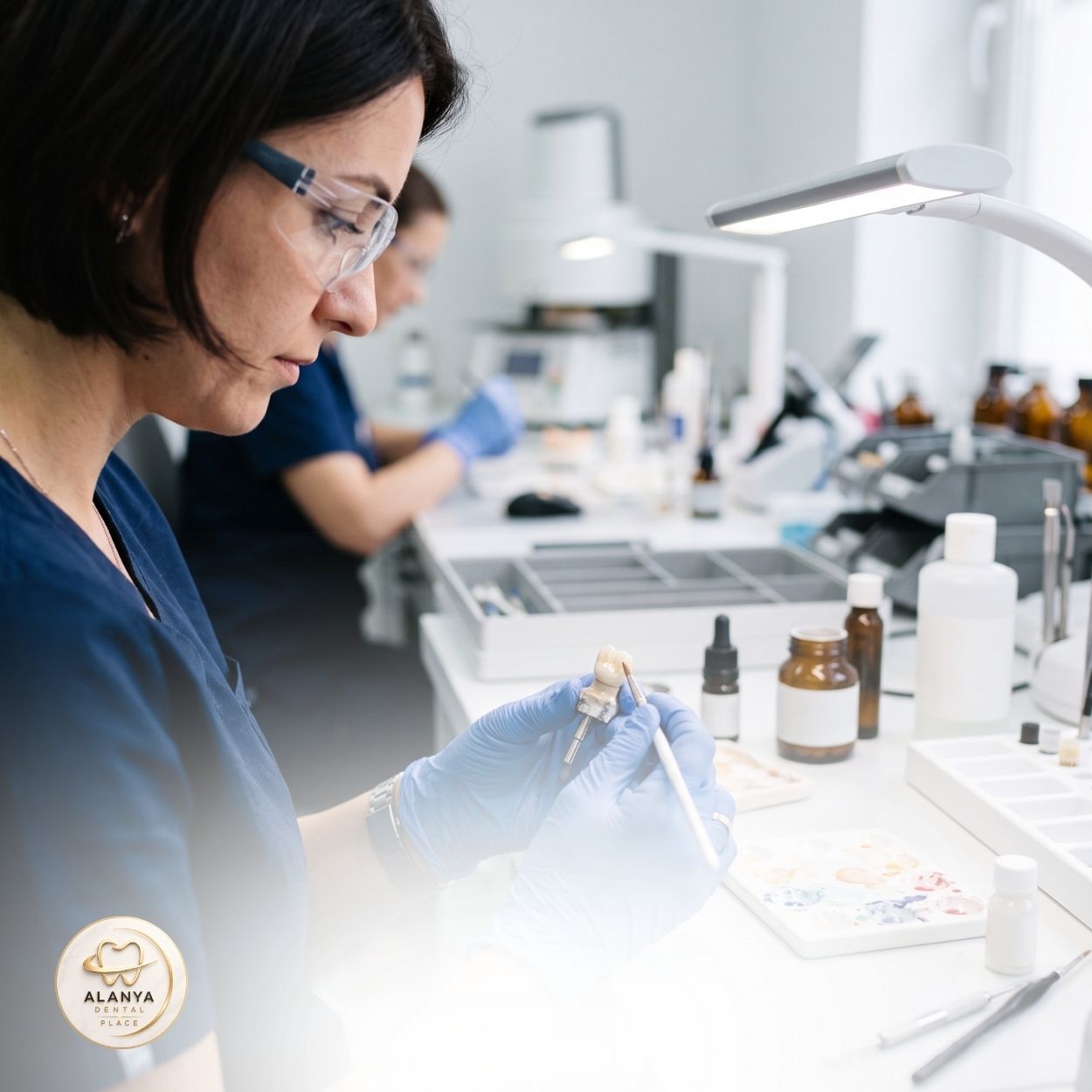
A metal framework is cast, and layers of porcelain are fired onto it. This process typically takes 5–10 days.
When the metal-supported porcelain veneer is returned, its colour, shape and occlusion are checked; if found to be satisfactory, it is fixed in place using a permanent adhesive.
The Advantages and Disadvantages of Metal-Supported Porcelain Veneers
Advantages:
- High mechanical strength, particularly in posterior and bridge cases
- More cost-effective than other types of restoration
- Proven reliability backed by decades of clinical use
- Ability to provide robust support in bridge applications
Disadvantages:
- The risk of a grey line (metal show-through) forming at the gum line over time
- Lower light transmission compared to all-ceramic alternatives
- Risk of metal allergy with some alloys
The Benefits of Metal-Supported Porcelain Veneer Treatment in Alanya
As one of Antalya’s most popular tourist destinations, Alanya offers significant advantages for both local and international patients seeking metal-supported porcelain veneer treatment:
- Affordable: Significantly lower prices compared to European countries
- A combination of holiday and treatment: Thanks to the Mediterranean climate and the area’s tourist appeal, the treatment process also becomes an enjoyable experience
- Ease of access: proximity to Antalya Airport, direct flight options from Europe
- Modern clinical infrastructure: digital measurements, precise laboratory processes and international sterilisation standards
- Multilingual service: Easy communication with a team that speaks English, German, Russian, Ukrainian and French
Would you like to combine your metal-supported porcelain veneer treatment in Alanya with your holiday? Please contact us for further information.





Alanya Dental Place: the choice of over 10,000 international patients!
Practical Information for Medical Tourism Patients
For patients coming from abroad, the process for metal-supported porcelain crowns is as follows:
Post-Treatment Care and the Lifespan of the Restoration
The lifespan of a metal-supported porcelain veneer can generally range from 10 to 15 years, depending on the alloy used, oral hygiene and habits such as teeth grinding; in some cases, this period may be extended even further with regular maintenance.
Care instructions:
- Brushing at least twice a day, using dental floss
- A dental check-up every six months
- Avoid biting into hard foods (ice, bones, nuts with hard shells) directly through the veneer
- The use of night-time mouthguards for patients with a history of bruxism
- Regular periodontal check-ups to prevent gum recession
Why Should You Choose Alanya Dental Place?
- Case-by-case planning of metal-supported porcelain veneers with a team of experienced prosthodontists
- Precision laboratory processes and high-quality alloy options
- A clinical environment that complies with international hygiene and sterilisation standards
- Transparent pricing and treatment plans tailored to both local and international patients
- Seamless communication throughout the process with multilingual advisory support
Please get in touch with us to find out whether this treatment is suitable for you.
Frequently Asked Questions
Questions About Treatment
What is a metal-supported porcelain veneer?
A metal-supported porcelain crown is a type of dental crown with high durability, produced by firing porcelain onto a metal substructure. It is frequently chosen for posterior teeth and bridgework in particular.
How long do metal-supported porcelain veneers last?
Depending on the alloy used, oral hygiene and habits such as teeth grinding, a service life of between 10 and 15 years is generally expected.
What is the difference between a metal-supported porcelain crown and a zirconia crown?
Metal-supported porcelain crowns are more economical and highly durable, but their light transmission is lower than that of zirconia. Zirconia crowns contain no metal and offer a more natural appearance.
Is a metal-supported porcelain crown painful?
As local anaesthetic is administered during the tooth preparation stage, you will not feel any pain during the procedure. You may experience slight sensitivity once the anaesthetic has worn off.
Do metal-supported porcelain veneers cause a grey line on the gums?
Over time, gum recession may cause the metal substructure to become visible. For this reason, all-ceramic alternatives may be considered in cases involving front teeth where aesthetic expectations are high.
Do metal-supported porcelain veneers cause allergic reactions?
Allergic reactions may rarely occur with nickel-containing alloys. In patients with a history of allergies, biocompatible alloys such as titanium may be preferred.
How many sessions are required for a metal-supported porcelain veneer?
Two appointments are usually sufficient: the first appointment involves preparing the tooth and taking impressions, whilst the second involves fitting the permanent crown.
Why are metal-supported porcelain veneer bridges the preferred choice?
Thanks to its high mechanical strength, it can be used with confidence as an abutment tooth in bridge cases where chewing forces are high.
What is the price difference between a metal-supported porcelain crown and an all-ceramic crown?
Metal-supported porcelain veneers are generally a more cost-effective option than all-ceramic alternatives; however, the exact price depends on the alloy used and the specifics of each case.
Can a metal-supported porcelain crown be fitted following root canal treatment?
Yes, a metal-supported porcelain crown is often recommended as a solution for providing mechanical support to teeth that have become weakened following root canal treatment.
Can a metal-supported porcelain crown be fitted onto an implant?
Yes, metal-supported porcelain crowns can also be used for prosthetic restorations on dental implants.
Do metal-supported porcelain veneers change colour?
The porcelain surface is resistant to discolouration, but excessive smoking and consumption of colouring drinks may lead to a slight change in colour over time.
Are metal-supported porcelain veneers used on front teeth?
They can be used, but in patients with high aesthetic expectations, all-ceramic alternatives with greater translucency are generally preferred.
What happens if a metal-supported porcelain crown breaks?
In the event of breakage, the coating may need to be repaired or replaced. Regular checks and correct use are important for extending the coating’s lifespan.
Is accommodation support available when undergoing metal-supported porcelain veneer treatment in Alanya?
We provide support with accommodation recommendations and airport transfer arrangements for our patients arriving from abroad; details will be finalised during the treatment plan consultation.
Can porcelain-fused-to-metal crown treatment be completed in a single visit?
Due to the laboratory process, two visits are usually required; however, accelerated protocols can be arranged depending on the duration of the journey.
Sources
- American Dental Association (ADA) – Crowns and restorative dentistry guidelines
- European Federation of Periodontology (EFP) – Periodontal health and restorative treatment
- National Institute of Dental and Craniofacial Research (NIDCR) – Tooth crown procedures
- NHS – Dental crowns information
- Türk Dişhekimleri Birliği (TDB) 2026 Rehber Tarife Kitapçığı
Do you have any other questions?