All-on-4 Dental Implants in Turkey
All-on-4 is a globally recognized full-mouth rehabilitation technique for patients who have lost all their teeth or are at risk of losing them, using just four strategically placed dental implants to support a full fixed prosthesis. At Alanya Dental Place in Antalya and Alanya, we offer digitally planned All-on-4 treatment, which allows eligible patients to leave the clinic on the same day with a fixed temporary prosthesis.
💬 Send Your X-Ray via WhatsApp
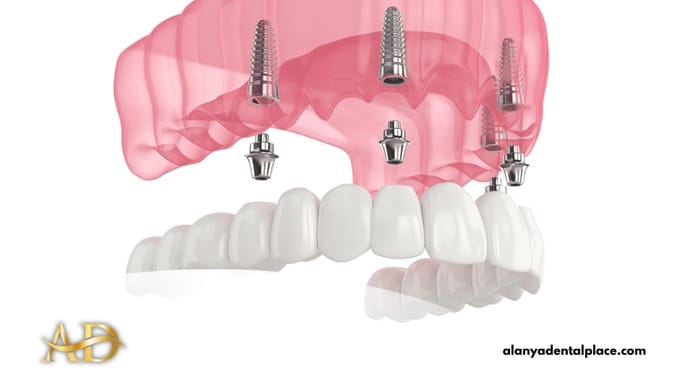
What Are All-on-4 Dental Implants?
All-on-4 is a full-arch dental implant treatment based on the principle of restoring all the teeth in a single jaw using a bridge or prosthesis anchored to just four implants. Developed for patients with complete edentulism, severe tooth loss, or decayed or broken teeth that cannot be saved, it is a proven protocol that has been used on millions of patients worldwide.
A significant portion of the patients who visit our dental clinic in Antalya are people who have been using removable dentures for years or who have gradually lost multiple teeth and have now lost most of their teeth. All-on-4 provides these patients with a fixed, implant-supported solution that cannot be removed and offers chewing efficiency similar to that of natural teeth.
The Origins of the All-on-4 Technique
The technique was developed in the late 1990s by Portuguese implantologist Dr. Paulo Maló and was clinically validated in collaboration with Nobel Biocare, leading to its widespread adoption worldwide. Follow-up studies spanning more than a decade have shown that the technique achieves a high success rate when proper case selection and surgical planning are performed. Today, nearly all major implant manufacturers—such as Nobel Biocare, Straumann, and Osstem—offer their own All-on-4 protocols.
The Difference Between All-on-4 and Other Implant Techniques
In conventional implant treatment, a an individual implant is placed for each missing tooth; in a completely edentulous jaw, this typically involves 8–10 implants and, due to bone deficiency, usually requires a bone graft.
The All-on-4 technique, on the other hand, takes advantage of the densest bone in the front region of the jaw by placing the rear implants at a 30–45-degree angle; as a result, bone grafting is not required in most cases, and the number of implants is reduced to 4. The result: a shorter surgical procedure, lower cost, and the possibility of fixed temporary teeth on the same day for most patients.
Let’s evaluate whether your bone quality is suitable for All-on-4 using your X-rays.
World-renowned dental implant brands we work with that are CE-certified






🎯 Who Is the All-on-4 Procedure Suitable For?
Since All-on-4 typically does not require bone grafting, it is a more accessible option than other implant techniques, even for patients who have experienced bone loss. However, this technique may not be the right solution for every patient; eligibility is determined following an examination and imaging.
Who Requires a More Careful Assessment?
The healing process may be more difficult in patients with uncontrolled diabetes, severe osteoporosis, those undergoing immunosuppressive treatments, or heavy smokers; this does not mean the treatment cannot be performed, but rather that it requires closer monitoring and a personalized protocol. The procedure is generally not recommended for patients under 18 years of age because jaw development is not yet complete. For patients with a history of severe bruxism (teeth grinding), the use of a night guard is included in the treatment plan.
Your final eligibility for treatment will be determined after reviewing the panoramic X-ray or CBCT image you submit and following your examination at our clinic; therefore, the first step is always a free preliminary evaluation.
How Is All-on-4 Performed? The Logic Behind Angled Placement
The answer to the question, “How does All-on-4 work so that only four implants are needed?” lies in the angle at which the implants are placed.
Why Are Only Four Implants Needed?
The anterior region of the jaw generally has denser and less resorbed bone compared to the posterior region. In the All-on-4 technique, two implants are placed in the anterior region at a 90-degree angle to the teeth, while two implants are placed in the posterior region at an angle of approximately approximately 30–45 degrees to maximise available bone. This angled placement reduces the risk of contact with the nerve in the lower jaw and the sinus cavity in the upper jaw, while allowing the implants to spread out over a wide base to support the bridge. As a result, four implants can provide the mechanical strength needed to support an entire arch.
Digital Surgical Planning (Guided Surgery)
At our clinic, we take a CBCT (3D tomography) scan before surgery; this image shows the density of your jawbone and the locations of nerves and sinuses with millimeter-level precision. The implant positions, digitally planned based on this data, are transferred to your mouth using a 3D-printed surgical guide. This technology ensures that the implants are placed at the planned angle and depth without damaging adjacent anatomical structures.
Same-Day Fixed Temporary Prosthesis (Immediate Loading)
Once sufficient primary stability is achieved, implants can be loaded with a temporary bridge on the same day, without waiting for osseointegration. This approach is called “immediate loading” and is one of the main reasons why the All-on-4 method is so popular: patients leave our clinic on the day of surgery without being left toothless.
Table of Contents
Your first visit usually lasts 5–7 days, and your second visit (for the permanent bridge) lasts 5–7 days; there is a 3–6-month healing period between the two.
Let’s create your personalized travel itinerary together.
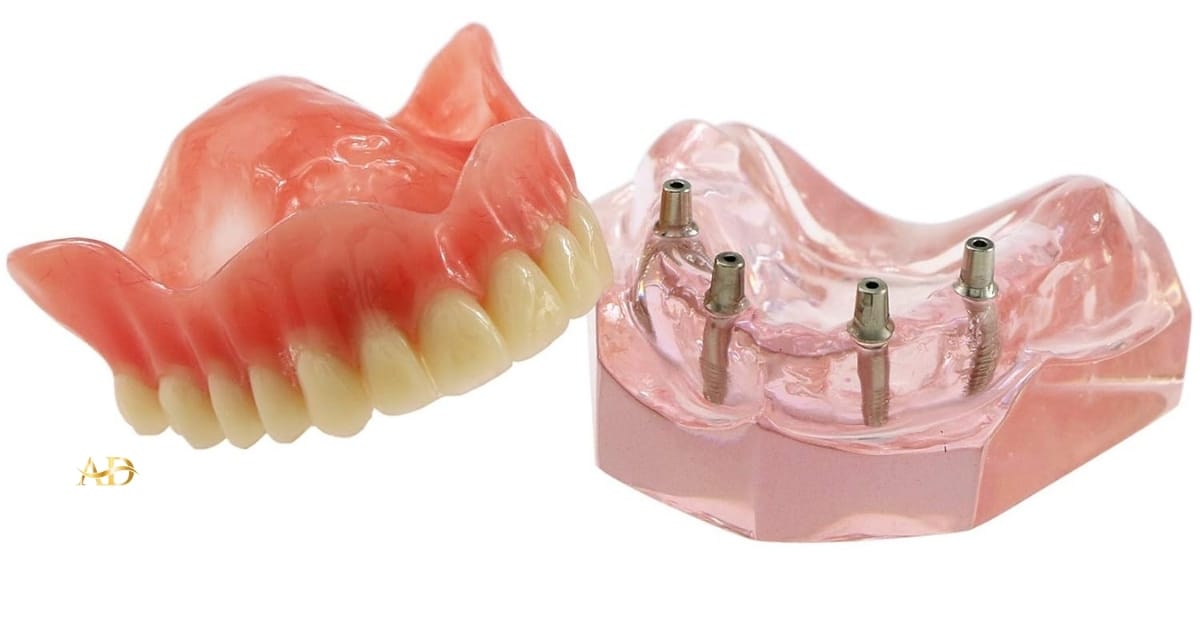
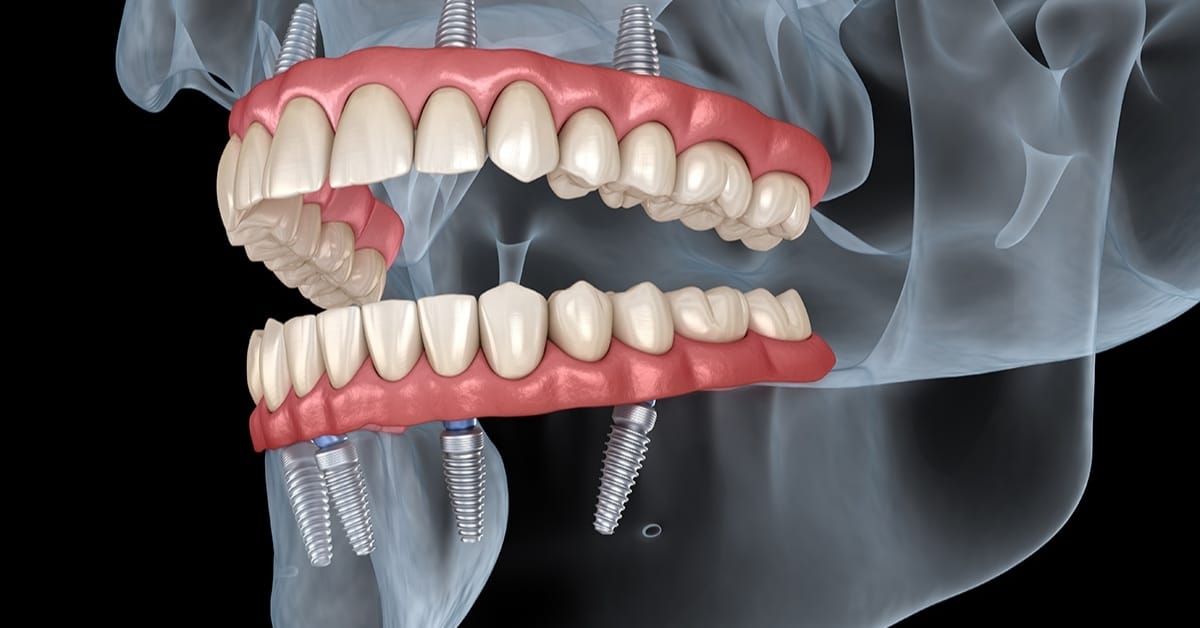
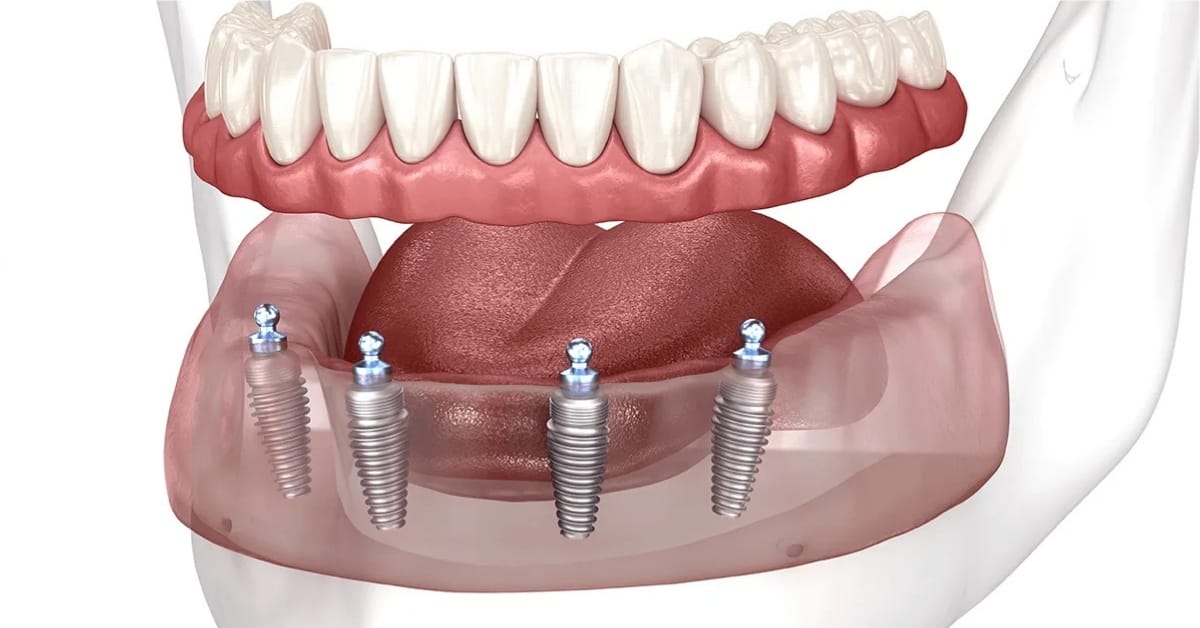
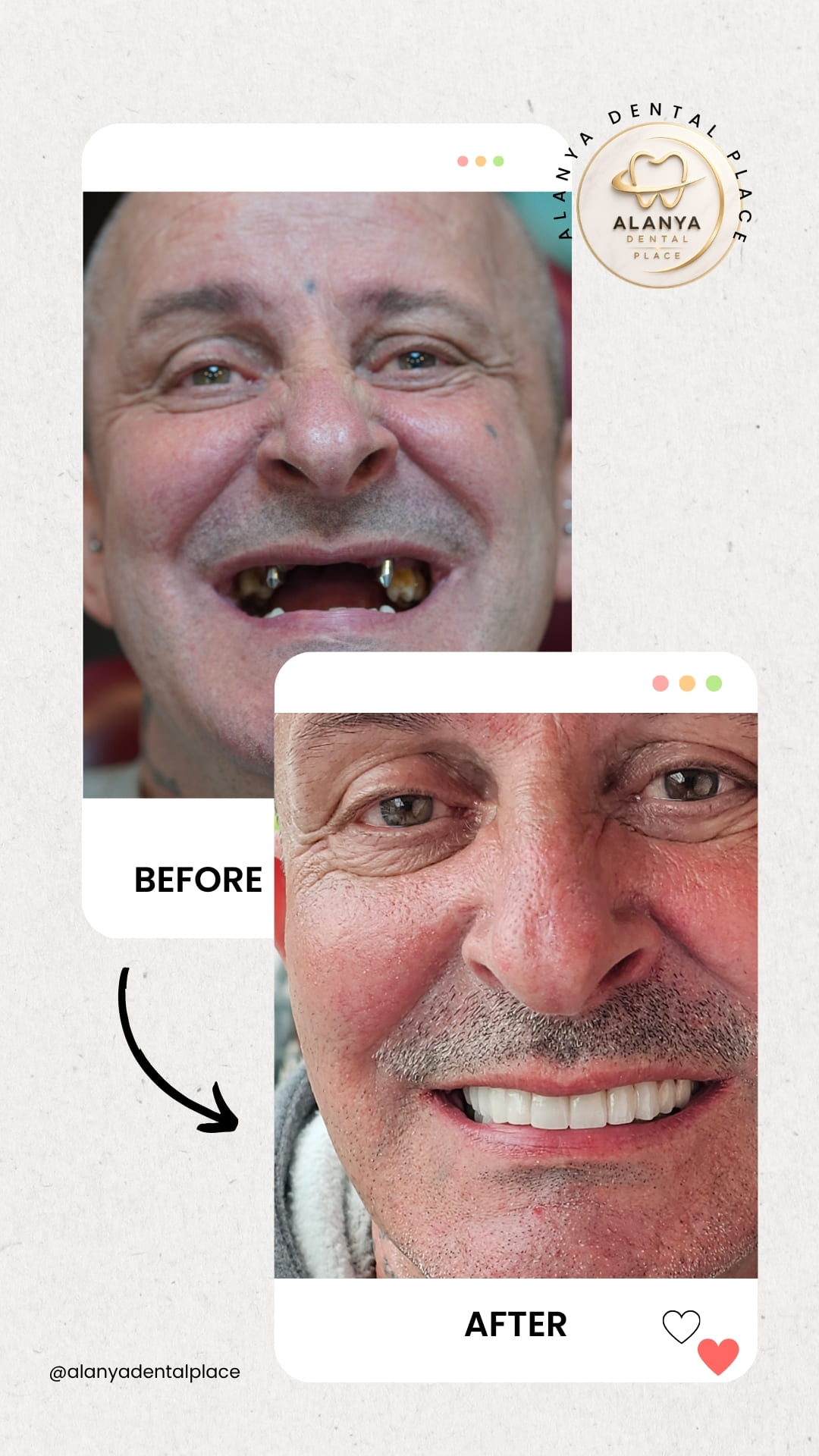
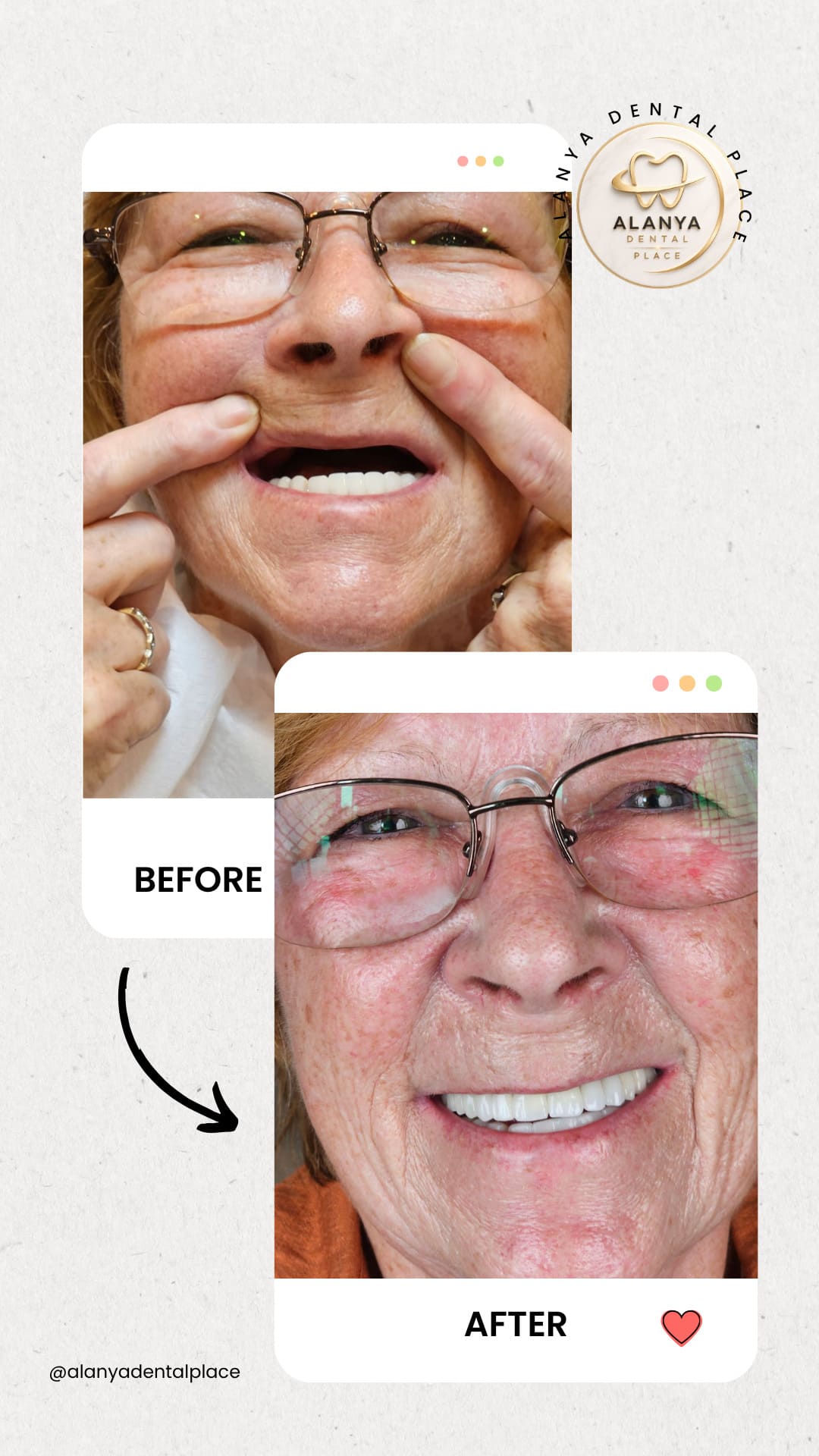
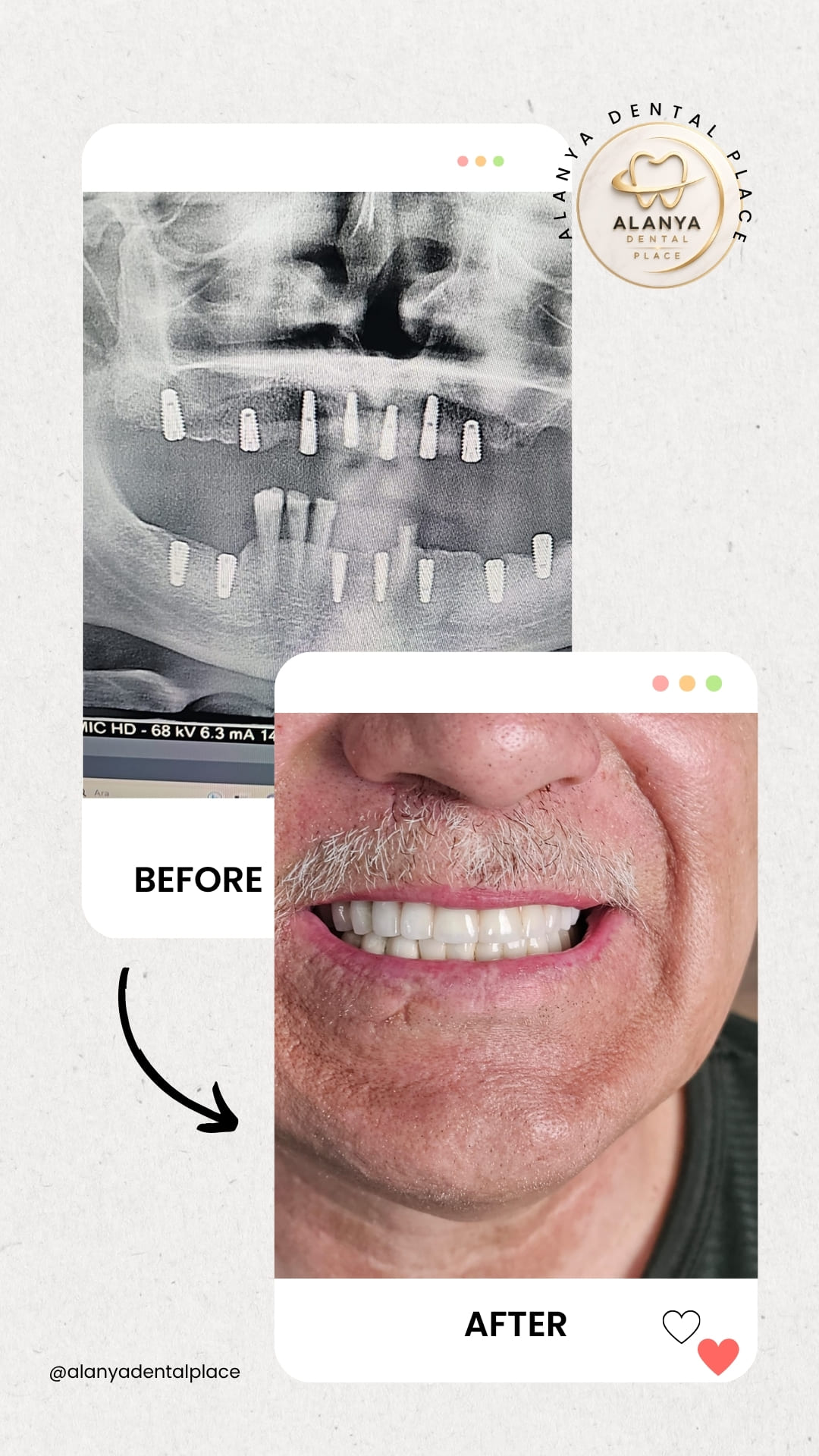
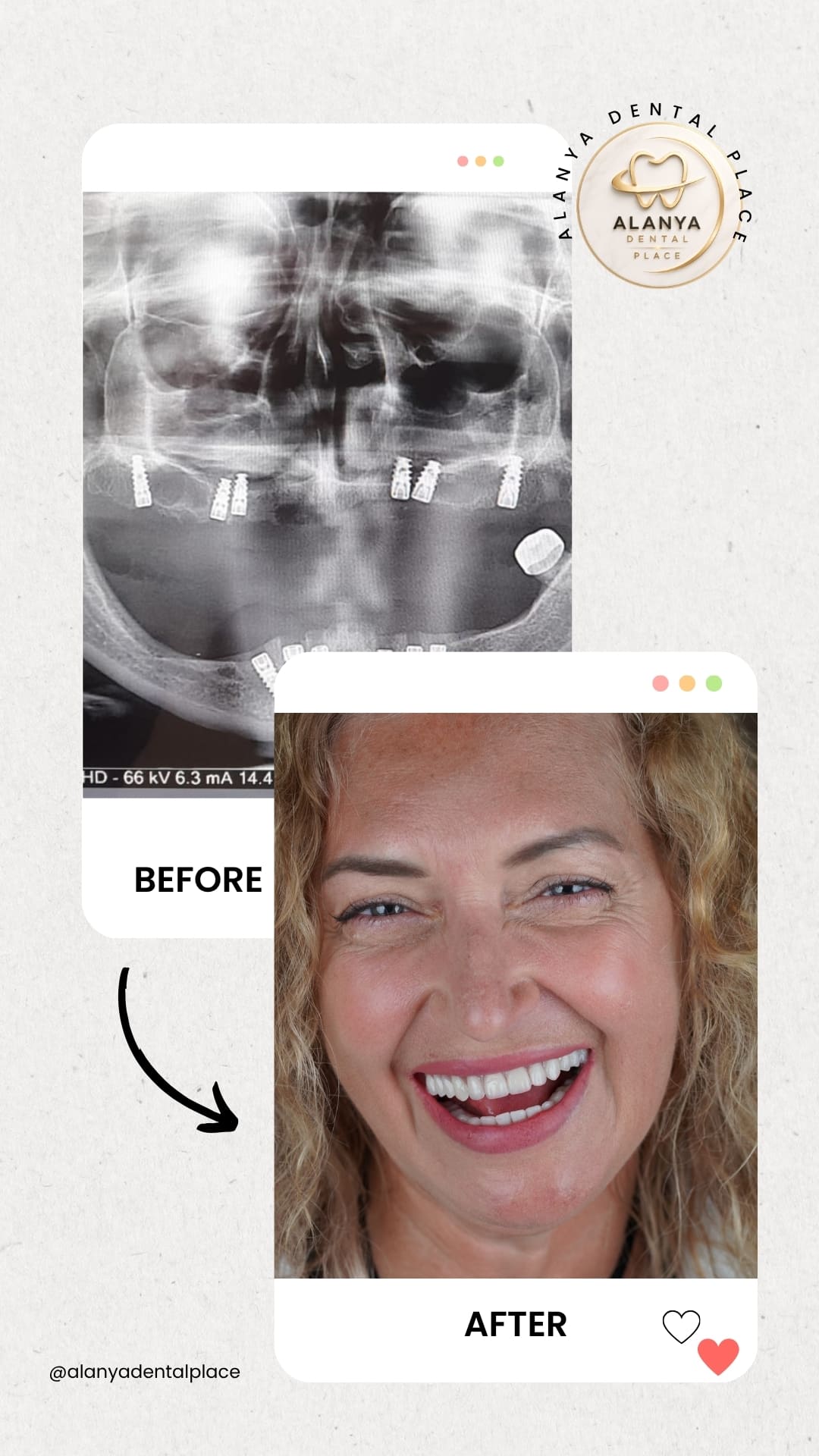
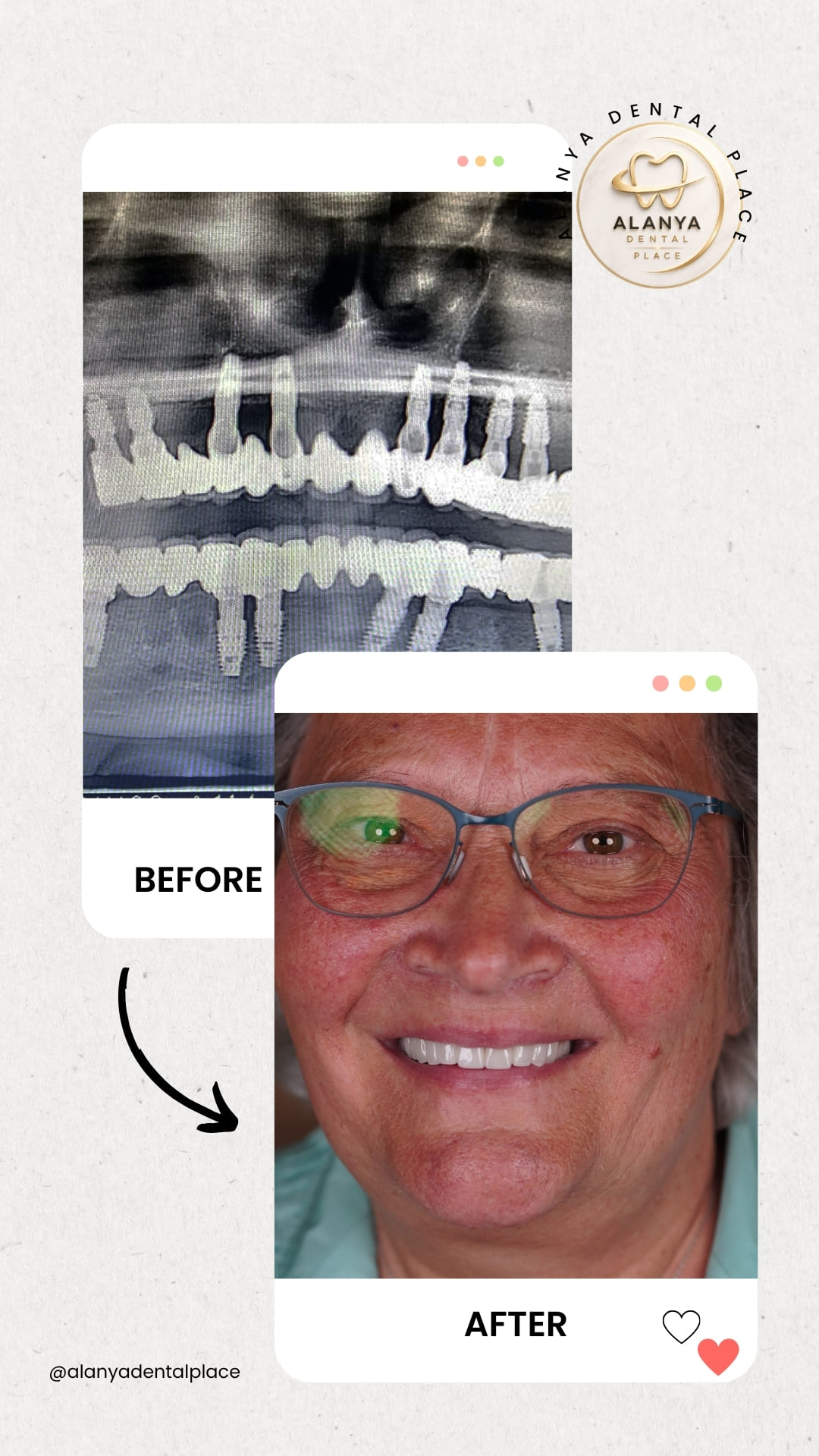
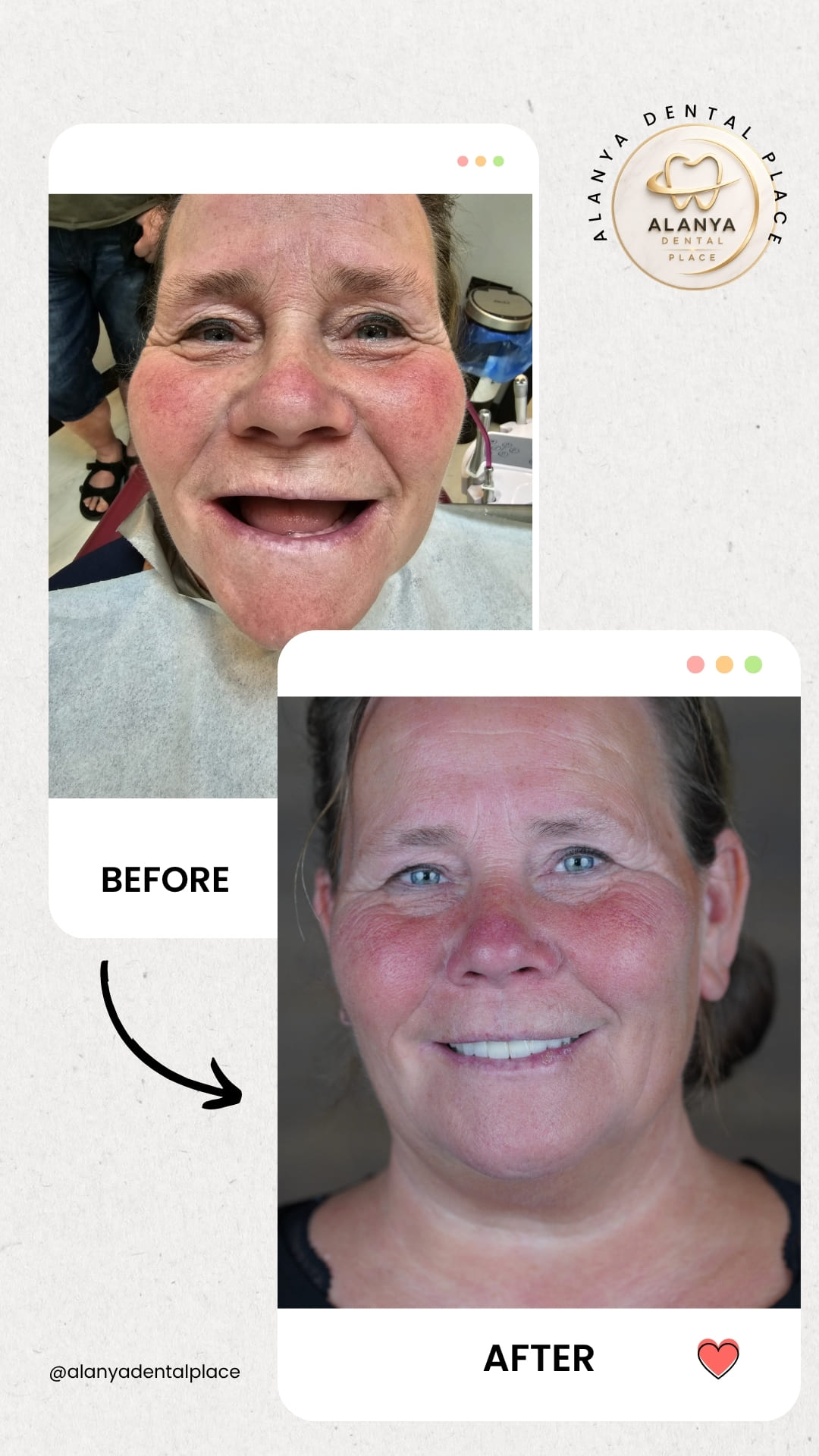
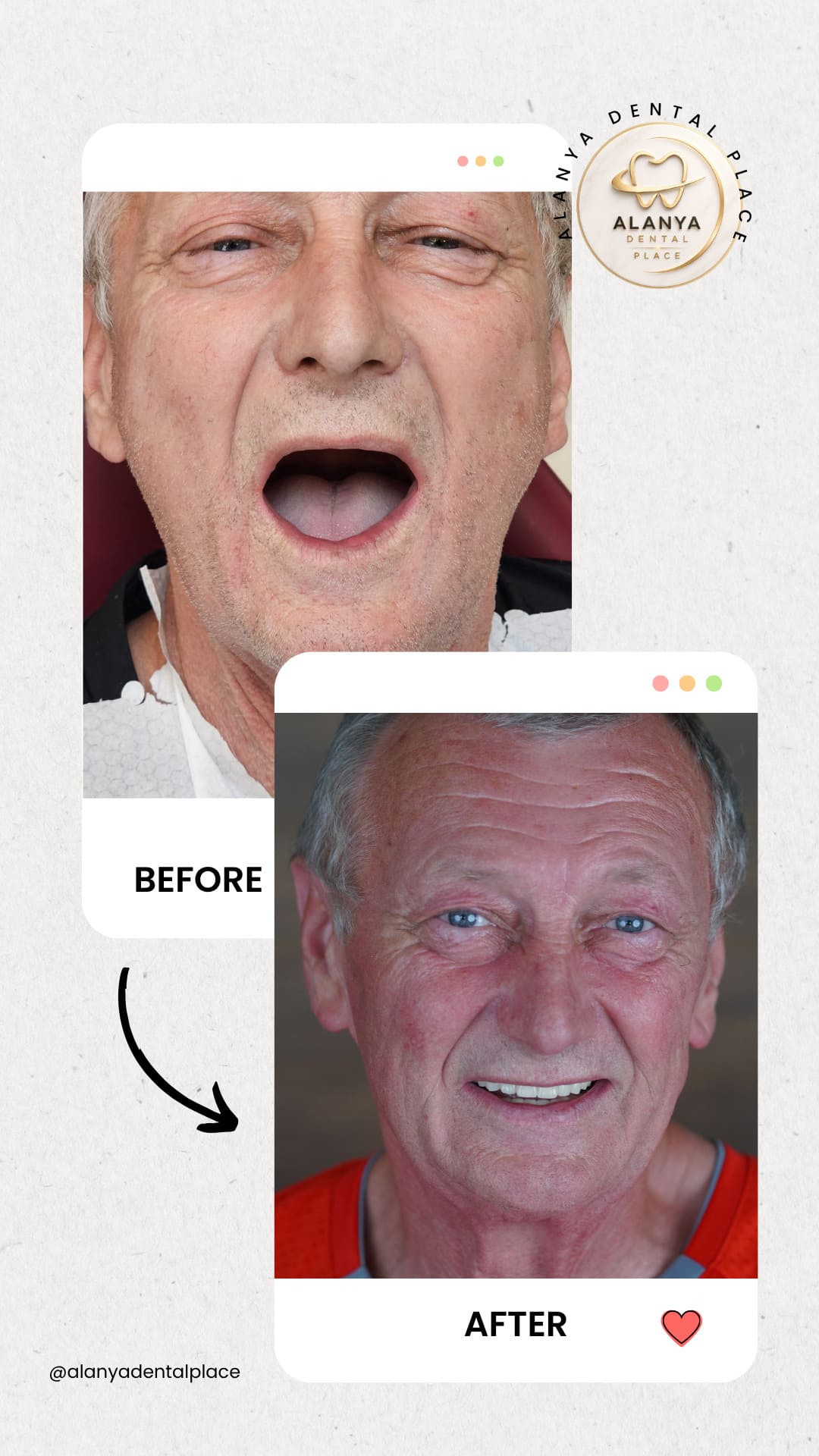
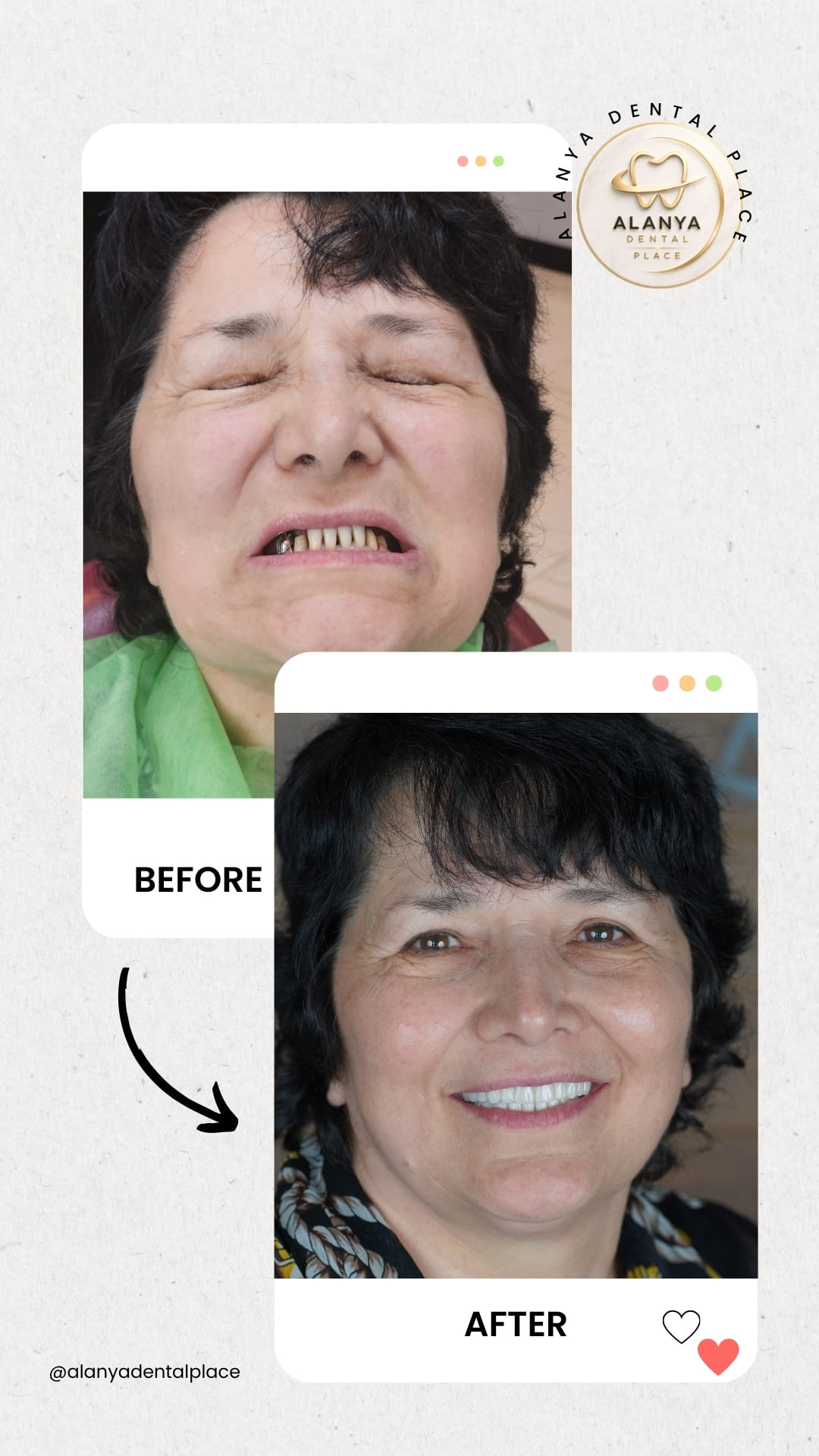
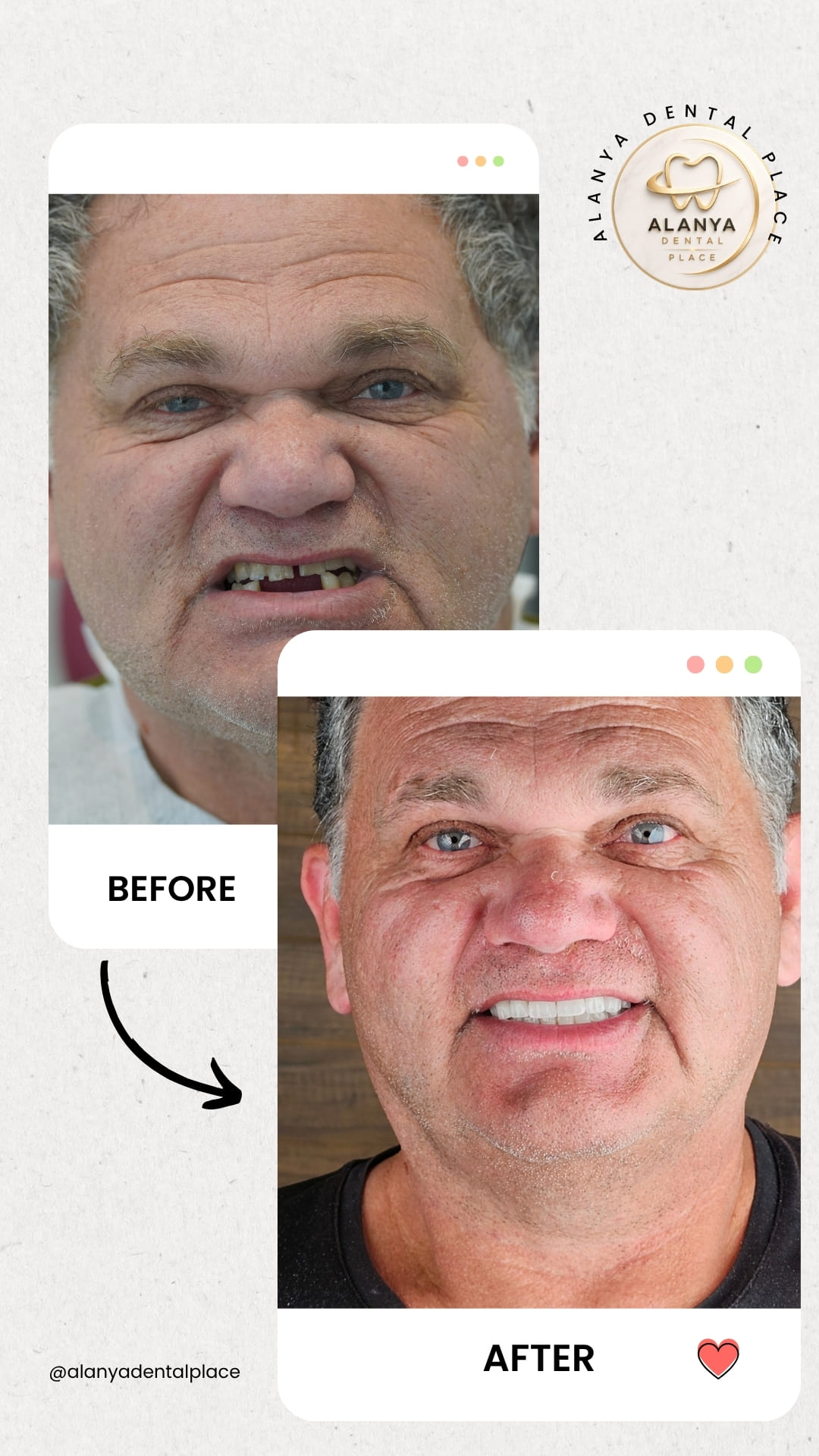
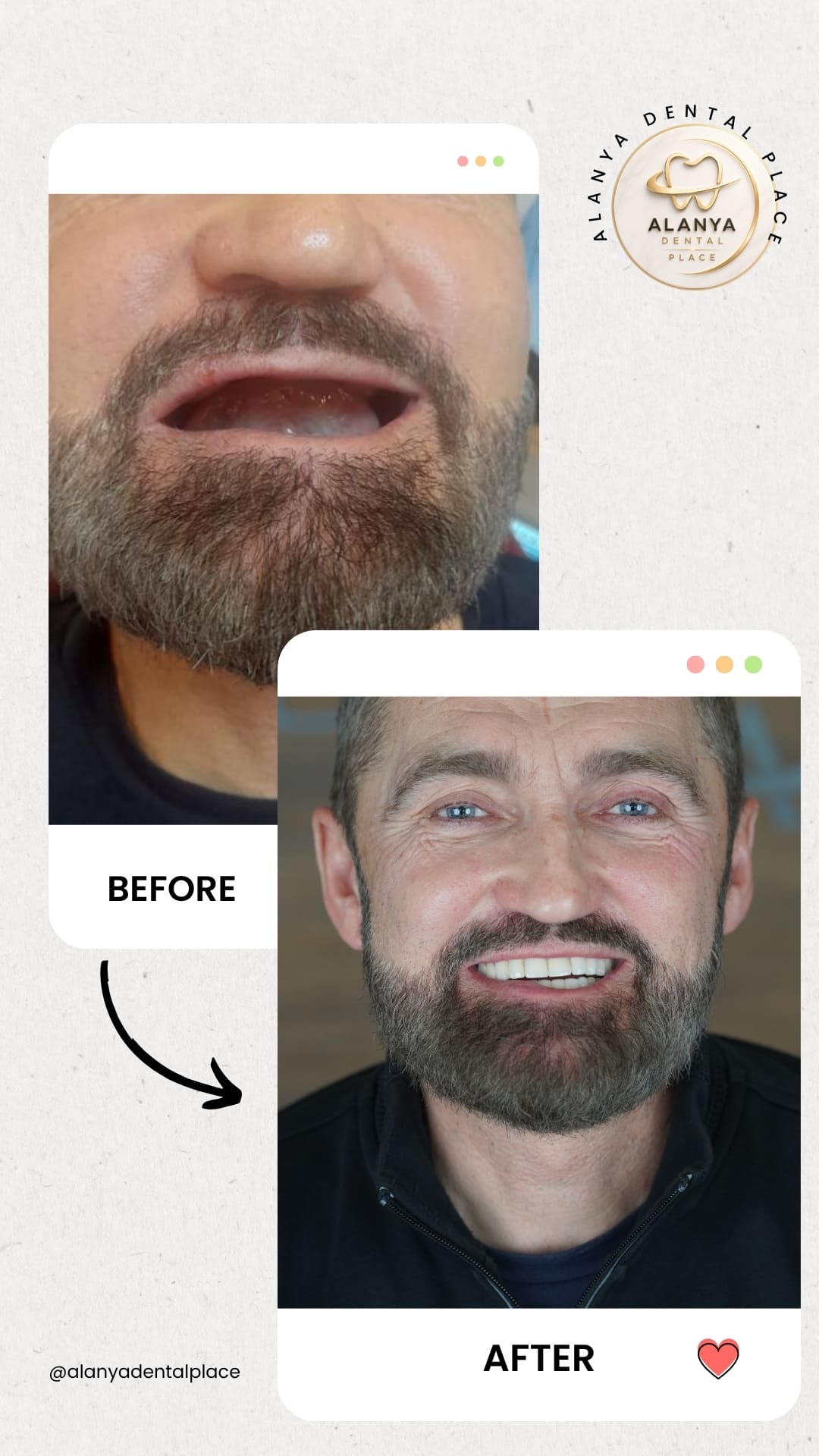
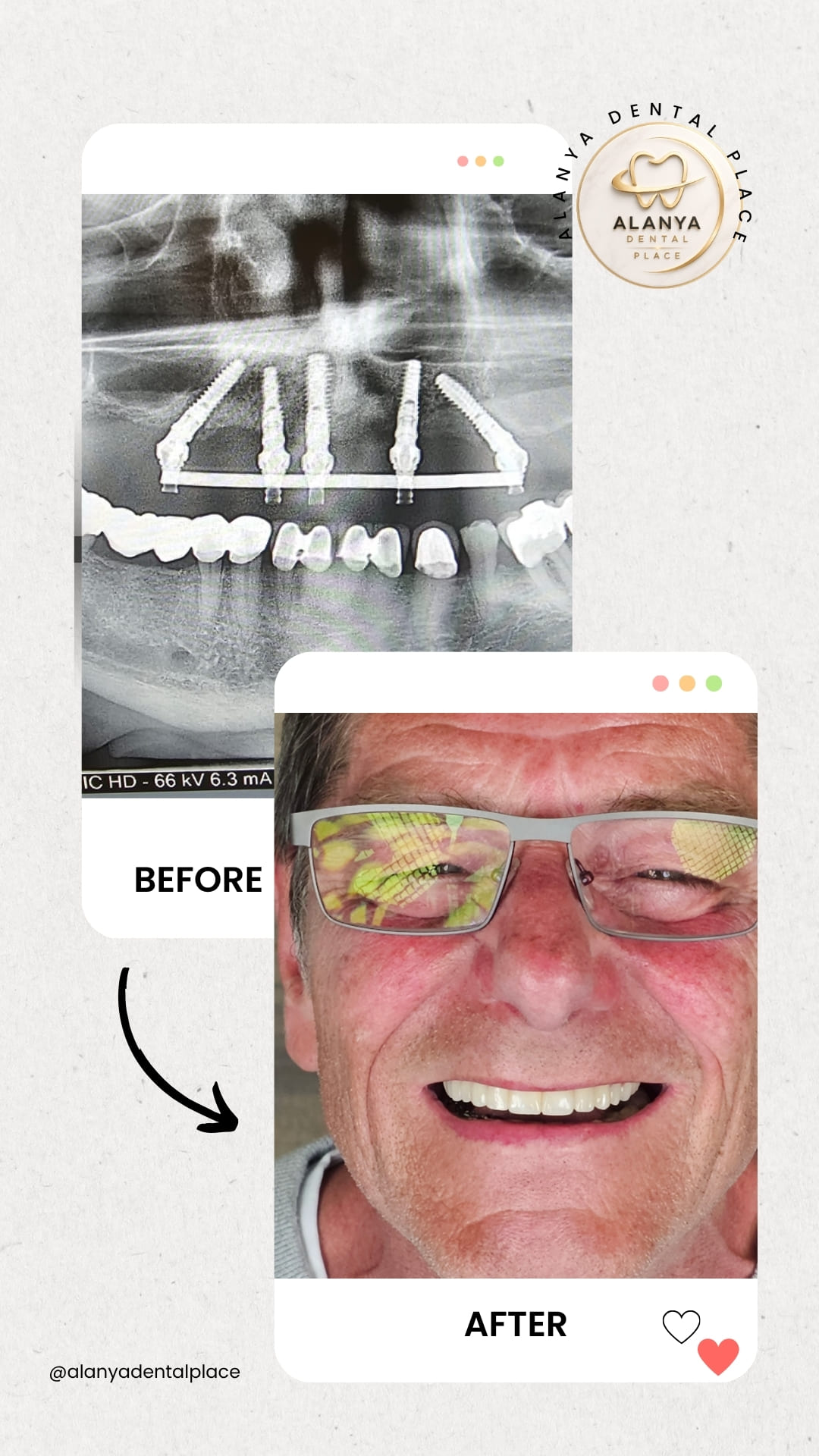
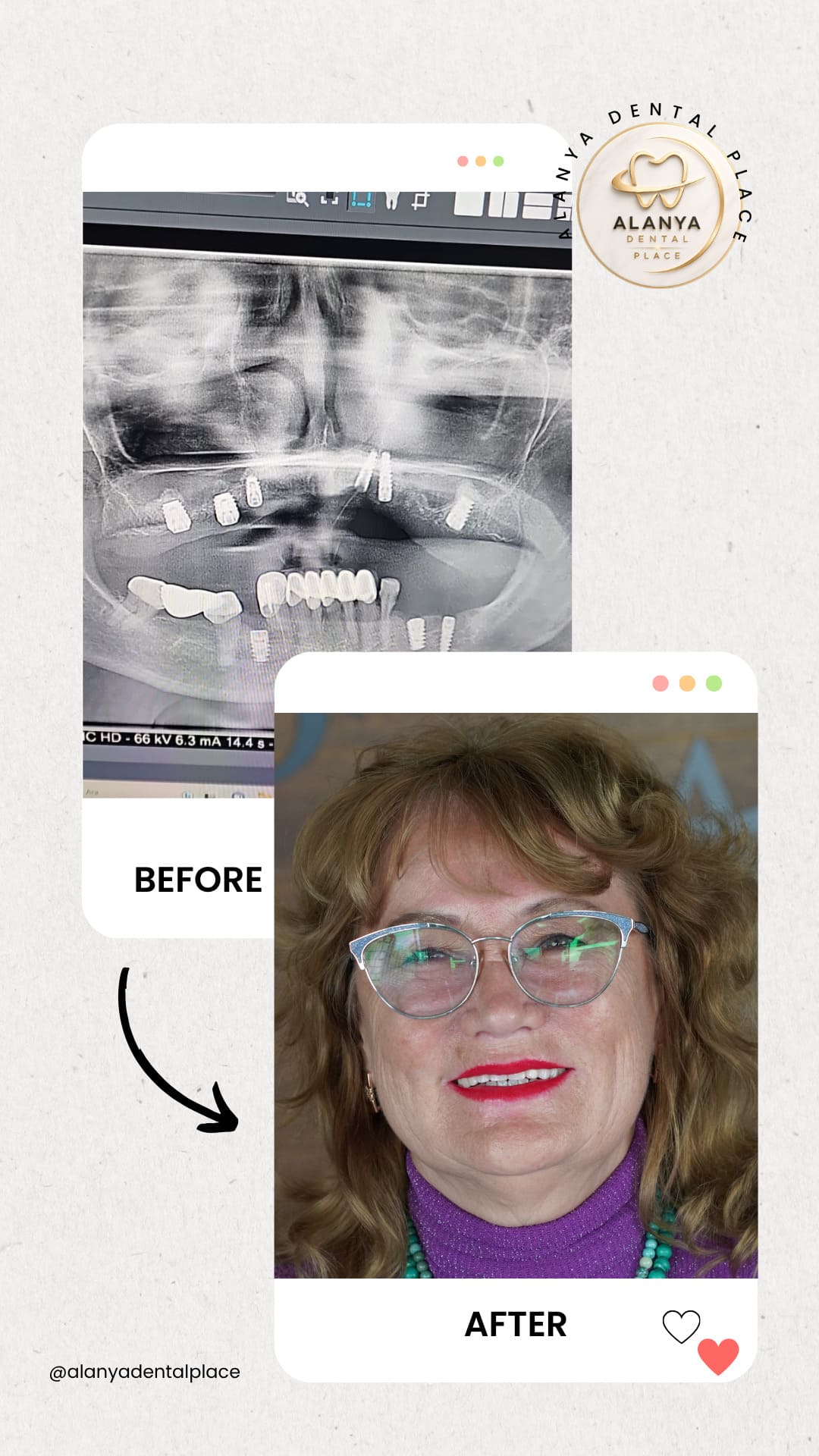
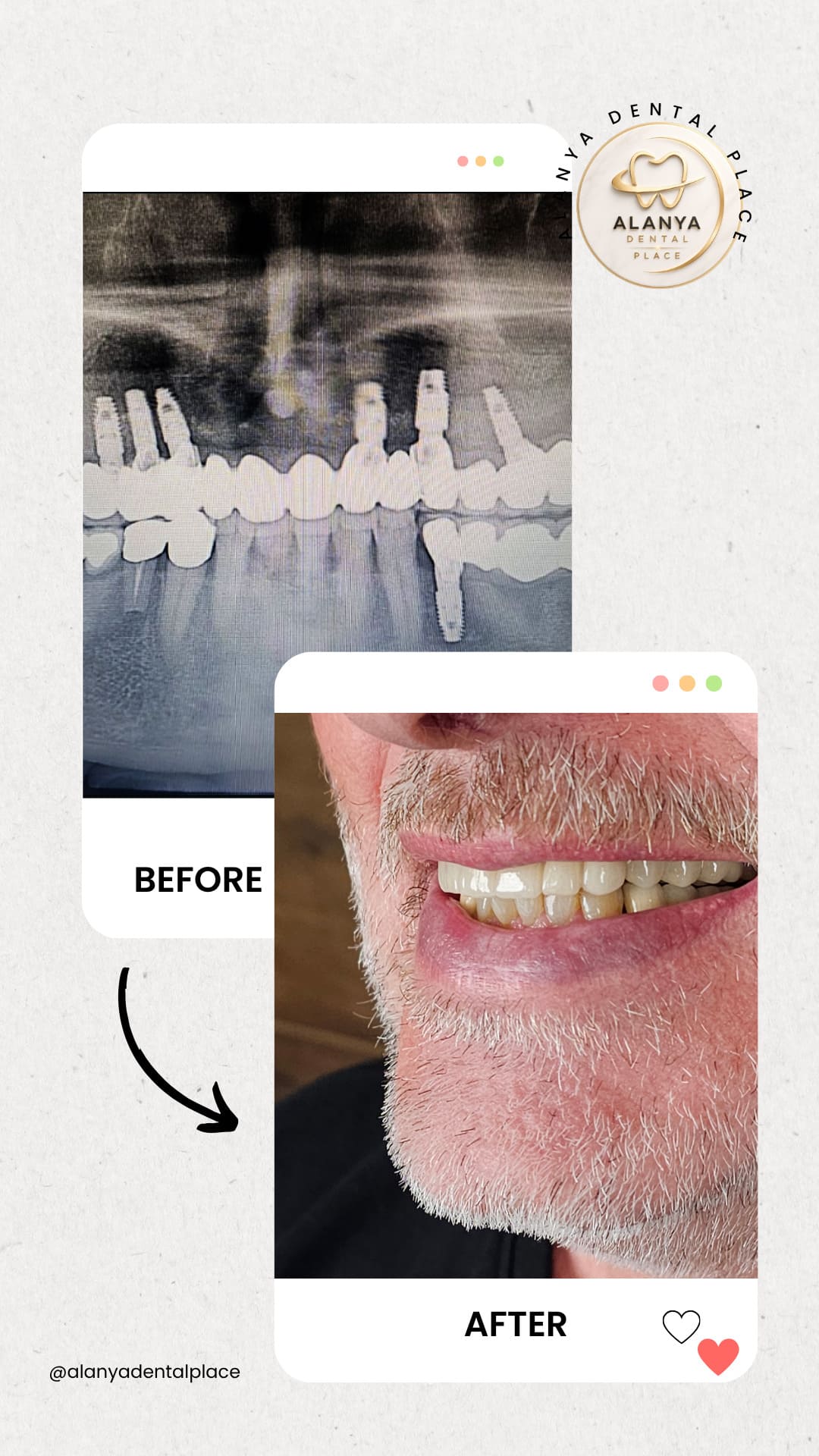
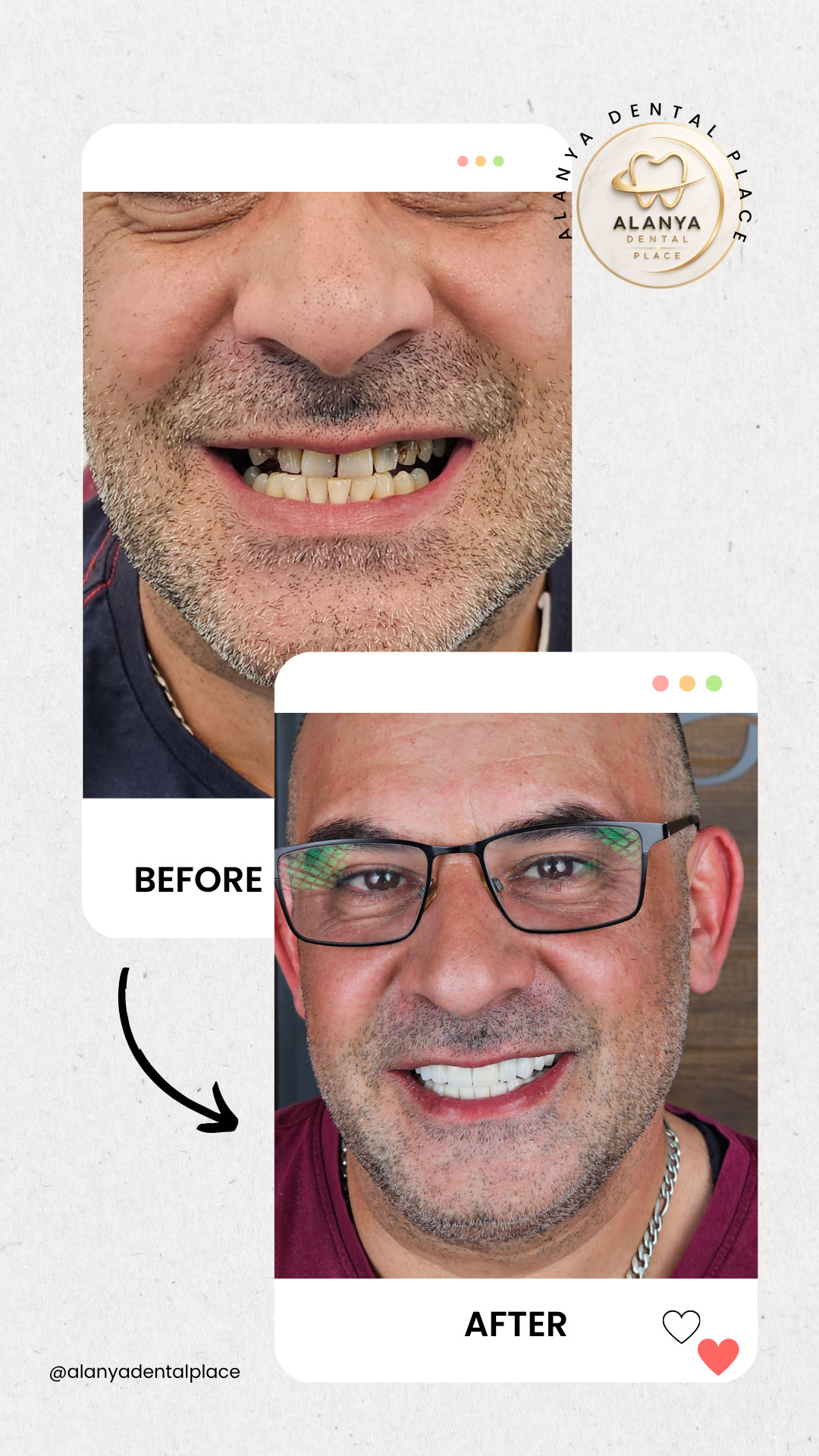
All-on-4 - Before and After Dental Implants
High success rate and natural-looking results






Brand & Material
💎 Implant Brands and Prosthesis Types Used
At our clinic in Antalya, we use the same international brands as those used by premium clinics in Europe and the U.S. We recommend that you be cautious about any offer that does not specify in writing which implant brand will be placed in your jaw.
Selection of Materials for Permanent Bridges
Standard packages typically include a high-quality acrylic/hybrid bridge; the majority of our patients choose to upgrade to a monolithic zirconia bridge supported by a titanium bar during their second visit. This upgrade makes a significant difference in terms of both aesthetics and long-term durability.
💰 All-on-4 Prices: How Much Does It Cost in Antalya?
According to current market data, the cost of All-on-4 treatment in Antalya ranges from approximately 3,500 to 5,500 euros for a single jaw and from approximately 6,500 to 9,500 euros for both jaws. This is significantly lower than prices in the United Kingdom.
10,000+ Reviews
*Price ranges are general information compiled from current market data; a final quote will be provided following a CBCT/X-ray examination and consultation.
The main factors that determine the total cost are: the implant brand, the material used for the permanent bridge (hybrid or zirconia), the number of teeth that need to be extracted, and any additional bone preparation that may rarely be required. Conditions such as smoking or uncontrolled diabetes can also affect the healing process and may require additional monitoring. We recommend that you share your CBCT scan for an exact quote.
In What Situations Is an All-on-4 Implant Necessary?
If you have any of the conditions listed below, you may want to consider All-on-4 dental implant treatment.
All-on-4 Risks, Success Rate, and Safety Guide
We believe it is more valuable to clearly explain the realistic risks of All-on-4 as a surgical procedure than to simply say, Everything will be perfect.
Possible Complications
In published clinical data, the long-term success rate of implants is generally reported to be between 95% and 98%; this means that in a small percentage of cases, the implant may not fully fuse with the bone (osseointegration failure). Other possible complications include peri-implantitis (inflammation around the implant), temporary nerve sensitivity, and, rarely, problems related to the sinus area. Most of these risks can be significantly reduced through proper surgical planning and regular maintenance.
Factors Affecting the Success Rate
✅ Factors that contribute to success
Adequate bone density, regular oral hygiene, a smoke-free lifestyle, well-managed diabetes, precision surgery performed using digital planning, and adherence to regular follow-up appointments.
🚩 Risk Factors
Heavy smoking, uncontrolled diabetes, severe osteoporosis, untreated gum disease, irregular oral care, and bruxism (teeth grinding).
Most of the “fast and cheap” implant experiences criticized on social media stem from cases planned without CBCT, performed without a surgical guide, and where the patient is not provided with written information regarding the number of teeth or the brand. At our clinic in Antalya, no All-on-4 treatment plan proceeds to surgery without digital imaging and written treatment consent.
🆚 All-on-4, Traditional Implants, or Removable Dentures?
🔄 What Is the Difference Between All-on-6, All-on-8, and All-on-X?
Depending on your bone density and chewing habits, in some cases your dentist may recommend a protocol involving 6 or 8 implants, or the “All on X” approach, where the number of implants is determined on a case-by-case basis. The general principle is the same: a fixed bridge supported by a small number of strategically placed implants. The difference is that as the number of implants increases, the load is distributed over a wider area, providing additional stability in some cases. Which protocol is right for you is determined based on your CBCT scan. We will cover the All-on-6 and All-on-8 techniques in more detail on our comprehensive guide pages.
📍 Why Should You Get All-on-4 Dental Treatment in Antalya and Alanya?
For a comprehensive surgical treatment such as All-on-4, choosing the right clinic and the right city directly affects the outcome. Antalya is a medical tourism hub with a high volume of cases in the field of implantology and extensive experience in treating international patients.
High Case Volume, Experienced Teams
Planning a Two-Visit Treatment Plan
Recovery Process and Long-Term Care
The success of All-on-4 depends not only on the surgery but also on the care you receive during the recovery period.
A diet consisting mainly of soft and liquid foods for the first 2 weeks
Use of a night guard for bruxism
A professional implant checkup every 6 months
Daily Cleaning with a Water Flosser
Use of a Specialized Implant Interdental Brush
Avoid smoking (especially during the first few months)
Mild swelling and tenderness are to be expected in the first few days; these symptoms usually subside significantly within a few days with prescribed pain relievers. Even after your permanent bridge is placed, regular follow-up appointments allow us to detect potential problems, such as peri-implantitis, at an early stage.
❓ Frequently Asked Questions About All-on-4 Dental Implants in Turkey
We’ve compiled the most common questions we receive from our patients in Antalya and Alanya.
What is All-on-4, and why are only 4 implants used?
All-on-4 is a procedure in which the teeth of an entire jaw are restored using a bridge anchored to just four implants. The implants—placed vertically in the front and at a 30- to 45-degree angle in the back—utilize the densest bone areas of the jaw to provide the mechanical support needed to hold the entire bridge. Thanks to this angled placement technique, treatment can be completed without the need for bone grafting in most cases.
What is the difference between All-on-4 and other implants?
With other implant techniques, a completely edentulous jaw typically requires 8–10 implants and often involves bone grafting; the process can take months. With All-on-4, the number of implants is reduced to 4, bone grafting is not required in most cases, and in suitable patients, a fixed temporary denture can be placed on the same day. This significantly reduces both the treatment time and the total cost.
Who is the All-on-4 procedure suitable for?
This treatment is suitable for patients who are completely edentulous, have lost most of their teeth, or have teeth that cannot be saved. Another common group of patients consists of those who have been using removable dentures for a long time and wish to switch to a fixed solution. Final eligibility is determined following a CBCT scan, which shows your bone density, and a clinical examination.
Is the All-on-4 procedure painful?
Since the procedure is performed under local anesthesia, you will not feel any pain during the procedure; sedation may also be offered upon request. Mild swelling and tenderness lasting a few days after the procedure are normal and can be easily managed with prescribed pain relievers. If you experience severe or prolonged pain, it may be a sign of a complication such as an infection, so you are advised to contact your clinic.
How many days does the All-on-4 procedure take, and how many visits are required?
The treatment is completed in two separate visits. During your first visit (typically 5–7 days), the surgery is performed and your fixed temporary bridge is placed. This is followed by a 3–6-month healing period to allow your implants to fuse with the bone. During your second visit (also 5–7 days), your permanent bridge is placed, and the treatment is completed.
Are fixed dentures installed on the same day? Is this possible for everyone?
Once sufficient bone stability has been achieved, a fixed temporary bridge can be placed over the implants on the day of surgery; this is called “immediate loading.” However, this depends on your bone quality and the stability achieved during surgery; it cannot be guaranteed for every case. Whether you are a suitable candidate will be determined based on your CBCT scan and an evaluation during surgery.
What factors influence the cost of All-on-4 dental implants?
The main factors determining the price are the implant brand, the material used for the fixed bridge (hybrid or zirconia), the number of teeth that need to be extracted, and, in rare cases, additional bone preparation. In Antalya, the general market range for a single jaw is around 3,500–5,500 euros; a precise quote is provided based on your CBCT scan.
Why are All-on-4 implants so affordable in Turkey?
The difference does not stem from the quality of the implant brand used, but rather from labor costs, clinic operating expenses, and favorable exchange rates. Established clinics in Antalya use the same international brands—such as Nobel Biocare and Straumann—that are used in Europe and the U.S. Turkey’s advanced medical tourism infrastructure is able to offer this cost advantage without compromising safety.
How long does the All-on-4 treatment last?
With proper care and regular checkups, implants can last 15–20 years or longer. The lifespan of the bridge attached to them varies depending on the material; zirconia bridges generally last longer than acrylic or hybrid bridges and require fewer replacements over time. The factor that most affects their lifespan is the care you take with your daily oral hygiene.
Can an All-on-4 implant fail, and what are the signs?
In published clinical data, the success rate is generally reported to be between 95% and 98%; in a small percentage of cases, the implant may not fully integrate with the bone. Pain, swelling, redness, or a sensation that the implant is moving are symptoms to watch for. In such cases, contacting your clinic without delay increases the chances of early intervention.
Is a bone graft required for All-on-4?
In most cases, it is not necessary; this is one of the key advantages of the technique. Angled placement of the posterior implants allows for avoidance of the areas where bone resorption is most severe. However, if bone loss is very advanced, your dentist may recommend limited bone support in certain areas; this will be determined by a CBCT evaluation.
Which implant brand is best for All-on-4?
Brands such as Nobel Biocare, Straumann, Osstem, and Medentika are all proven options backed by international clinical data. The “best” brand depends on your specific case and budget. What matters is that you are informed in writing about which brand will be used and that the selected brand has long-term clinical follow-up data.
Should a permanent bridge be made of acrylic or zirconium?
An acrylic/hybrid bridge is a more economical initial option but may require replacement over time. A monolithic zirconia bridge, on the other hand, offers greater durability, a more natural appearance, and a longer lifespan. Most of our patients choose to start with a hybrid bridge initially and upgrade to zirconia during their second visit.
What can I eat after All-on-4?
For the first two weeks, a soft, liquid-based diet (soup, purees, soft proteins) is recommended. Over time, your diet will gradually return to normal, but you should avoid hard and sticky foods until your permanent bridge is in place. Once your permanent zirconia bridge is in place, most patients can comfortably eat almost any food.
How do you care for All-on-4 implants?
For daily care, the use of special implant interdental brushes and a water flosser is recommended; these clean the areas under bridges more effectively than traditional dental floss. A professional implant checkup every six months is important for detecting problems such as peri-implantitis at an early stage.
What is the difference between All-on-4 and All-on-6?
The basic principle is the same: a fixed bridge supported by a small number of implants. The All-on-6 method provides additional stability in some cases by distributing the load over a wider area using additional implants. Which protocol is right for you depends on your bone density and is determined through a CBCT evaluation. We discuss the All-on-6 treatment in detail on a separate guide page.
Can patients with diabetes undergo the All-on-4 procedure?
Well-controlled diabetes is not an absolute contraindication for All-on-4; however, your blood sugar levels can affect the healing process and the risk of infection. For this reason, the treatment plan for patients with diabetes is carried out with closer monitoring and, if necessary, in coordination with your doctor. In cases of uncontrolled diabetes, it is recommended to first stabilize blood sugar levels.
I smoke. Can I get the All-on-4 procedure?
Smoking is not an absolute contraindication for treatment, but it has been scientifically proven to slow osseointegration (fusion with the bone) and thus increase the risk of implant failure. If possible, quitting smoking or at least cutting back before surgery and during the healing period will significantly increase your chances of success.
Is there a warranty for All-on-4 implants?
The implant brand used comes with its own manufacturer’s warranty; in addition, we provide you with the scope and terms of the warranty offered by our clinic in writing during your initial consultation. The warranty generally requires that you attend regular follow-up appointments and adhere to the recommended care routine.
Is there an age limit for All-on-4?
There is no upper age limit; older patients in good overall health can also benefit from treatment. The lower age limit, however, is around 18 years of age, when jawbone development is complete, because implants placed before development is complete may become loose over time. Regardless of your age, the key factors are your overall health and bone density.
📚 Sources



Send us your panoramic X-ray or CBCT image, and we’ll prepare your eligibility assessment and a clear price quote within 24 hours.