Palateless Dentures in Turkey
For patients who are fed up with full dentures covering the palate, who experience nausea, or who can no longer taste their food, a palateless denture is a truly life-changing solution. Regain both your comfort and your natural-looking smile with implant-supported horseshoe denture designs in Antalya and Alanya.
Prices for Palateless Denture prostheses; almost 70% cheaper than in European countries.
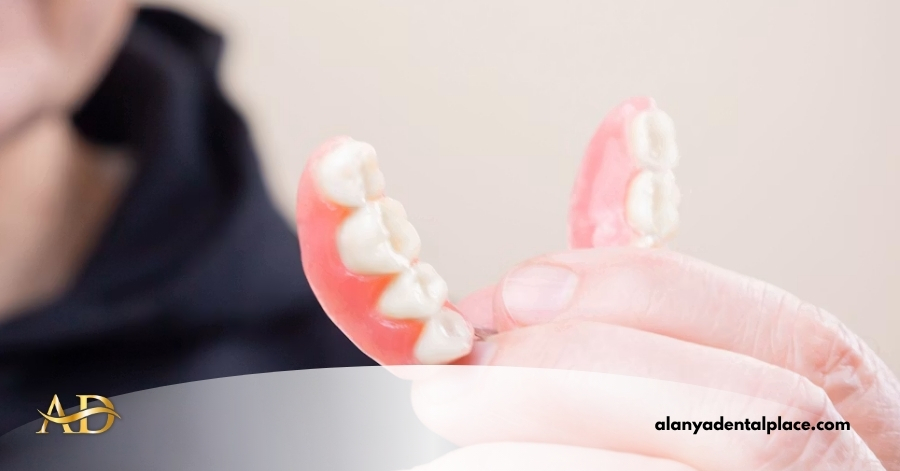
What is a denture without a palate? How does it differ from a conventional denture?
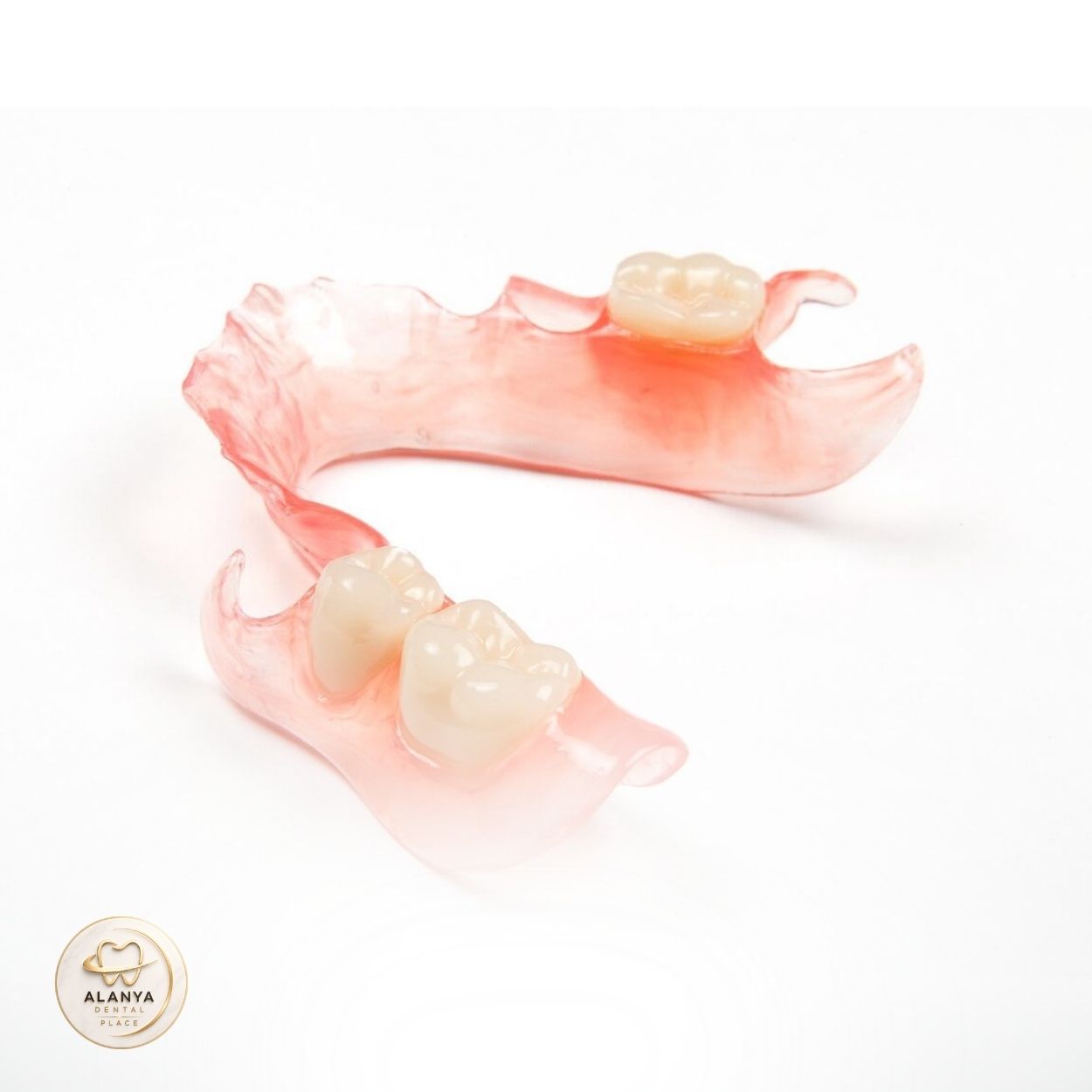
A partial denture, as the name suggests, is a modern implant- or root-supported denture system that does not completely cover the upper palate (palatum) and is usually designed in a horseshoe shape. In traditional full upper dentures, there is a wide acrylic plate covering the palate; this plate is used both to distribute chewing forces and to provide retention via a vacuum effect. However, this wide plate causes serious complaints in many patients, such as chronic discomfort, the gag reflex, a significant reduction in the sense of taste and smell, and difficulty speaking.
In the case of a non-palatal denture, the palatal plate—which is the source of these problems—is either completely removed or represented by nothing more than a thin horseshoe-shaped frame. The denture is secured not by suction, but by dental implants placed in the jawbone or by special attachment systems (attachments, O-rings, Locators, bar systems) on remaining tooth roots. This leaves the palate completely exposed; taste buds and the sense of the palate are preserved, the tongue moves freely, speech becomes clearer, and eating becomes a truly enjoyable experience.
An important point: The term ‘palate-less denture’ applies only to the upper jaw. The lower jaw, by its very nature, does not have a palate; the main issues with full lower dentures are retention and stability, not the palate. All the information discussed on this page relates to upper jaw palate-less dentures.
Types of Dentures: Which System Is Right for You?
A denture without a palate is not a single product; it is divided into several subsystems based on the number of implants, the type of attachment and the frame geometry. At our clinics in Alanya and Antalya, we select the most suitable system for each patient based on their bone structure, budget and expectations regarding quality of life.
Who is Suitable for a Denture Without a Palate? Criteria for Suitable Candidates
When we look at the profile of patients who come to our clinics in Antalya and Alanya saying, “I want to have a denture without a palate,” several common patterns emerge. If you recognise yourself in one of these patterns, a denture without a palate is most likely the right choice for you.
Contents
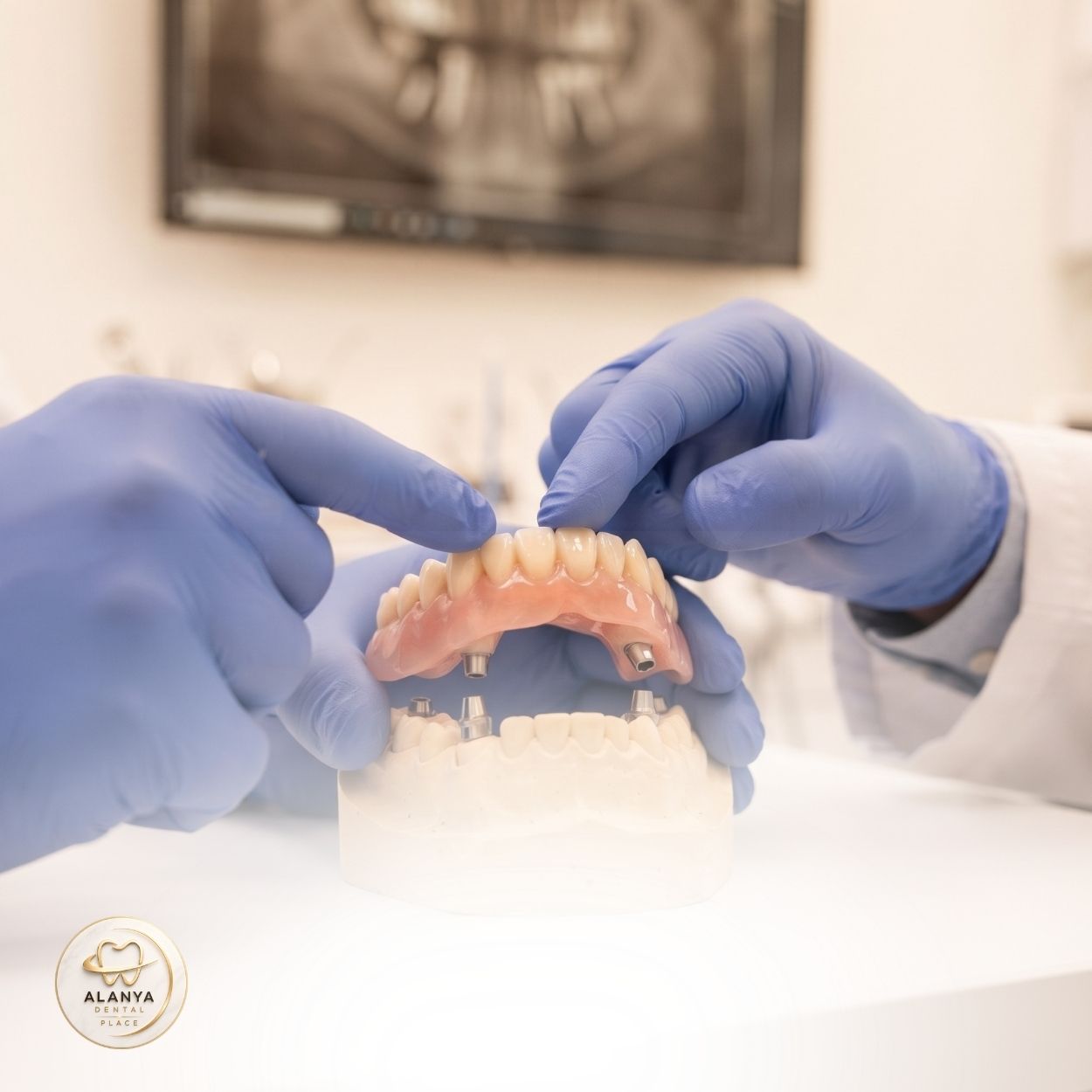
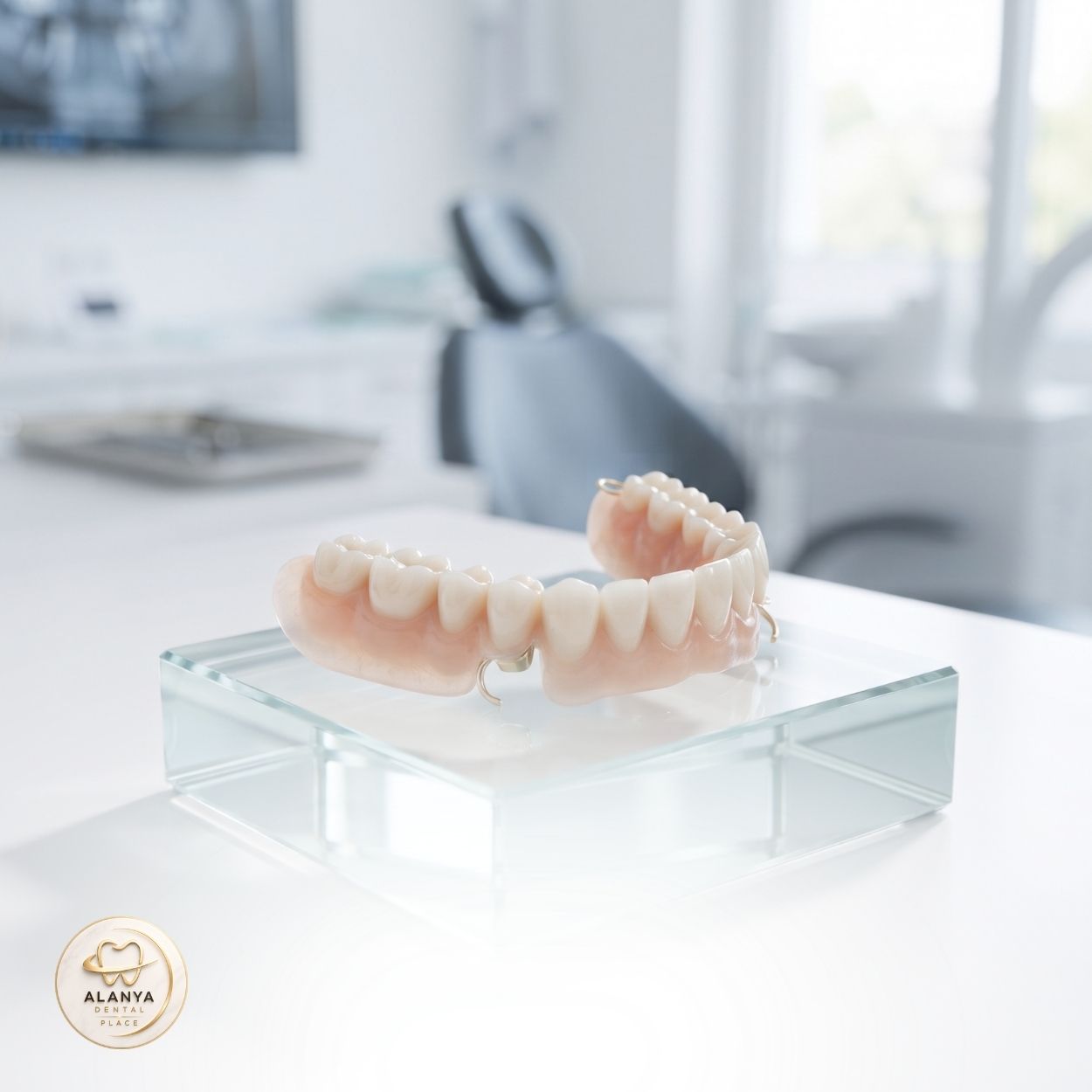
How Are Dentures Made? A Step-by-Step Guide
At our clinic in Alanya, Turkey, treatment for denture-free prosthetics is completed within a total process lasting 2–6 months, involving 1–3 clinic visits depending on the patient’s condition. Compact visit protocols are available for dental tourism patients from abroad.


Prices for Dentures in Turkey — How Much Do They Cost in Alanya and Antalya?
The cost of edentulous dentures in Turkey varies depending on the system chosen (removable overdenture or fixed bridge), the number of implants placed, the type of attachment used (O-ring, Locator, bar), the denture material (acrylic, zirconia-based, metal-supported) and the level of expertise at the clinic. To give a general overview:
Clinic location
Dental implant system
Duration of treatment
Compared to Europe
Frequently Asked Questions — Dentures
Questions About Treatment
As the implant placement stage is carried out under local anaesthetic or conscious sedation, no pain is felt during the procedure. Mild swelling and tenderness are to be expected for 48–72 hours following the operation; this can be easily managed with prescribed painkillers. The prosthetic stage, however, is a completely pain-free process. Our clinic prioritises offering a pain-free, denture-free experience to all patients.
In theory, it is possible to have an implant-free, non-palatal denture; however, international clinical data clearly demonstrates that implant-free versions have significant disadvantages in terms of retention and stability. Implant support makes a significant difference in terms of preventing slippage and tipping, as well as ensuring long-term comfort. Clinically, the most successful outcomes for non-palatal dentures are achieved in cases supported by at least 2–4 implants.
Two to four implants are generally considered standard for a removable edentulous overdenture, whilst four to six implants are standard for a fixed implant-supported full-arch bridge. An edentulous overdenture supported by four implants is the most commonly preferred configuration in terms of both retention and patient satisfaction. The exact number of implants is determined following CBCT imaging and bone analysis.
With proper care and regular check-ups, implants can last a lifetime. The removable denture framework that sits on top can be replaced every 5–8 years; attachment components such as Locators or O-rings are replaced every 1–3 years. In the case of a fixed implant-supported bridge, the aim is for it to last 10–15 years. The key to a long lifespan: regular check-ups and proper oral hygiene.
Yes. A severe gag reflex is one of the strongest indications for a palateless denture. Dozens of case reports in the international literature describe patients who were unable to use conventional dentures at all due to a gag reflex but were successfully treated with palateless bar-retained dentures or implant-supported overdentures. Our clinic has extensive experience in this field; we particularly welcome patients who experience a severe gag reflex.
As the palate remains open, the sense of temperature, taste and smell are fully preserved. This means that eating becomes a truly enjoyable experience. Chewing ability in the implant-supported version is equal to or superior to that of a traditional denture; research shows that implant-supported palateless overdentures have a positive effect on chewing ability.
With removable dentures, the dentures should be removed at least once a day and cleaned using a denture brush and a special denture cleanser; they can be soaked in water overnight. Implant abutments should be gently cleaned with a soft-bristled toothbrush. For fixed bridges, it is recommended to use an interdental brush or a mouthwash after every meal, and to have a professional cleaning at the clinic twice a year.
The lower jaw does not naturally contain a palate; therefore, the concept of a ‘palate-less lower denture’ does not technically exist. The main issue with the lower jaw is usually a lack of retention. This problem is resolved using a two-implant-supported removable overdenture. Our clinic offers comprehensive prosthetic rehabilitation for both the upper and lower jaws.
Two separate appointments are scheduled for the entire implant and prosthesis treatment. First appointment (4–6 days): consultation, implant surgery and a temporary solution. Second visit (3–4 months later, 4–6 days): impressions, fitting and delivery of the permanent prosthesis. Antalya Airport is approximately 45 minutes’ drive from Alanya; airport transfers are arranged by our clinic.
Locator system: A separate, low-profile abutment is placed on each implant; the prosthesis locks onto these abutments individually. This is a more flexible and cost-effective option. Bar system: The implants are connected to one another via a metal bar; the prosthesis sits on top of this bar. It provides greater stability and load distribution, but involves higher costs and more labour. The choice between the two depends on the number of implants, the spacing between them, and the patient’s budget.
📚 Sources and Scientific References
- Zicari F, et al. “Palateless Maxillary Implant-Supported Overdentures: A Review of Patient Satisfaction and Clinical Outcomes Along With Case Series.” PMC / NCBI, 2025. PMC →
- Sharma A, et al. “Palateless custom bar supported overdenture: A treatment modality to treat patient with severe gag reflex.” Indian Journal of Dental Research, 2012; 23(2). PubMed →
- Heydecke G, Thomason JM, Lund JP, Feine JS. “The impact of conventional and implant supported prostheses on social and sexual activities in edentulous adults.” Journal of Dentistry, 2005; 33(8): 649–657. PubMed →
- Medipol Sağlık Grubu. “Damaksız Diş Protezi Nedir, Avantajları Nelerdir?” Medipol →
- Colgate Ağız Sağlığı Merkezi. “Damaksız Diş Protezi Nedir, Nasıl Yapılır?” Colgate TR →
- Eurodenture. “Horseshoe Upper Dentures: Pros, Cons & Options.” Eurodenture →
- Türk Diş Hekimleri Birliği. Protetik Diş Tedavileri Kılavuzu. Ankara, 2024. TDB →
- Meijer HJA, et al. “Five years clinical outcome of maxillary mini dental implant overdenture treatment.” Clinical Implant Dentistry and Related Research, 2023. PubMed →
Do you have any other questions?