Bone Graft Surgery in Turkey
If you have been told that you cannot have dental implants due to insufficient bone, this is, in most cases, a solvable problem. A bone graft is a safe and evidence-based surgical procedure performed by specialist oral surgeons at our clinics in Antalya and Alanya. It is now possible to restore the necessary bone volume prior to implant placement.
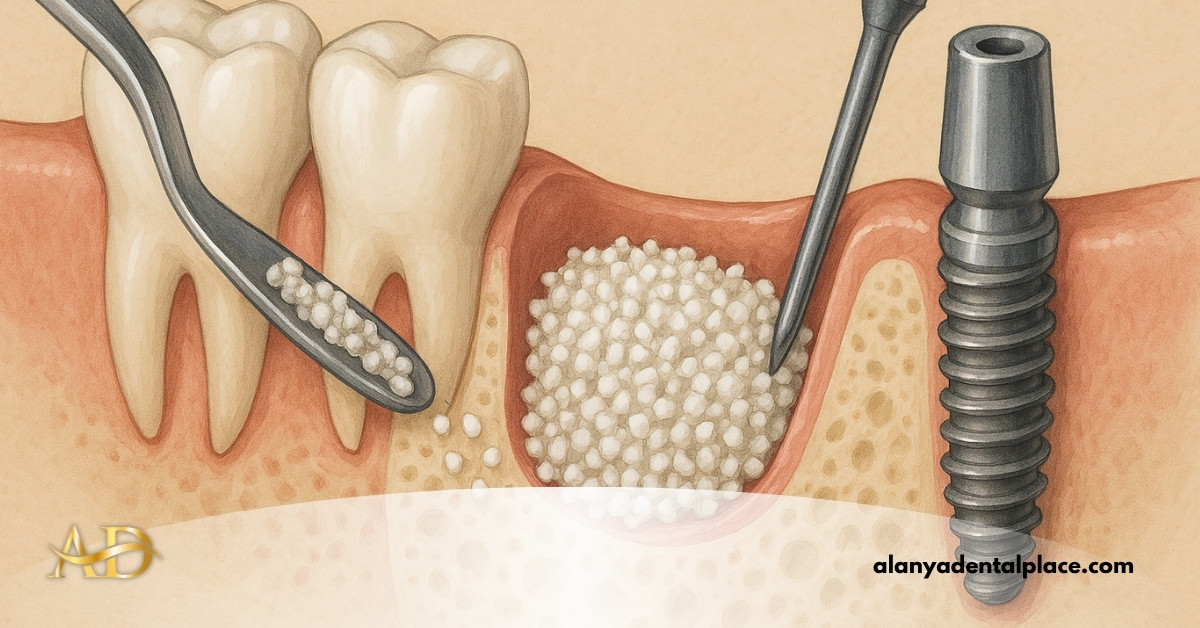
What Is a Bone Graft Operation in Antalya?
The jawbone serves as a biomechanical foundation that directly determines the structure of the teeth and the stability of dental implants. When a tooth is lost or remains missing for a long period, the bone tissue in that area gradually becomes thinner and loses its density. This is known as bone resorption and is one of the most common obstacles to implant treatment.
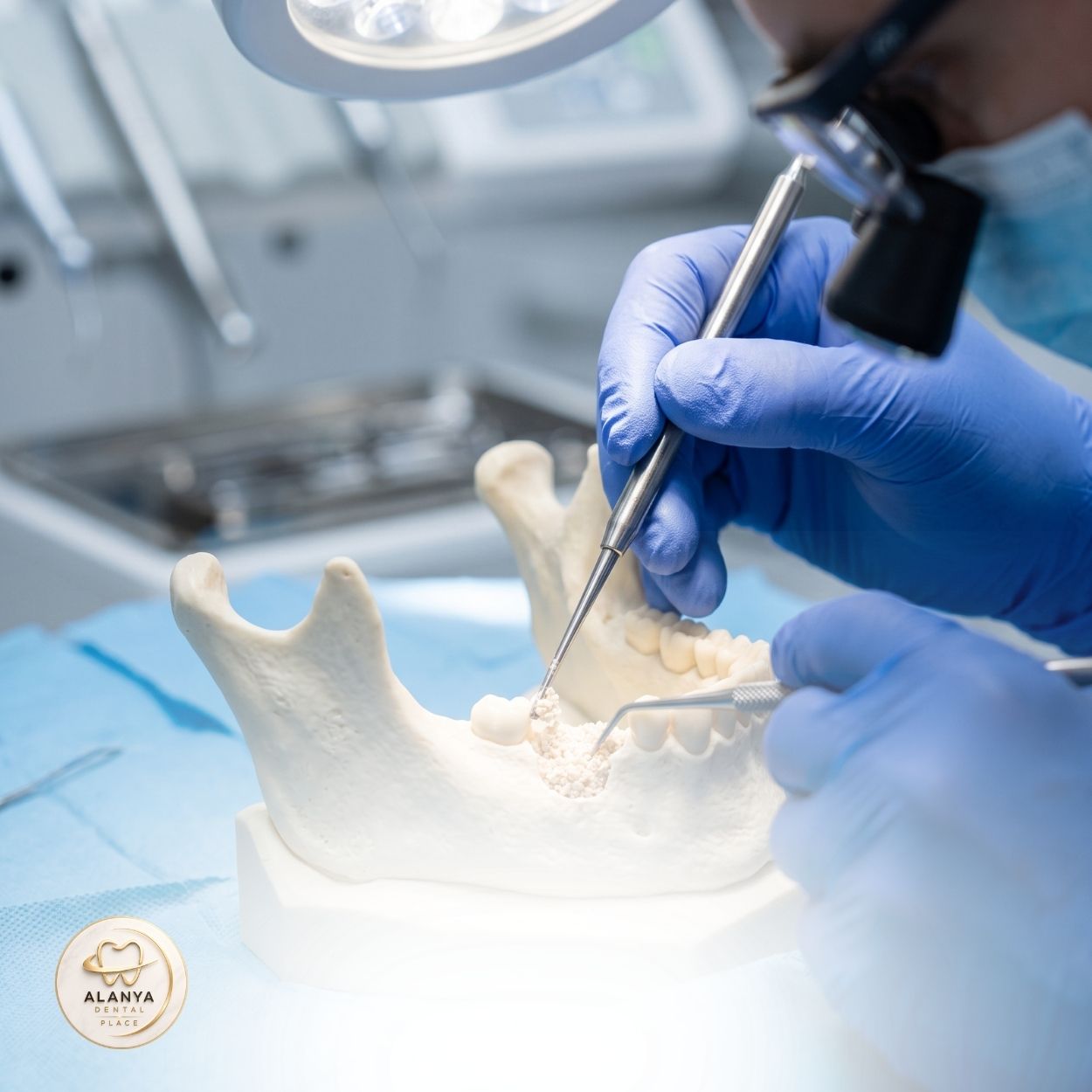
A bone graft procedure is a surgical regeneration technique performed to restore lost bone volume, create a solid foundation for the implant and ensure long-term treatment success. Also known as bone augmentation, this procedure triggers the formation of new bone tissue by placing biocompatible graft material into the deficient area.
For patients planning dental implant treatment in Turkey, bone grafting is often a necessary preparatory step. In our clinical observations carried out in the Antalya and Alanya regions, bone deficiency of varying degrees is detected in approximately 30–40 per cent of implant candidates.
When Is a Bone Graft Required?
Insufficient Bone Mass Prior to Implant Placement
Socket Grafting Following Tooth Extraction
Advanced Gum Disease (Periodontitis)
Insufficient Sinus Area
After Cyst and Tumour Surgery
Accidents and Trauma
Types of Bone Grafts: Which Material Is Right for You?
The choice of bone graft type is determined by the extent of the patient’s bone loss, their general state of health, their anatomy and the surgical plan.
At our clinic, a separate assessment of graft material is carried out for each case. Research published in the scientific literature up to 2025 has shown that synthetic biomaterials yield results comparable to those of autogenous grafts in certain clinical indicators.
A bone graft is not simply a matter of placing a material into a void. Placing a biocompatible membrane (barrier membrane) over the graft material prevents soft tissue from growing rapidly and encroaching on the bone formation site. This technique is known as GBR.
GBR is used particularly in cases of large bone defects and where vertical bone augmentation is the aim. Either resorbable (absorbable) or non-resorbable membranes may be preferred; this choice depends on the surgical requirements and the surgeon’s experience.
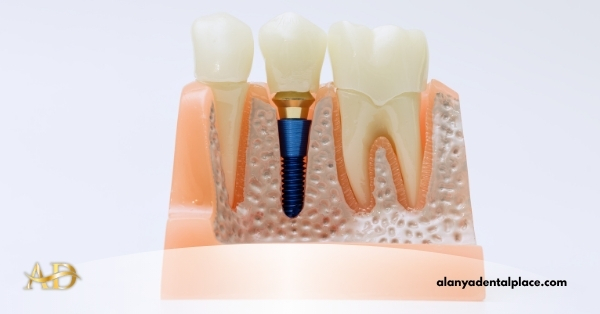
In cases of mild or moderate bone deficiency, a combination of bone powder and membrane is usually sufficient. However, where there is excessive resorption of the jawbone, a particle graft alone cannot provide the required volume.
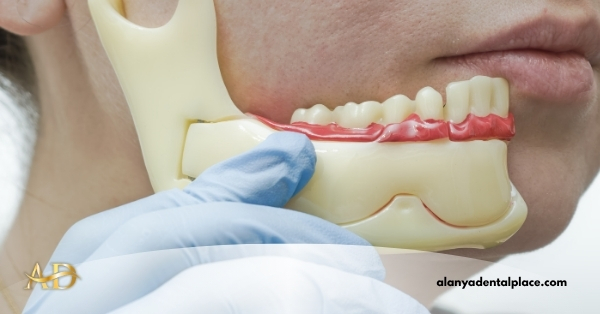
In such cases, an autogenous block bone graft is used. A block of the patient’s own bone — usually taken from a different part of the jaw or from the iliac crest — is harvested and fixed to the defect site. The hip bone is recognised worldwide as the richest source of bone marrow and growth factors; it provides a volume sufficient to reconstruct the entire jaw.
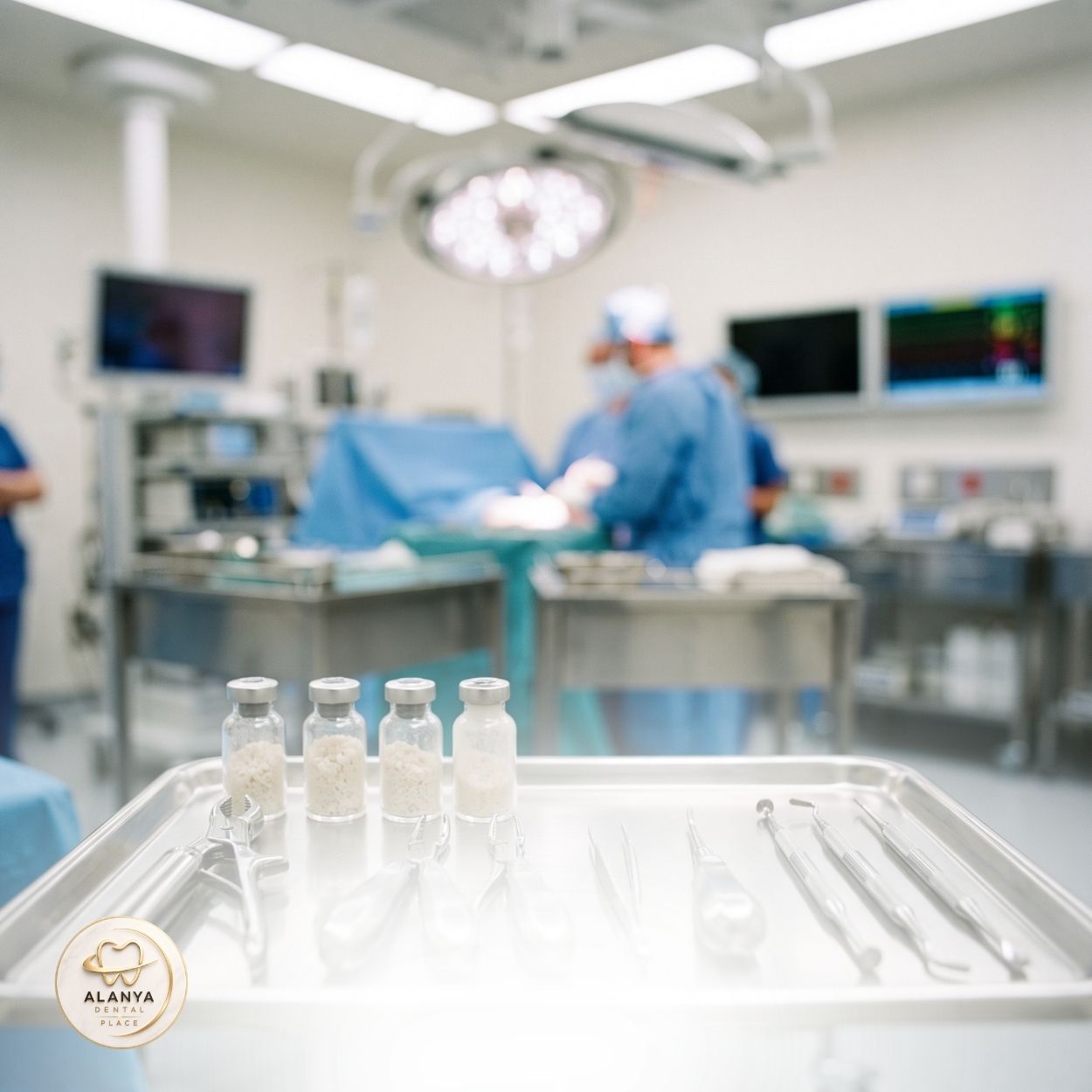
Block graft procedures are carried out under general anaesthesia and in a fully equipped operating theatre, particularly for extensive procedures.
How is a Bone Graft Operation Performed? The Step-by-Step Process
Examination and Imaging
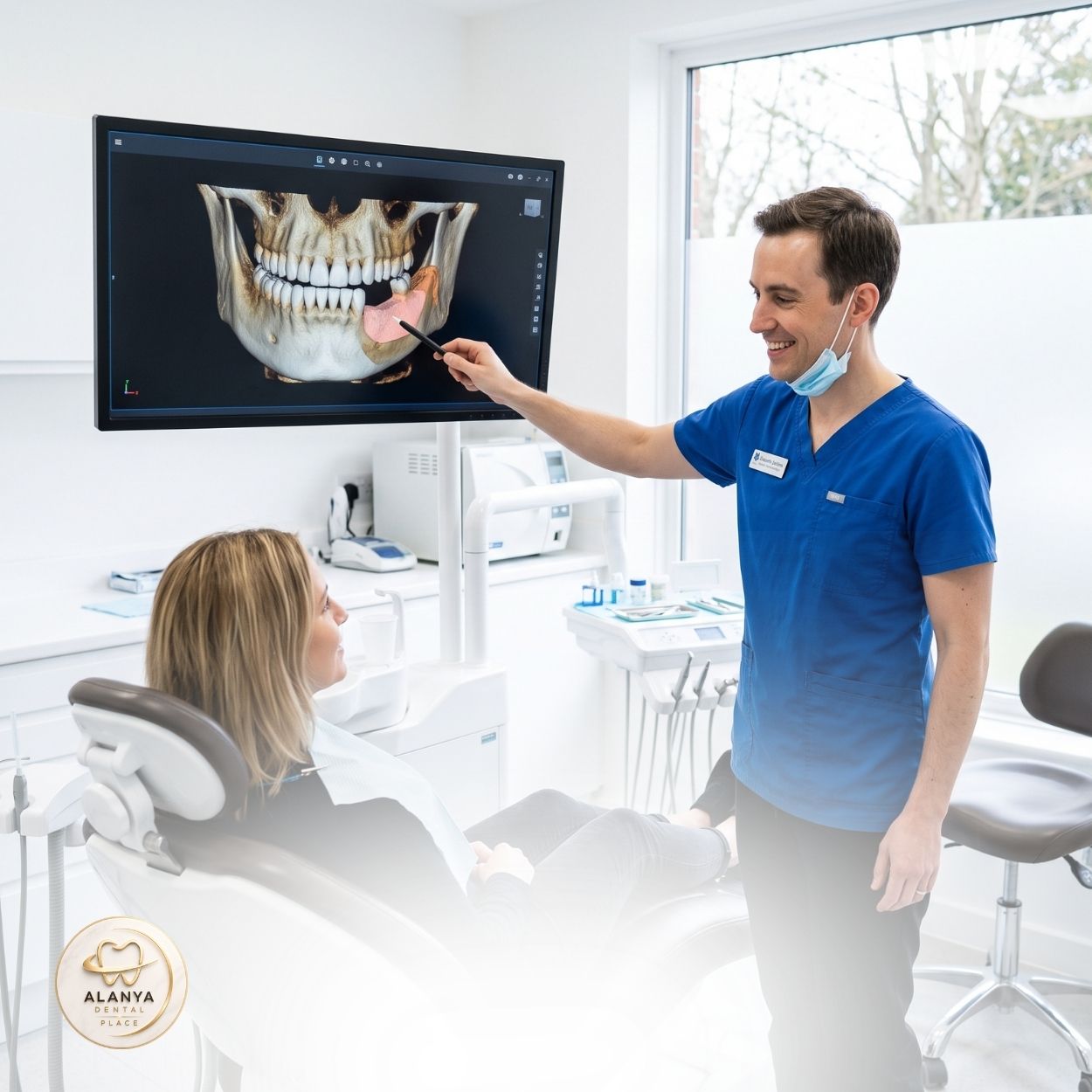
A panoramic X-ray and/or cone-beam CT (CBCT) scan is taken prior to the procedure. This imaging enables graft planning by measuring the existing bone volume with millimetre-level precision.
Anaesthesia Procedure
Most bone graft procedures are carried out under local anaesthesia. Conscious sedation may be preferred for patients with high levels of anxiety. More complex bone graft procedures, however, may require general anaesthesia.
Surgical Access and Graft Placement
The graft site is accessed via a tissue incision, and the selected graft material is placed in the deficient area. Where necessary, a GBR membrane is applied. The wound is closed with sutures.
Recovery Process
Mild swelling and tenderness in the first few days following the procedure are normal. The vast majority of our patients are able to leave the clinic on the same day. Bone integration is completed within 4 to 9 months; this period varies depending on the initial condition of the bone and the type of graft used.
Bone Graft Surgery in Turkey: Why Is It the Preferred Option?
In recent years, Turkey has emerged as a leading destination for medical tourism worldwide. The number of foreign patients choosing Turkey for dental bone grafts and implant treatment is increasing every year. The main reasons for this can be summarised as follows:
- Costs 50–70 per cent lower than in Europe and North America, without compromising on quality
- Modern clinics subject to inspection by the Turkish Ministry of Health
- Cutting-edge technology: Digital implant planning, CBCT imaging, bioactive membranes
- Experienced oral and maxillofacial surgeons
- Comprehensive coordination: transport, accommodation, translation support
The Antalya and Alanya regions are among Turkey’s most popular destinations for both general tourism and medical tourism. Our clinic operates in both cities; our team, which specialises in coordinating care for international patients, manages your treatment process from start to finish.
Bone Graft or Sinus Lift? What's the Difference?
Parameter
Area of application
Purpose
Technical
Recovery period
Indications
Antalya Dental Clinic and Alanya Implant Centre: The Benefits of Dental Tourism
As well as being one of Turkey’s largest tourist centres, Antalya has also become a major destination for dental tourism in recent years. As an Antalya dental clinic offering services to international standards, our clinic also operates in the district of Alanya.
As the Alanya Implant Centre, our team of specialists carries out bone grafting, sinus lifts, guided bone regeneration (GBR) and advanced implantology procedures in accordance with the latest protocols. For those seeking dental treatment in Antalya, our location in the city centre offers easy access.
To get started with your dental treatment in Turkey, all you need to do is request a preliminary consultation. Our team will be by your side throughout the entire process, from your treatment plan to accommodation recommendations.
Patient Testimonials




Frequently Asked Questions (FAQ)
Questions About Treatment
How long does a bone graft operation take?
For minor defects, the procedure can be completed in 30–60 minutes. In more complex cases (such as block grafts, extensive GBR or sinus lifts), this time may extend to 2–3 hours. The duration varies from person to person and depends on the pre-determined surgical plan.
When can a dental implant be fitted following a bone graft?
In most cases, it is necessary to wait between 4 and 9 months after the graft. Once follow-up X-rays have confirmed that the bone has reached sufficient density, the implant stage can begin. For some small defects, however, the graft and implant can be carried out in the same session.
Does a bone graft cause pain?
As the procedure is carried out under local anaesthetic, no pain is felt during the procedure. A period of natural tenderness follows; this can be easily managed with prescribed painkillers. The vast majority of patients return to their daily lives within a few days.
Can a bone graft fail?
Although bone graft failure is rare, it is possible. Factors that increase the risk of failure include smoking, uncontrolled diabetes, poor oral hygiene and infection. Careful patient selection and meticulous surgical technique significantly reduce this risk.
Are there any alternatives to a bone graft?
In some cases, zygomatic (cheekbone) implants, short implants or the All-on-4 technique may be preferred instead of a bone graft. However, these alternatives are not suitable for every case. The most appropriate option is determined following an examination and imaging carried out at our clinic.
Is a bone graft permanent?
Yes. The graft material fuses with your own bone tissue over time, resulting in permanent bone volume. Provided that good oral hygiene is maintained and implant care is not neglected, the resulting bone will retain its stability for many years.
What should you eat after a bone graft?
During the first week, you should opt for soft and cold foods. Hard foods that may put pressure on the graft site, foods that require chewing, and hot drinks are among the things you should avoid during this period. Following your doctor’s advice will speed up the healing process.
Which doctor should you see in Antalya for a bone graft?
Bone grafting falls within the remit of oral and maxillofacial surgeons or dentists specialising in implantology. Our clinic is staffed by a team of dentists with extensive experience in these areas. When choosing a dental clinic in Antalya, the dentist’s experience and the clinic’s technological infrastructure should be key criteria.
Is it safe to have a bone graft in Turkey?
Yes. Turkey has clinics that provide services in line with international standards in the field of dental implants and bone grafts. Clinics subject to supervision by the Ministry of Health use CE-certified materials, and surgeons participate in international training programmes. Hundreds of our international patients have undergone treatment without any complications.
Will there be any pain on the same day as the bone graft?
Once the effects of the anaesthetic have worn off, you should expect to experience mild to moderate discomfort. This is a predictable and manageable process. Modern pain management protocols are designed to cause the patient as little discomfort as possible.
Is a bone graft made from an embryo or from animal bone?
This depends on the type of graft used. Autogenous grafts are taken from the patient’s own bone, allogeneic grafts from a human bone bank, and xenografts are usually derived from bovine bone (highly processed). Synthetic grafts, on the other hand, are produced entirely from artificial materials. The type to be used is determined based on the patient and the specific circumstances; the options will be explained to you in detail in accordance with your preferences.
Is a bone graft covered by insurance?
In Turkey, the Social Security Institution (SGK) does not generally cover dental implants or bone graft procedures. You will need to check the scope of your private health insurance policy. We prepare all treatment-related documents (invoices, treatment plan) for international patients; they can then submit a claim for reimbursement to their insurers in their home countries.
What should you avoid doing during the bone graft healing process?
Smoking is strictly prohibited. Alcohol consumption should be reduced. Strenuous physical activity should be avoided. The area over the graft should not be touched with the tongue or fingers, and no pressure should be applied to the suture site. Adherence to all these rules is one of the critical factors determining the success rate.
When does the swelling subside after a bone graft?
Swelling usually subsides noticeably within 3–5 days and largely resolves within 10–14 days. The duration may vary depending on the extent of the affected area and the patient’s individual capacity for recovery. Applying cold and keeping the head elevated during the first few hours helps to reduce swelling.
How long does it take for a bone graft to take hold?
The integration of the graft material into the bone (osseointegration) takes an average of 4–9 months. This process varies depending on the patient’s general state of health, the type of graft and the size of the defect. Once the graft has taken hold, the resulting bone performs the same function as natural bone tissue.
International Scientific Sources
- American Dental Association (ADA) — ada.org
- American Academy of Periodontology (AAP) — perio.org
- American Association of Oral and Maxillofacial Surgeons (AAOMS) — aaoms.org
- European Federation of Periodontology (EFP) — efp.org
- National Institute of Dental and Craniofacial Research (NIDCR) — nidcr.nih.gov
- Journal of Periodontology — joponline.org
- Frontiers in Bioengineering and Biotechnology — frontiersin.org
- Mayo Clinic — mayoclinic.org
- Journal of the American Dental Association (JADA) — jada.ada.org
- National Center for Biotechnology Information (NCBI / PubMed) — pubmed.ncbi.nlm.nih.gov
Do you have any other questions?