Zahnmedizintourismus in der Türkei
Die Türkei trägt auch heute noch das Erbe der Vergangenheit im Bereich der Gesundheit. Man kann sagen, dass in diesem Bereich in unserem Land viel erreicht wurde. Wenn es um Gesundheitstourismus geht, gibt es unterschiedliche Reaktionen, und wir werden in diesem Artikel über Dental-Tourismus sprechen, um uns zu differenzieren.
Was ist Dental Tourismus?

Dental-Tourismus bezieht sich auf das Reisen in ein anderes Land für zahnärztliche Behandlungen. Gesundheits- und Zahnmedizintourismus sind für jedes Land von besonderer Bedeutung.
Menschen können verschiedene Gründe haben, um in einem anderen Land Gesundheitsdienstleistungen in Anspruch zu nehmen. Zum Beispiel können die Qualität und die Preise von Gesundheitsdienstleistungen in einigen Ländern im Vergleich zu anderen Ländern höher sein, und deshalb möchten Menschen möglicherweise keine Gesundheitsdienstleistungen in diesen Ländern in Anspruch nehmen. Darüber hinaus können in einigen Ländern bestimmte Gesundheitsdienstleistungen nicht verfügbar sein, und daher müssen Menschen möglicherweise in andere Länder reisen, um diese Dienstleistungen zu erhalten.
Ein weiterer Grund kann sein, dass es in einigen Ländern lange Wartezeiten gibt. Zum Beispiel können in einigen Ländern lange Wartezeiten für chirurgische Eingriffe bestehen, und deshalb suchen Menschen möglicherweise in anderen Ländern nach schnelleren Möglichkeiten, diese Eingriffe durchzuführen.
Insgesamt können Menschen aus vielen Gründen Gesundheitsdienstleistungen in einem anderen Land in Anspruch nehmen. Diese Gründe können Faktoren wie Qualität, Preis, nicht verfügbare Dienstleistungen und Wartezeiten umfassen.
Zusammenfassend lässt sich sagen, dass es viele Gründe gibt, warum Menschen in einem anderen Land Gesundheitsdienstleistungen in Anspruch nehmen. Zu diesen Gründen können Faktoren wie Qualität, Preis, nicht verfügbare Dienstleistungen und Wartezeiten gehören.
Gleichzeitig beruhigt es unsere Gäste, dass erfahrene Fachärzte bei uns tätig sind. Tatsächlich kommen jedes Jahr Menschen aus aller Welt in unser Land.
Nach Angaben von Geschäftsleuten haben die Zufriedenheitsraten derjenigen, die Türkei für zahnärztliche Behandlungen besuchen, die 90% -Marke überschritten, wodurch unser Ziel für das Gesundheitstourismus im Jahr 2023 genau 10 Milliarden Dollar beträgt.
Unser Land gehört zu den Top 5 Ländern im Gesundheitstourismus.

Was umfasst Dental Tourismus?
Dental Tourismus ist ein Begriff, der für Menschen verwendet wird, die für zahnärztliche Gesundheitsdienste ins Ausland reisen. Dental Tourismus wird in der Regel in Ländern mit günstigeren und qualitativ hochwertigeren Dienstleistungen angeboten, und die Türkei ist eines dieser Länder. Zu diesen Dienstleistungen können gehören:
- Zahnaufhellung: Dieser Vorgang macht die Zähne weißer, indem er die Farbe der Zähne aufhellt.
- Zahnfüllungen: Dieser Vorgang behandelt Karies in den Zähnen und stärkt die Zähne.
- Zahnersatz: Dieser Vorgang beinhaltet künstliche Zähne, die anstelle fehlender Zähne eingesetzt werden.
- Zahnimplantate: Dieser Vorgang beinhaltet das Einsetzen von Titanstiften anstelle von verfallenen oder verlorenen Zähnen im Körper.
- Wurzelkanalbehandlung: Dieser Vorgang behandelt Zahnfleischerkrankungen und schützt die Zähne.
- Zahnfleischbehandlung: Dieser Vorgang behandelt Zahnfleischerkrankungen und schützt die Zähne.
- Zahnextraktion: Dieser Vorgang beinhaltet das Entfernen von kariösen oder schädlichen Zähnen.
Diese Dienstleistungen sind häufig in den Bereich des Dental Tourismus (Gesundheitstourismus) eingeschlossen, es gibt jedoch auch weitere Optionen im Bereich der zahnärztlichen Gesundheitsdienste. Personen, die Dental Tourismus betreiben möchten, sollten die angebotenen Dienstleistungen und ihre Zuverlässigkeit im besuchten Land recherchieren und nach entsprechenden Untersuchungen eine Entscheidung treffen.
Warum sollten Sie Alanya für Zahnmedizin-Tourismus wählen?
Alanya ist ein Tourismusparadies in der Provinz Antalya in der Türkei. Mit seinen schönen Stränden, historischen Stätten und hochwertigen Hotels ist Alanya in touristischer Hinsicht sehr beliebt. Außerdem gibt es viele Aktivitäten, die man in Alanya unternehmen kann.
Alanya liegt südlich des Golfs von Antalya und ist daher ideal für einen Strand- sowie einen Bergurlaub geeignet. Es liegt am Fuße des Taurusgebirges und ist daher auch ein geeigneter Ort für Bergliebhaber.
Alanya beeindruckt seine Besucher auch mit seinen historischen Stätten und seiner schönen Natur. Historische Stätten wie die Burg von Alanya, das Alanya-Museum, die Dim-Höhle und der Alanya-Höyük sind sehr beliebt bei Besuchern. Außerdem gibt es viele Aktivitäten, die man in Alanya unternehmen kann, wie Wassersport, Paragliding, Mountainbiking und Rafting.
Alles in allem ist Alanya ein Tourismusparadies, das seinen Besuchern mit Strand-, Berg- und historischen Stätten viele Optionen bietet. Daher ist es ein sehr geeigneter Ort für diejenigen, die Alanya besuchen möchten.
Alanya ist auch für seine natürliche Schönheit bekannt. Zum Beispiel ist die Burg von Alanya ein historisches Gebäude und das Symbol von Alanya. Alanya ist auch berühmt für den Cleopatra-Strand, den längsten Strand der Türkei. Dieser Strand bietet perfekte Möglichkeiten zum Schwimmen und Sonnenbaden.
Alanya ist auch für seine regionalen Gerichte bekannt. Zum Beispiel gehören Süßigkeiten wie “Lokum” und “Baklava” zu den regional hergestellten Speisen in Alanya.
Alles in allem ist Alanya eine Stadt, die ihren Besuchern mit schönen Stränden, historischen Stätten, einem aufregenden Nachtleben und regionalen Gerichten viele Optionen bietet und in touristischer Hinsicht sehr beliebt ist.
Fotos von Alanya und Antalya





















Wisdom Tooth Extraction in Antalya
The extraction of wisdom teeth is one of the most common procedures in dentistry. Commonly known as wisdom teeth, these are the last teeth to erupt during a person’s development. They are located amongst the molars at the very back of the lower jaw.
Due to the anatomy of the human jaw, wisdom teeth often cause problems when trying to fit into the jaw structure. For this reason, people with emerging wisdom teeth may experience pain, abscesses and similar health issues.
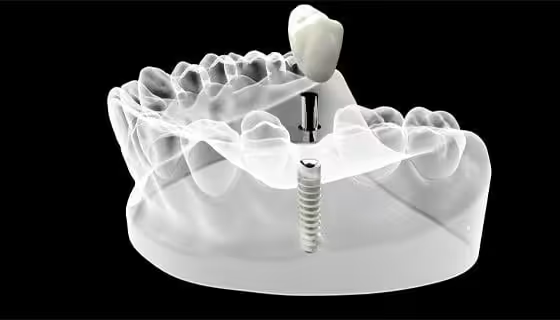
To resolve these types of problems, which are frequently encountered in dentistry, patients are advised to have their wisdom teeth removed.
What is a Wisdom Tooth?
Wisdom teeth, also known as 20-year-old teeth, are the last teeth to emerge during a person’s development. From the age of 10, children begin to lose their milk teeth and develop their permanent teeth.
Of the 32 permanent teeth that a person should have in total, 28 are fully developed by the time of adolescence.
The remaining four large molars are known as wisdom teeth, located at the very back of the upper and lower jaws. The main reason these teeth are called wisdom teeth is that, as the name suggests, they typically erupt around the age of 20.
How many wisdom teeth are there?
There are a total of four wisdom teeth, with two in each of the upper and lower jaws. However, in some cases, depending on genetic factors, there may be only two or three wisdom teeth.
Due to the structure of the jaw, wisdom teeth that find a suitable space to erupt can develop without any problems behind the third molars. However, wisdom teeth that cannot find sufficient space in the mouth may be found to be impacted or partially impacted during their development.
Where there is insufficient space, they can cause problems such as crowding in the mouth, damage to other teeth, and pressure on the gums.
What are the symptoms of wisdom teeth?
The symptoms of wisdom teeth can be clearly observed in people whose teeth develop normally. To prevent any discomfort, there must be sufficient space at the very back of the jawbone for the wisdom teeth to erupt.
However, as this area is often insufficient in most people, other symptoms may accompany the eruption of wisdom teeth. The most common symptoms of wisdom teeth include the following:
- Toothache and gum pain
- Gum sensitivity
- Severe pain radiating to the jaw and ear
- Difficulty swallowing due to swollen lymph nodes
- Bad breath
- Severe headache
- Tooth sensitivity when chewing
It can be said that the conditions for wisdom tooth extraction are particularly present in people around the age of 20.
In individuals aged between 17 and 25, the majority of these symptoms arise as a result of the development of wisdom teeth.
In many patients who consult a dentist due to these complaints, a specialist dentist will recommend the extraction of the wisdom teeth.
When extracting wisdom teeth, it is essential to use the necessary technological equipment to obtain data on the tooth’s position, angle and root condition.
How is a wisdom tooth extracted?
When extracting a wisdom tooth, different methods may be chosen depending on the tooth’s current position and characteristics. The dentist’s experience is crucial when extracting impacted, partially impacted or crowded wisdom teeth.
By examining X-ray images, a decision can be made on how the wisdom tooth should be extracted and which method to use.
Wisdom teeth that have erupted at the correct angle and do not cause crowding in the jawbone, but need to be extracted due to decay, can be removed in just 15 minutes.
However, as the extraction of impacted or partially impacted wisdom teeth requires surgery, the process can be longer and more complicated.
Contents
The Treatment Process for Wisdom Tooth Extraction
Duration of the Surgical Procedure
Back to Everyday Life
Total Duration of Treatment
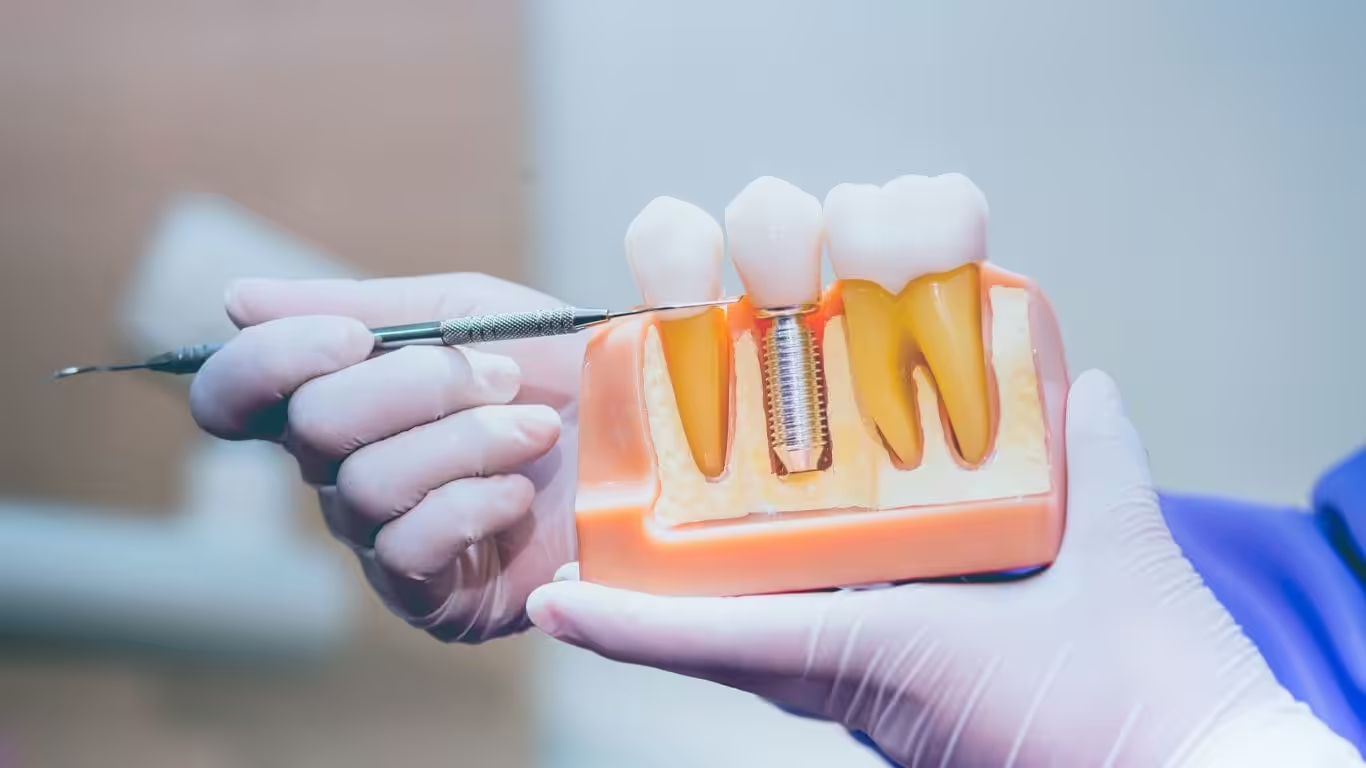
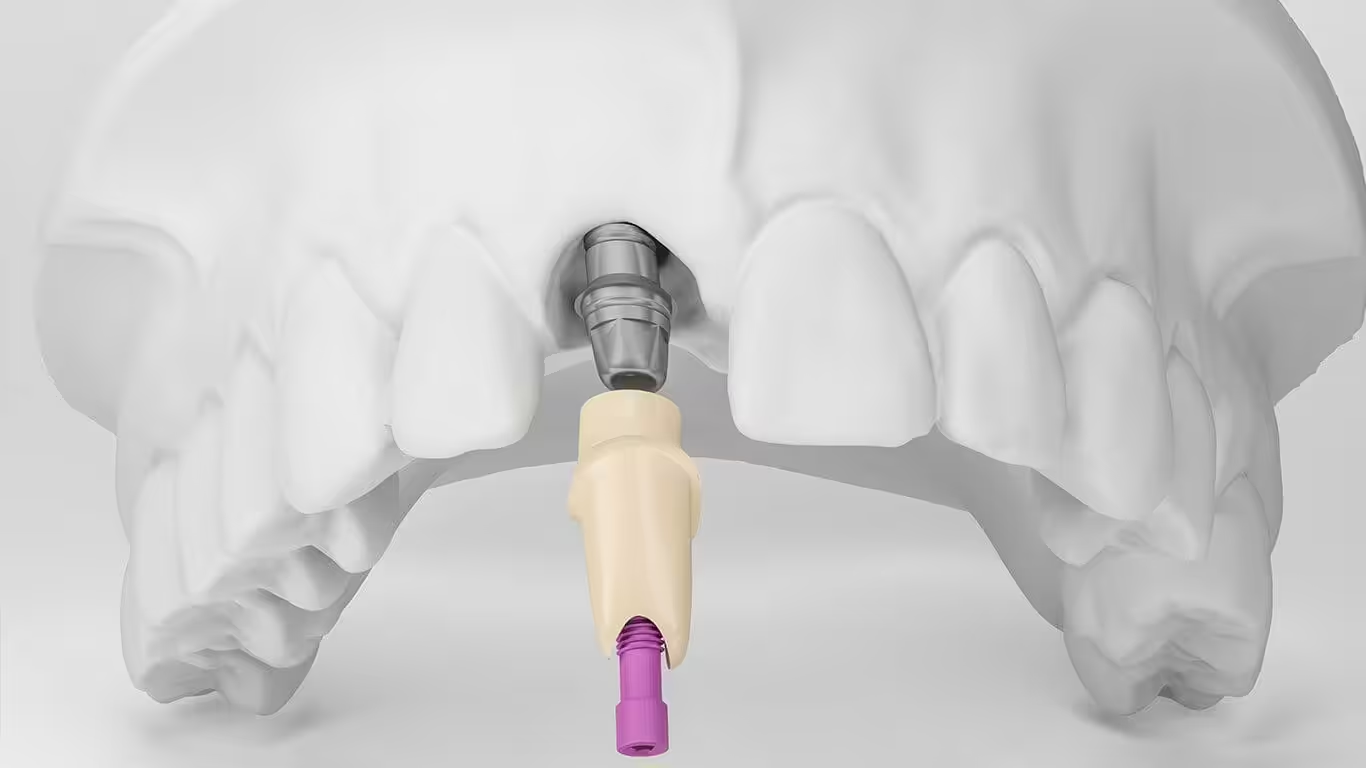
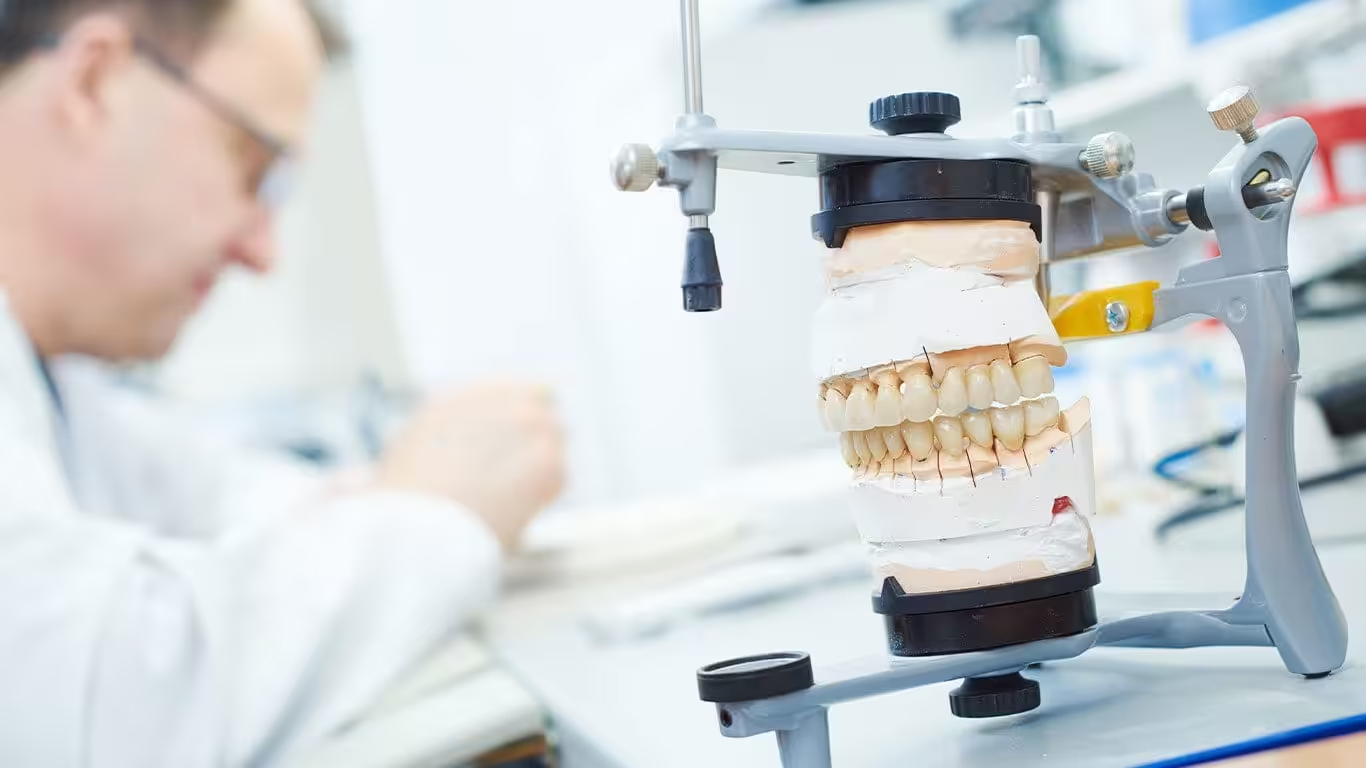
Extraction of a Normal 20-Year-Old Tooth
Provided the correct procedures are followed during the extraction of a standard wisdom tooth, no complications will arise.
If a wisdom tooth is not extracted in good time, it may damage the other teeth and lead to problems with the structure of the mouth.
During a standard wisdom tooth extraction, the tooth, which is located in the jawbone, can be removed by a specialist dentist.
The dentist’s experience and the equipment they use are of great importance during this process. The following steps are involved in a wisdom tooth extraction:
- The gum and bone tissue surrounding the tooth are loosened.
- During this loosening procedure, the dentist may need to use specialist equipment.
- The tooth is firmly grasped using forceps or similar instruments.
- The tooth is moved back and forth to sever the connection with the jawbone that holds it in place.
- The extraction procedure is completed once the tooth has been separated from the jawbone and has lost its stability.
- In some cases, a small fragment of the tooth root may remain in the gum or jawbone following a tooth extraction.
The use of 3D imaging equipment is essential to ensure that the dentist encounters no problems when extracting a wisdom tooth. Determining the angle of the wisdom tooth and the depth of its roots makes the extraction process much easier for the dentist.
To ensure that a tooth extraction is carried out quickly, smoothly and successfully, you should always choose a dental clinic equipped with the latest technology.
You too can seek assistance from our experienced dentists at our dental clinic to achieve successful results quickly when having your wisdom teeth removed.
Extraction of an Impacted Wisdom Tooth
Surgery to remove an impacted wisdom tooth can be longer and more complicated than a standard tooth extraction. A standard wisdom tooth extraction can take around 20 minutes, following the necessary preparation and once the gum has been numbed.
However, removing an impacted wisdom tooth from beneath the tissue or bone requires more time and intervention.
When extracting an impacted wisdom tooth—which can cause deformities in the mouth and may lead to various infections—it is essential to consult an experienced dentist.
The following steps are involved in surgery to remove an impacted wisdom tooth:
- Firstly, the dentist uses X-rays and computerised imaging equipment to examine the patient’s dental structure and the position of the impacted tooth.
- Once the position of the impacted tooth has been determined, a decision is made on the technique to be used.
- During the extraction of an impacted wisdom tooth, local anaesthetic is administered to the area to prevent any pain or discomfort.
- The extraction is completed by removing the tissue or bone covering the impacted wisdom tooth.
- After the procedure, stitches are applied to this area and the recovery process continues.
- Once the stitches are removed after approximately 10 days, the surgery to extract the impacted wisdom tooth will have been successfully completed.
The extraction of an impacted wisdom tooth is more difficult than the extraction of a standard wisdom tooth, i.e. one that is situated on the jawbone.
For this reason, you should choose dental clinics with experienced dentists and state-of-the-art technology.
Data on the position of an impacted wisdom tooth can be collected using computer-assisted devices to ensure a thorough assessment of dental anatomy.
By visiting our state-of-the-art dental clinic, you can have your impacted wisdom tooth extracted quickly and without any complications.
Things to Bear in Mind After Having a Wisdom Tooth Extracted
Following the extraction of a wisdom tooth, the patient should avoid hot and cold foods for at least 24 hours. As bleeding is likely to continue during this period, the patient should avoid chewing on the side where the extraction took place for a few days.
Good oral hygiene is important, but care should be taken not to brush the area where the wisdom tooth was removed.
On the first day, to prevent the blood clot from dislodging, it is sufficient to rinse with salt water rather than brushing your teeth. As local anaesthesia is administered for all wisdom tooth extractions, you will not feel any pain or discomfort.
You can also find out more about wisdom teeth on the Wikipedia page.
The Benefits of Having Wisdom Teeth Removed
We’re not trying to hype up the ‘benefits of having wisdom teeth removed’ using marketing jargon; this isn’t a list of benefits, but rather a procedure that is often carried out out of necessity.
The correct context is as follows:
- Eliminates the risk of pain and infection
- Prevents decay and pressure on adjacent teeth
- Reduces the risk of cysts and inflammation developing in the jaw
- Prevents the deterioration of orthodontic treatment
- Helps maintain proper tooth alignment.